

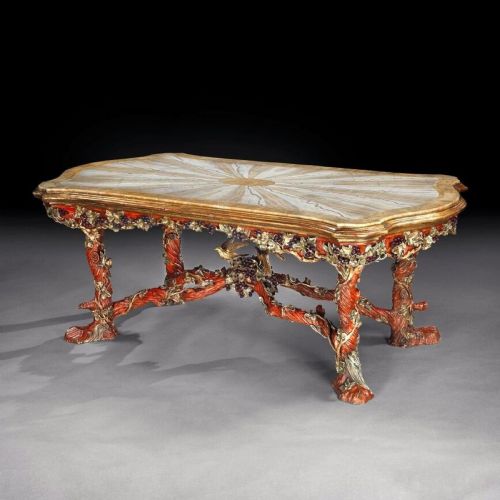


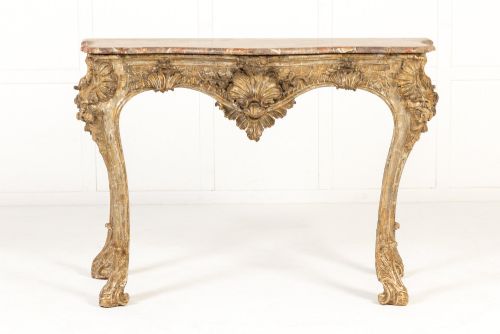


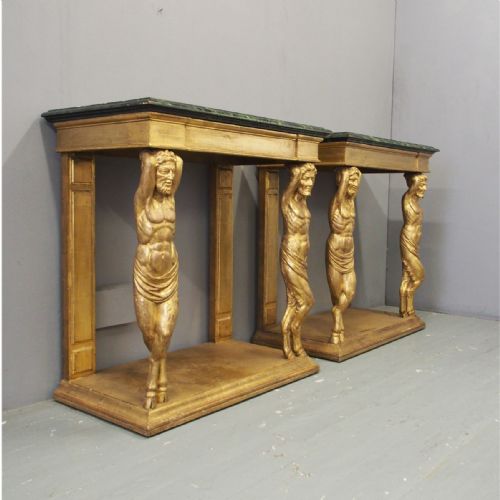

Baroque Entry Table
A baroque entry table brings dramatic scale and rich carving to a hallway, offering a commanding surface beneath a mirror or art piece.
Baroque Entry Table
A baroque entry table serves as a striking architectural focal point in a hallway or reception space, defining the character of an interior from the threshold. When exploring a baroque entry table, one encounters substantial console and centre tables designed with heavy proportions and theatrical presence.
The pieces appearing on this page span several centuries and regional traditions, moving from seventeenth century Spanish oak to eighteenth century Italian giltwood and later revivals. Buyers frequently meet console tables featuring shaped marble tops supported by heavily carved and gilded wooden frames.
Makers and craftsmen from various eras reinterpreted these grand classical motifs, resulting in variations that range from austere provincial walnut to ornate silver gilt and polychrome surfaces. Each piece reflects the enduring appeal of elaborate scrollwork, mythological figures, and monumental design in domestic interiors.
Materials and construction
The construction of these tables relies on robust timbers such as oak and walnut, carved deeply to form structural supports and intricate aprons. Artisans applied layers of gesso onto the carved wooden carcasses to prepare surfaces for subsequent gilding with gold or silver leaf, or for detailed polychrome paintwork.
Heavy stone slabs, particularly marble and onyx, form the upper surfaces of many examples, resting securely on the elaborately shaped wooden bases. Metal components and iron elements occasionally reinforce the structure or provide specific decorative accents within the broader wooden framework.
Baroque Entry Table Retail Price Guide 2026
Typical asking prices for baroque entry table among the pieces listed under this phrase on Sellingantiques today, from the lower quarter to the upper quarter. They describe what is for sale here now, not the wider market.
Look closely for carved maiden heads and rams tucked beneath the table edges, keeping silent watch over your hallway post.
Distinctions in quality
Quality in these tables is evident in the depth and crispness of the carving, where human figures, foliage, and scrolls display anatomical understanding and confident chisel work. Superior examples demonstrate a harmonious relationship between the heavy stone top and the carved wooden base, ensuring structural stability without sacrificing visual lightness in the ornamentation.
The application of surface finishes distinguishes workshop tiers, with genuine hand-applied gilding and layered polychrome paint ageing with a depth that mechanical or hasty finishes cannot replicate. Original integration of materials, such as a fitted marble top matching the exact contours of the frame, elevates the standing of an individual piece.
Amleto Bertoni
The Baroque Entry Table Glossary
- Console table
- A table designed to stand against a wall, traditionally supported by two front legs or brackets while the rear is secured to the wall.
- Giltwood
- Timber that has been coated with thin sheets of gold leaf over a prepared gesso ground.
- Gesso
- A plaster mixture applied to wood surfaces as a smooth base for gilding and painting.
- Polychrome
- Decorated in a variety of different colours, often applied to wood or stone surfaces to create pictorial or ornamental effects.
- Centaur
- A mythical creature with the upper body of a human and the lower body and legs of a horse, frequently employed in decorative carving.
Baroque Entry Table: Frequently Asked Questions
Where should a console table go?
A console table sits flat against a wall, making it well suited for narrow hallways, landings, or beneath large wall mirrors in reception rooms.
Because these tables are often shallow in depth, they occupy minimal floor space while providing a prominent surface for lamps, decorative objects, or correspondence.
How do I clean marble tops?
Stone surfaces require gentle wiping with a damp cloth and mild, neutral soap to avoid dulling the polish or damaging the porous material.
Harsh chemical cleaners and acidic substances must be kept away from marble and onyx to preserve the natural finish and prevent staining.
Are these tables sturdy enough for daily use?
These tables are primarily constructed for decorative display and supporting modest weights rather than heavy domestic activity.
Securing taller or top-heavy console tables to the wall ensures stability, particularly when stone slabs rest loosely upon the wooden bases.
How do I identify different periods?
Distinguishing between seventeenth century originals and later nineteenth century revivals involves examining the tool marks, timber shrinkage, and the composition of the gesso beneath the gilding.
Earlier pieces often display hand-sawn timber characteristics and regional joinery methods that evolved significantly by the time revival styles gained popularity.