

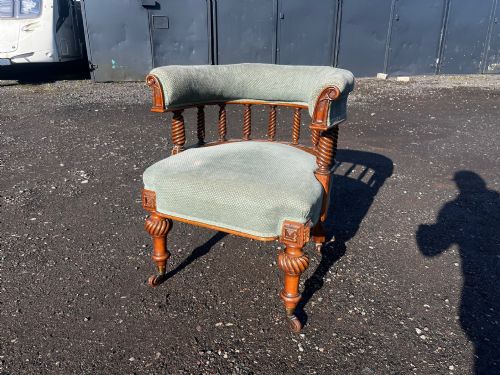


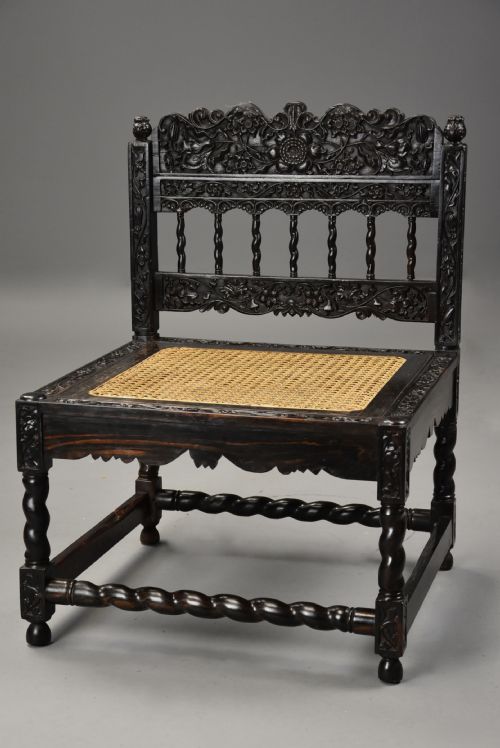


Barley Twist Wooden Chair
A barley twist wooden chair brings centuries of turned timber tradition into a room, offering robust construction and striking spiral legs.
Barley Twist Wooden Chair
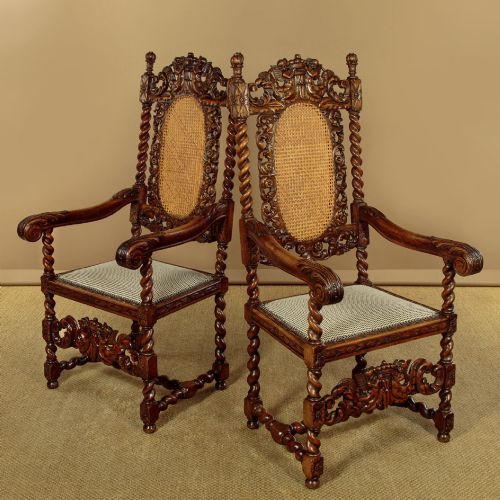
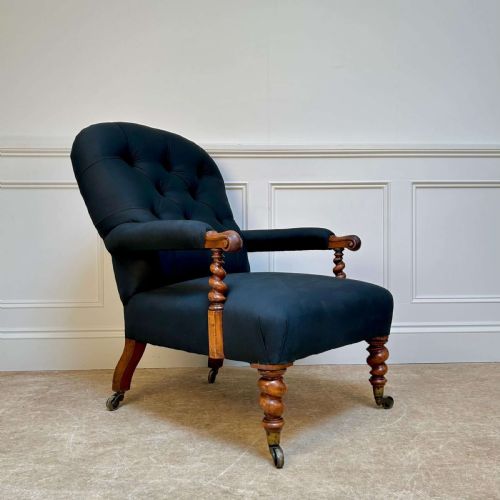
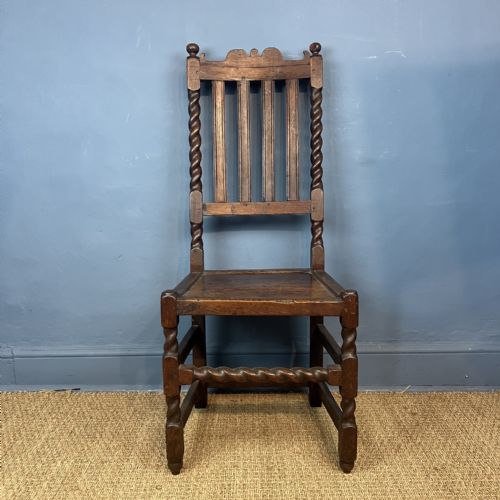
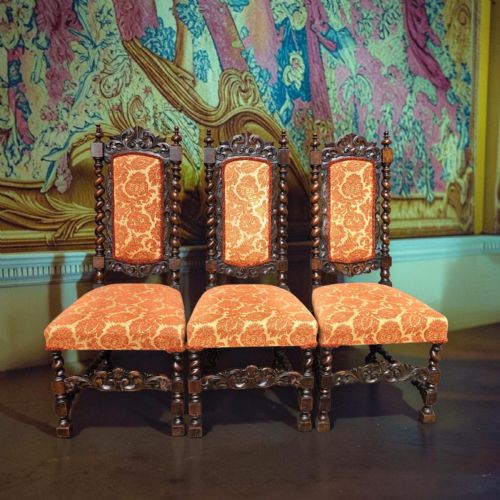
When you search for a barley twist wooden chair, you encounter a form defined by its distinctive spiral turned legs and stretchers, appearing across dining chairs, armchairs, and hall chairs. The pieces on this page span from 17th century originals to 19th century Victorian revivals, demonstrating how makers returned to this spiral design across multiple generations.
Oak is the predominant timber found in these listings, accompanied by walnut, mahogany, satinwood, and ebony, showing the material range utilised by makers from the 17th to the early 20th century. Forms vary from simple side chairs and hall chairs to substantial throne chairs, Carver armchairs, and sets of dining chairs.
How they were made
Makers shaped the characteristic spirals of a barley twist wooden chair using hand woodworking tools, turning timber on a lathe or carving the helical form by hand to achieve the distinctive rope-like contour. Solid timbers such as oak, walnut, mahogany, and satinwood provided the structural strength required for the uprights, legs, and stretchers.
Joinery techniques relied on traditional mortise and tenon joints to secure the frames, while surface details often included deep relief carving, ebonising, or polished finishes. Upholstery was integrated using cane, leather, fabric, or brass elements, fastened directly to the wooden frames of armchairs, side chairs, and desk chairs.
Barley Twist Wooden Chair Retail Price Guide 2026
Typical asking prices for barley twist wooden chair among the pieces listed under this phrase on Sellingantiques today, from the lower quarter to the upper quarter. They describe what is for sale here now, not the wider market.
The listings demonstrate that barley twist wooden chairs appear across oak, walnut, mahogany, satinwood, and ebony, spanning the 17th, 18th, and 19th centuries.
What varies in quality
The distinction between standard examples and the finest pieces lies in the crispness of the turned spirals and the depth of the hand carving on the crest rails and back panels. Solid timbers with rich figuring, such as walnut, ebony, and satinwood, elevate the presence of a chair compared to plainer secondary woods.
Original joinery integrity and the retention of period upholstery materials, whether cane, leather, or early fabric, separate unaltered specimens from heavily restored or reconstructed chairs. Consistency across a matched set of dining chairs or armchairs further marks out superior craftsmanship from assembled groups.
Hindley & Sons·Liberty & Co·George Morant
The Barley Twist Wooden Chair Glossary
- Barley twist
- A spiral turning resembling the stalk of barley, used on the legs and stretchers of chairs and tables. This decorative form gained prominence during the 17th century and saw revivals in the Victorian era.
- Carolean Revival
- A 19th century design movement imitating the decorative arts of the reign of Charles II. Pieces in this style frequently incorporate high carved crest rails, spiral turnings, and cane panels.
- Carver armchair
- An armchair with wooden arms, traditionally positioned at the head of a dining table or used as a desk chair. These pieces often match a set of smaller side chairs.
- Stretcher
- A horizontal wooden member connecting the legs of a chair to provide structural stability. On these chairs, stretchers frequently feature the same spiral turning as the legs.
- Ebonised
- Wood treated with a dark finish to imitate ebony. This technique appears on 19th century walnut and oak frames to achieve a formal black surface.
Barley Twist Wooden Chair: Frequently Asked Questions
How do I date a barley twist wooden chair?
Dating relies on examining the timber species, joinery methods, and the style of the carving. 17th century examples typically show hand-split oak and peg construction, while 19th century revivals utilise machine assistance and varied secondary woods.
The context of the turning also provides clues, as earlier spirals tend to have a wider, more relaxed pitch compared to later Victorian interpretations. Comparing the piece to documented revival periods helps narrow down the decade of production.
Were these chairs used as dining seats?
Many examples on this page are listed as dining chairs or sets of dining chairs. They were manufactured both singly and in large matched sets for formal domestic dining rooms.
Armchairs and carvers functioned alongside side chairs at the table, while individual pieces served as hall chairs or desk chairs in studies and entranceways.
How should I care for an antique wooden chair?
Maintaining these pieces involves keeping them away from direct heat sources and dramatic humidity fluctuations to prevent the timber from splitting. Regular dusting with a soft dry cloth protects the polished surface without building up residue.
Leather, cane, and fabric upholstery require specific attention depending on the material. Periodic inspection of the joints ensures the structural stability remains sound.
What is the difference between Carolean and Jacobean styles?
Jacobean style relates to the early 17th century reign of James I, characterised by geometric panelling and sturdy, rectilinear proportions. Carolean style corresponds to the later 17th century reign of Charles II, introducing more exuberant carving, scrolling foliage, and prominent spiral turnings.
Victorian revival pieces often blended these elements, drawing inspiration from both periods when constructing oak and walnut seating.