





Barley Twist Shelving Unit
A barley twist shelving unit brings robust nineteenth-century turning and tiered display space straight into a modern interior.
Barley Twist Shelving Unit
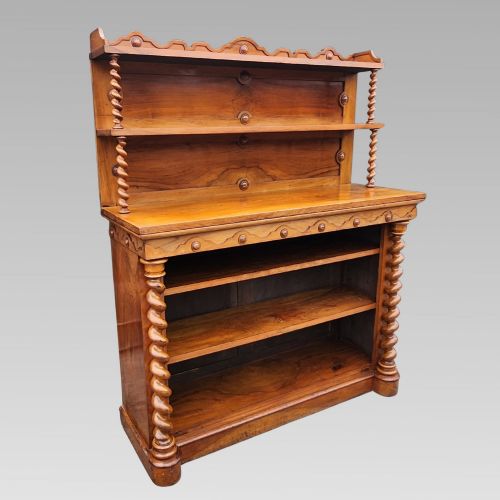
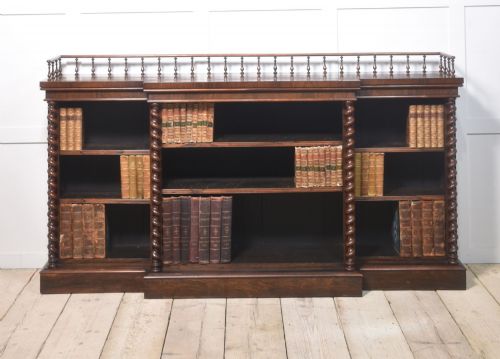
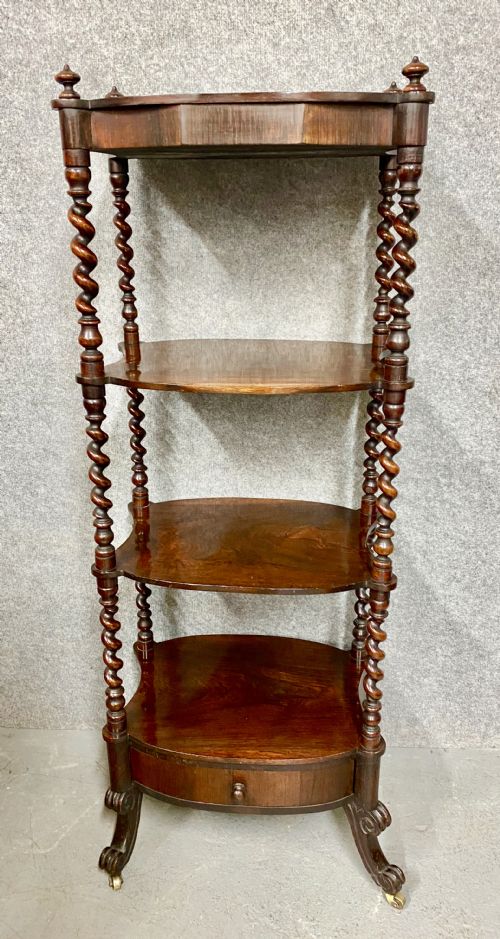
When you search for a barley twist shelving unit, you are looking at tiered display furniture that typically takes the form of a whatnot, etagere, or open bookcase. These pieces span the nineteenth century, with strong representation from the Victorian and Regency eras, alongside examples from the early twentieth century.
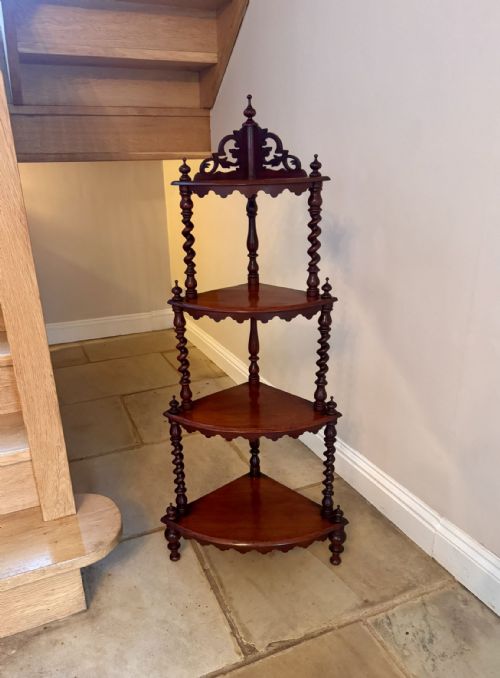
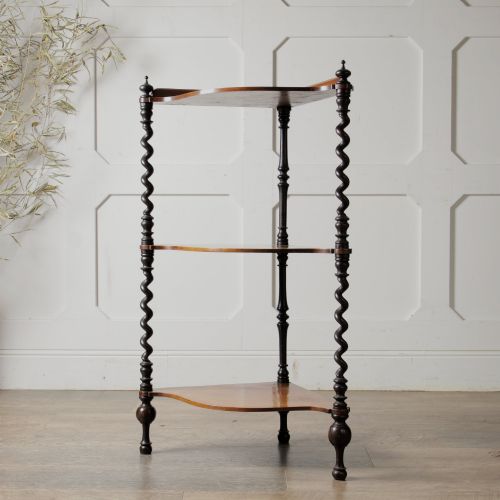
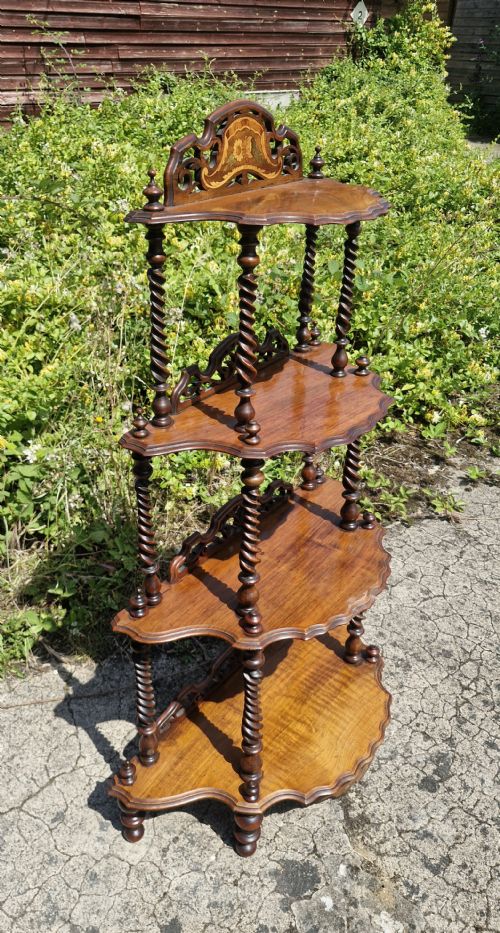
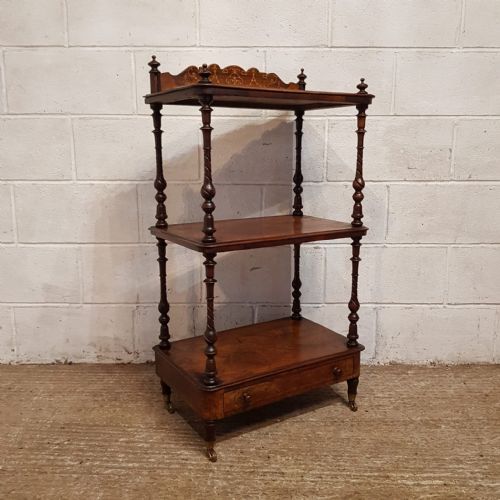
The primary configurations range from multi-tiered standing shelves and bookcases to corner units and demi-lune display tables. Woods such as mahogany, walnut, burr walnut, and rosewood dominate the selections, frequently incorporating turned supports and occasional drawers.
You will encounter pieces designed for open rooms as well as corner spaces, serving practical storage and decorative display roles alike. The visual weight relies heavily on the timber selection, whether figured burr walnut or deep rosewood, paired with characteristic turned columns.
Materials and construction
Cabinetmakers constructed these tiers primarily from hardwoods including mahogany, walnut, and rosewood, often selecting burr veneers for prominent surfaces. Glass, mirror panels, and brass details appear selectively to enhance display functions and reflect light through the tiers.
The signature twist turning is executed on solid timber uprights, supporting multiple shelves secured by traditional joinery. Friezes and panels occasionally feature carved ornamentation or wood inlay to accent the architectural structure of the stands.
Barley Twist Shelving Unit Retail Price Guide 2026
Typical asking prices for barley twist shelving unit among the pieces listed under this phrase on Sellingantiques today, from the lower quarter to the upper quarter. They describe what is for sale here now, not the wider market.
Several units boast hollow barley twists, proving that Victorian turners enjoyed making things as light as they were strong.
What separates the tiers of quality
The distinction between standard examples and the finest pieces lies in the choice of timber and the precision of the turning. Richly figured burr walnut and carefully matched rosewood elevate a piece, whereas plain timbers sit lower in the range.
Design complexity also defines the grade, with multi-tiered stands featuring hollow twists, inlaid marquetry, and carved friezes occupying the upper tier of craftsmanship. Simpler four-tier corner units and straightforward mahogany boards represent the more utilitarian end of the scale.
The Barley Twist Shelving Unit Glossary
- Whatnot
- A piece of furniture with multiple tiers of shelves used for displaying ornaments or books. Originating in the eighteenth century, it became a staple of Victorian interiors.
- Demi-lune
- Half-moon shaped furniture designed to sit flush against a wall. This profile is frequently seen in corner and console variants.
- Frieze
- The decorative band running along the upper part of a bookcase or unit. It frequently displays carved details or wood inlay.
- Burr walnut
- Timber taken from a growth on a walnut tree, highly prized for its swirling grain patterns. Cabinetmakers used it extensively for veneering prominent surfaces.
Barley Twist Shelving Unit: Frequently Asked Questions
What is a barley twist shelving unit?
A barley twist shelving unit is a multi-tiered display stand featuring spiral-turned wooden columns. These pieces function as bookcases, whatnots, and etageres for holding books and decorative objects.
Most examples date from the nineteenth century and employ hardwoods like mahogany, walnut, and rosewood.
Where were these units placed in a room?
These shelving pieces were designed to occupy corners, wall spaces, or freestanding positions in Victorian and Regency interiors. Their tiered construction allowed households to display ornaments, collections, and books efficiently.
Corner units made use of otherwise empty angles, while rectangular and demi-lune variants stood against principal walls.
How do I identify a Victorian piece?
Victorian pieces frequently utilise dense hardwoods such as walnut, rosewood, and mahogany, often featuring rich burr veneers. The presence of spiral turnings, turned columns, and carved friezes points directly to mid to late nineteenth-century manufacture.
Construction methods rely on traditional joinery, fixed shelf supports, and occasional small drawers fitted beneath the primary tiers.
How do I care for antique wood furniture?
Antique shelving units require stable indoor humidity levels and protection from direct sunlight to preserve the timber and veneer. Regular dusting with a soft, dry cloth prevents particulate accumulation on the intricate twist turnings.
Avoid placing damp items directly onto the polished wood surfaces to prevent water marks on the antique finish.