
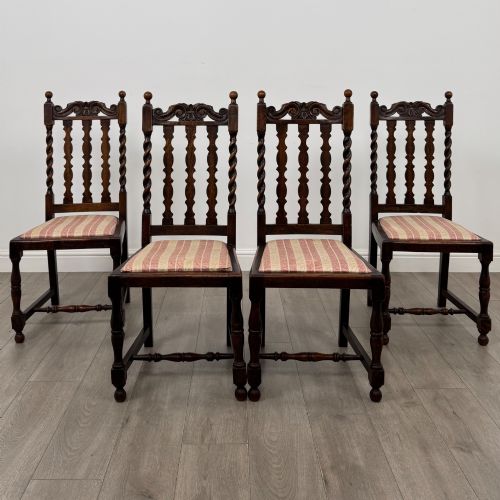
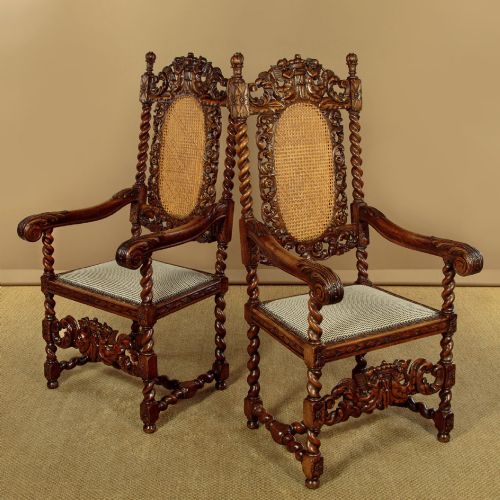
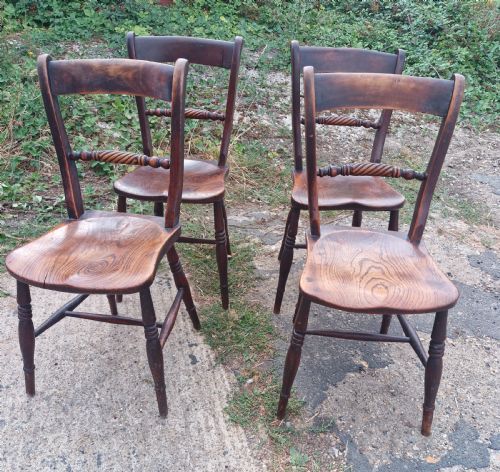
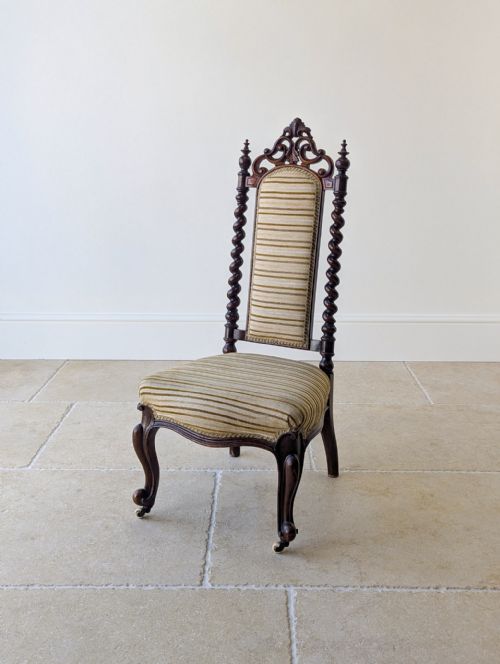
Barley Twist Back Chairs
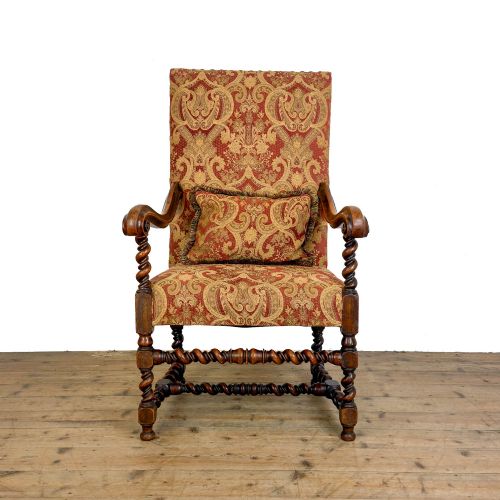
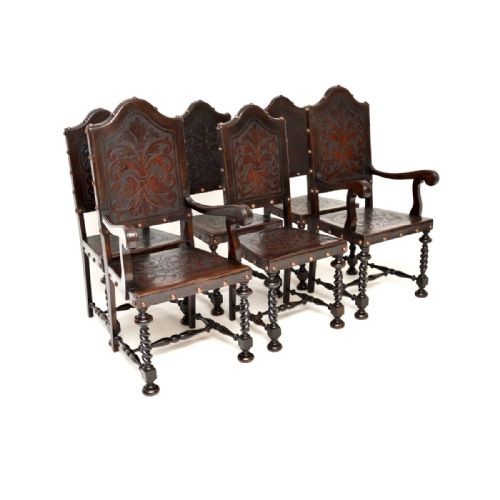
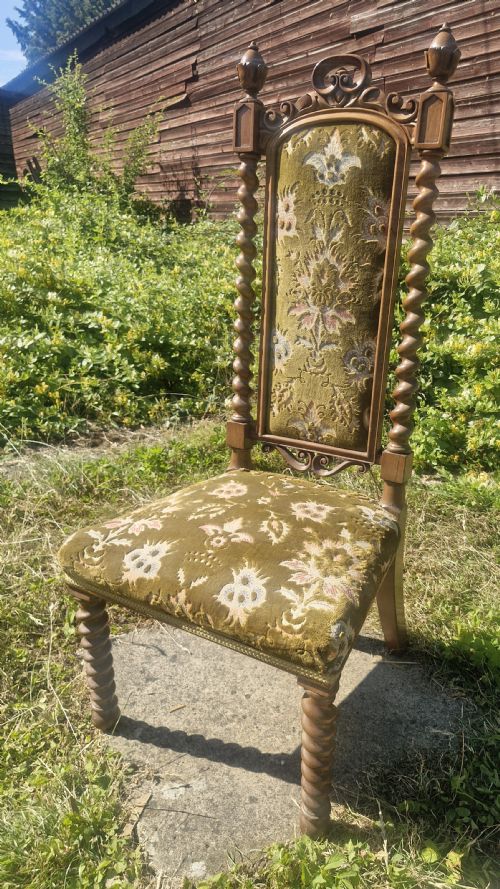
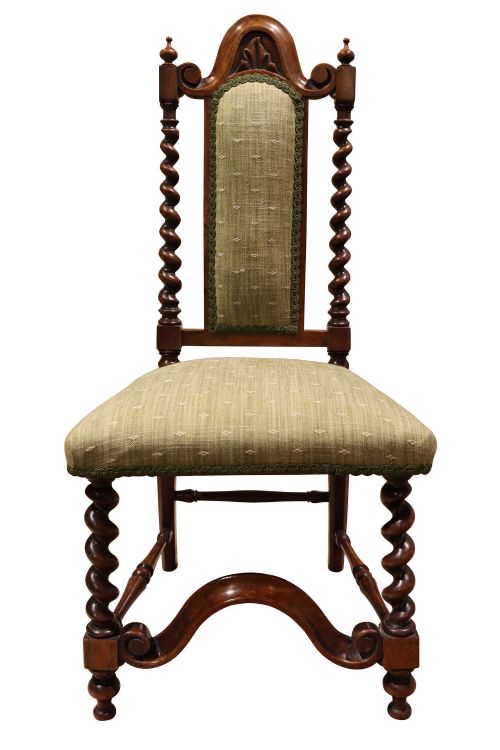
Barley twist back chairs bring sculptural turned woodwork into everyday rooms, offering a sturdy frame with distinct helical columns.
Barley Twist Back Chairs
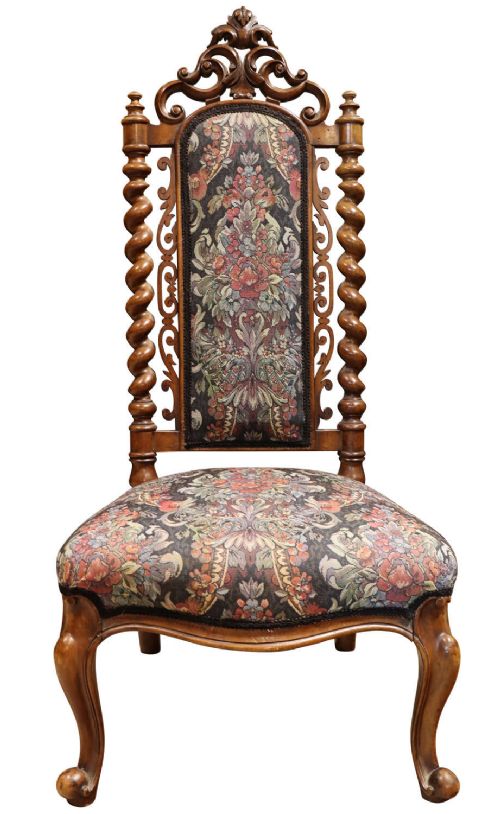
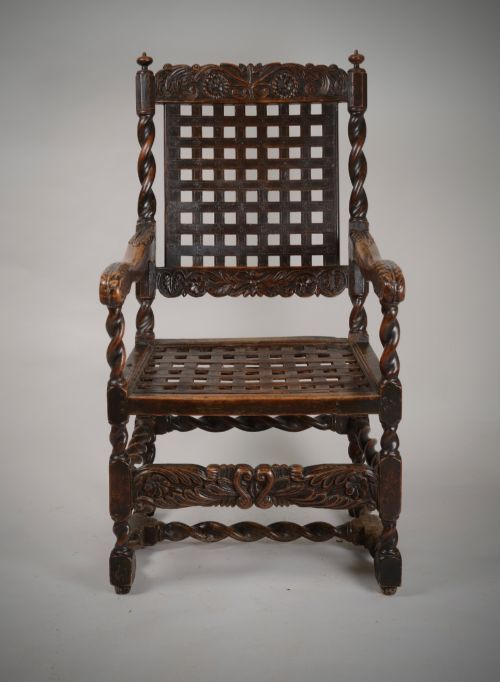
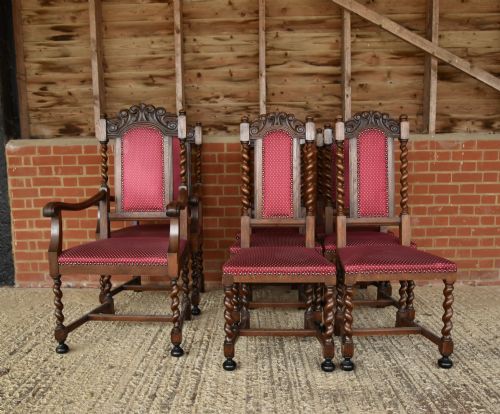
Barley twist back chairs encompass seating built with distinctive spiral-turned framing members, appearing frequently as dining sets or individual armchairs from the Victorian period onwards. The form draws heavily on earlier 17th-century vernacular and revival aesthetics, reinterpreting historic turning techniques for later Victorian and Edwardian interiors.
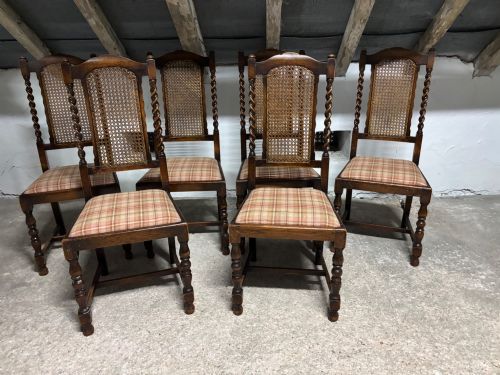
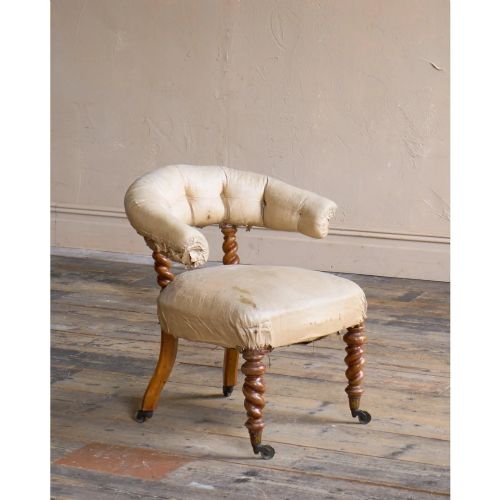
Buyers encounter a mix of single elbow chairs, parlour seating, and sets of dining chairs originating from the nineteenth and early twentieth centuries. Oak and walnut serve as the predominant timbers for these framed supports, often paired with cane panels, upholstered seats, or high carved backs.
How they were made
Cabinet makers utilised dense hardwoods such as oak and walnut to ensure the turned spiral structural members could withstand daily weight without splitting. Lathes and hand chisels shaped the characteristic helical twist along uprights, legs, and stretchers.
Seating areas incorporated woven cane, embossed leather, or padded upholstery secured with textile coverings and brass tacking. Joinery relied on traditional mortise and tenon joints to stabilise the upright framing against lateral movement.
Listings feature oak and walnut frames alongside cane, leather, and fabric upholstery from Victorian and Edwardian periods.
What varies in quality
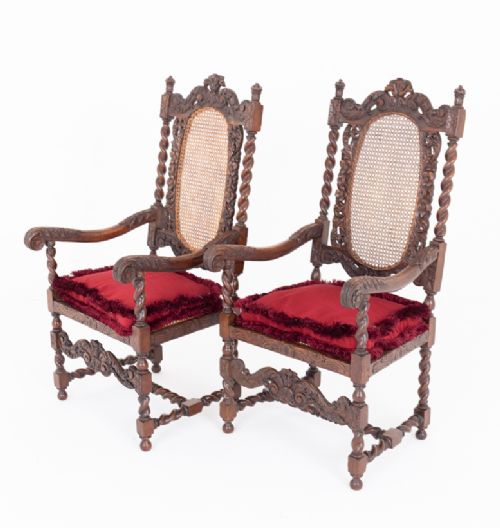
The crispness and symmetry of the spiral turnings distinguish finer pieces from simpler workshop output, revealing the turner's skill with the chisel. Deep, undercut carving on the crest rails and stretchers indicates a more ambitious commission rather than plain production.
Timber selection and frame integrity dictate longevity, with tight-grained oak or figured walnut holding structural tension better over time. Original surface patination and intact cane work or period upholstery enhance the cohesion of the finished piece.
C. Hindley & Sons·Liberty & Co
The Barley Twist Back Chairs Glossary
- Barley twist
- A spiral turning resembling a twisted stalk of barley, formed on timber uprights, legs, and stretchers. This decorative profile appears across several centuries of furniture design.
- Stretcher
- A horizontal wooden brace connecting the legs of a chair to provide rigidity and strength. On these chairs, they frequently feature the same spiral turning as the legs.
- Bergere
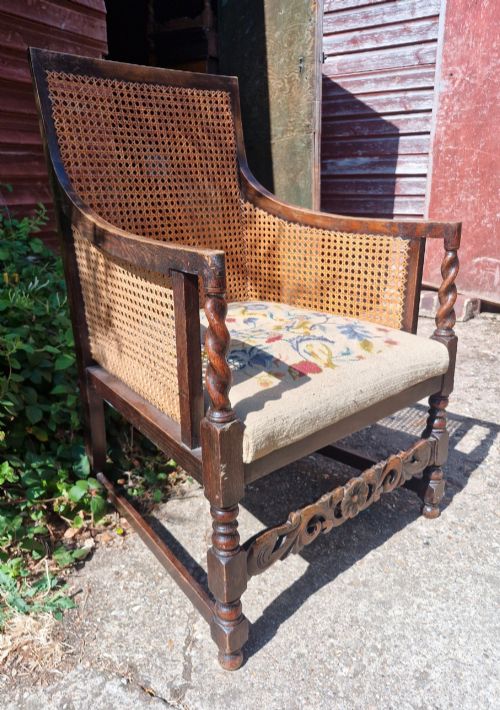
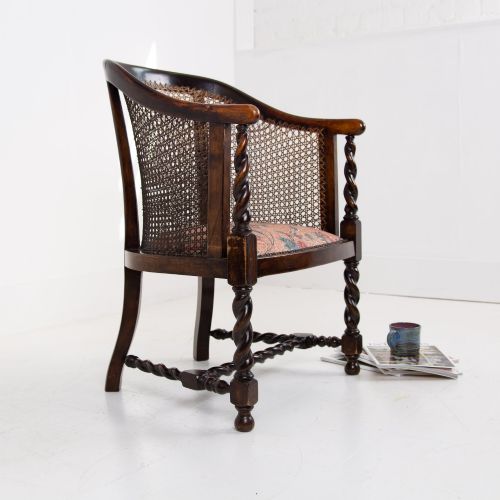
- A closed upholstered armchair with an enclosed wooden frame, often featuring woven cane panels on the back and sides. It offers a distinct profile compared to open-arm chairs.
- Carolean
- A style associated with the reign of Charles II, characterised by rich carving, scrollwork, and high cane backs. Later Victorian revivals frequently copied these elaborate motifs.
- Caned
- A seating surface or back panel woven from split rattan cane in an open mesh pattern. This technique provides flexible support while keeping the frame lightweight.
Barley Twist Back Chairs: Frequently Asked Questions
What periods do these chairs date from?
The selection spans from the nineteenth century through to the Edwardian era, incorporating revivals of seventeenth-century designs.
Craftsmen across these periods reproduced traditional spiral turnings using oak and walnut to satisfy changing domestic tastes.
Are these chairs suitable for daily dining?
Many sets are built for everyday use, provided the joints remain tight and the timber is sound.
Checking the stability of the stretcher base helps ensure the chair handles regular sitting.
How do I identify a revival style?
Revival pieces often combine older decorative motifs like heavy crest rails and cane panels with the wood finishes typical of their actual production date.
Secondary wood types and construction methods usually give away whether a piece belongs to the nineteenth-century revival or an earlier period.