



Barge Painting Art
These pieces of barge painting art capture the gritty, working rivers and canals of past centuries through the eyes of skilled painters.
Barge Painting Art
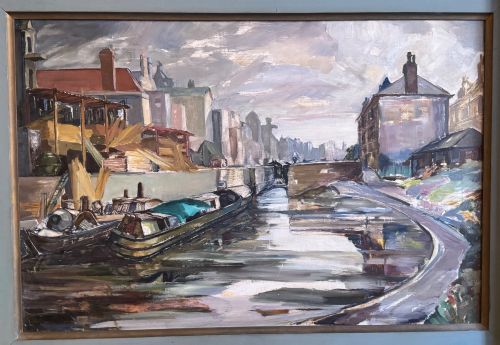
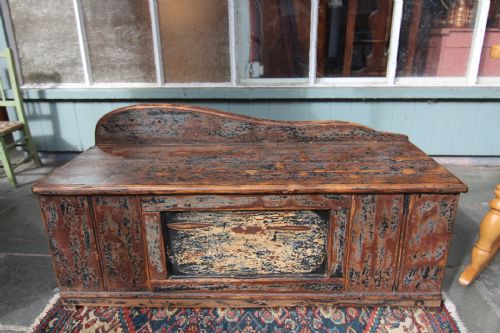
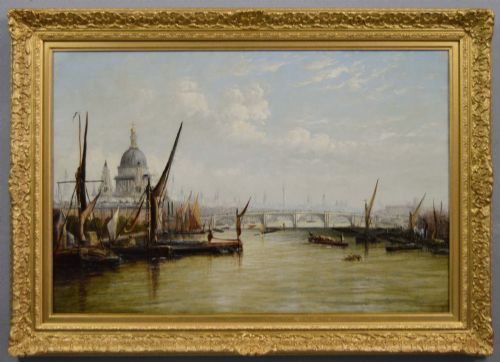
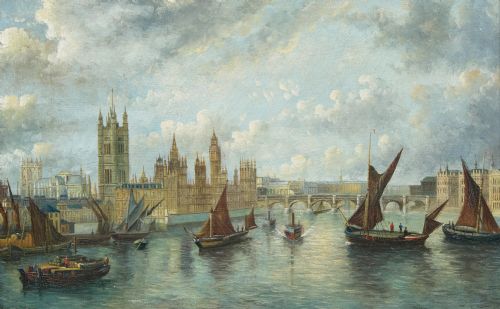
When you search for barge painting art, you are looking at river and canal scenes featuring working vessels, alongside decorated functional items such as polychrome box seats and log stores. These works capture the maritime and industrial heritage of waterways, ranging from quiet rural canals to bustling urban rivers like the Thames.
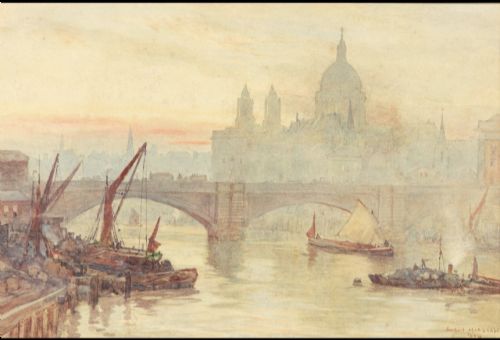
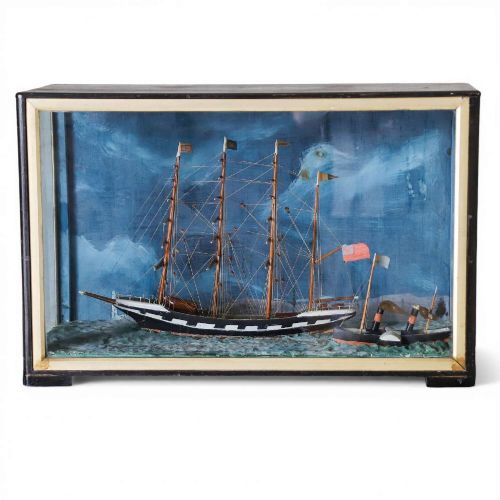
The pieces on this page span several eras, moving from nineteenth-century academic and folk depictions through to mid-twentieth-century treatments on canvas and board. You will encounter everything from detailed river landscapes with steam barges to atmospheric views of French canals and maritime dioramas.
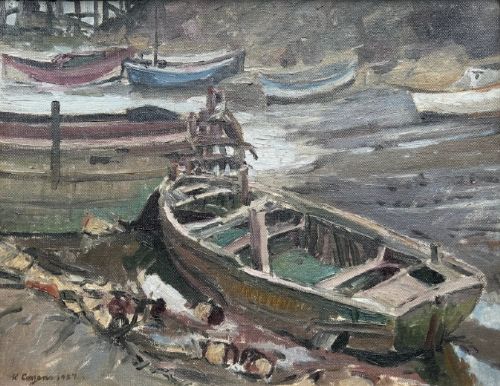
Makers and artists focused heavily on the interplay between the water, the sky, and the heavy commercial boats that kept trade moving. Whether executed as delicate watercolours or heavy impasto oils, these works place the working barge at the heart of the composition.
Materials and methods
Artists relied primarily on oil paint applied to canvas, board, or paper, capturing light and atmosphere through varied brushwork. Watercolour was also utilised, particularly for detailed topographical and architectural river views.
Functional items incorporate wood as a base material, adorned with polychrome paintwork and decorative touches such as gold leaf. These painted wooden objects reflect traditional folk art techniques applied to everyday utility items.
Compositions often combined observational plein air methods with studio finishing, building texture through thick paint applications in later industrial scenes.
Barge Painting Art Retail Price Guide 2026
Typical asking prices for barge painting art among the pieces listed under this phrase on Sellingantiques today, from the lower quarter to the upper quarter. They describe what is for sale here now, not the wider market.
Even a humble log box could not escape the brush, turning everyday firewood storage into a floating folk art gallery.
Assessing quality and execution
Quality rests upon the artist's command of light, atmosphere, and spatial depth, separating hurried sketches from deeply considered compositions. A strong piece demonstrates confident handling of water reflections and the heavy structural form of the vessels themselves.
The preservation of the original surface plays a major role in the standing of each piece, whether dealing with the crispness of a nineteenth-century watercolour or the stable impasto of a post-war oil painting. Material integrity in wooden items, such as box seats, adds further distinction to the object.
Herbert Menzies Marshall·Kenneth Cozens·Francis Moltino·Edward Henry Eugene Fletcher·Benjamin Williams Leader·Paul Jean Clays·E Elliot·Walter Duncan·Maud Raphael Jones·Jacob Knyff·Gordon Meadows·Hubert Thornley
The Barge Painting Art Glossary
- Plein air
- Painting outdoors to capture natural light and atmospheric conditions directly onto the canvas. This technique was favoured by nineteenth-century artists recording river landscapes.
- Impasto
- Paint applied thickly to a surface, leaving visible brush or palette knife marks. This method adds physical texture and depth to water and industrial skies.
- Diorama
- A three-dimensional scene, often enclosing model ships and barges within a shadow box. These constructions combine painted backgrounds with physical maritime elements.
- Toleware
- Enamelled or lacquered metalware, occasionally linked to decorated functional boxes and household items. It represents the intersection of domestic utility and folk artistry.
- Topographical
- Representing specific real-world locations with a focus on accurate geography and architecture. Many river paintings double as historical records of changing cityscapes.
Barge Painting Art: Frequently Asked Questions
What is barge painting art?
Barge painting art encompasses paintings and decorated objects featuring commercial river vessels, canals, and estuaries. These works document the heavy traffic of historic waterways.
You will find depictions ranging from nineteenth-century Thames scenes to mid-century French canal landscapes and painted wooden storage boxes.
How were these pieces used historically?
Paintings served as records of maritime trade, urban expansion, and rural river life, designed to be framed and displayed in homes. Decorated wooden pieces like box seats and log stores combined household utility with traditional folk art.
Together, these objects reflect both the fine art market and practical canal life.
How do I live with these artworks?
Place oil paintings and watercolours away from direct sunlight to protect the pigments from fading over time. Wooden pieces benefit from stable indoor humidity to keep the painted surfaces secure.
Allow these works space on the wall or shelf where their historical narrative can be easily appreciated.
How can I tell different periods apart?
Nineteenth-century works often feature detailed rigging, academic realism, or charming folk art applications on wooden boxes. Later twentieth-century pieces tend towards looser brushwork, impressionistic lighting, and industrial estuary views.
Examining the canvas preparation, framing, and artist signatures helps narrow down the date of creation.