





Banded Occasional Table
A banded occasional table brings refined timberwork and compact versatility to a room, offering the subtle contrast of contrasting border veneers.
Banded Occasional Table
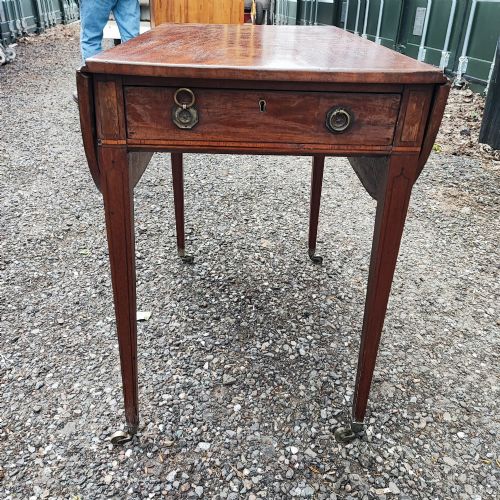
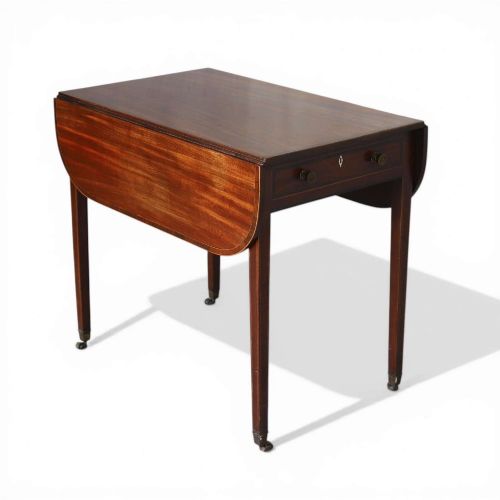
A banded occasional table covers a variety of small, movable support surfaces designed for flexibility around a parlour or sitting room. The pieces matching this phrase span several distinct forms, including Pembroke tables with drop leaves, twin-pillar sofa tables, nesting sets, and drop-leaf Sutherland tables.
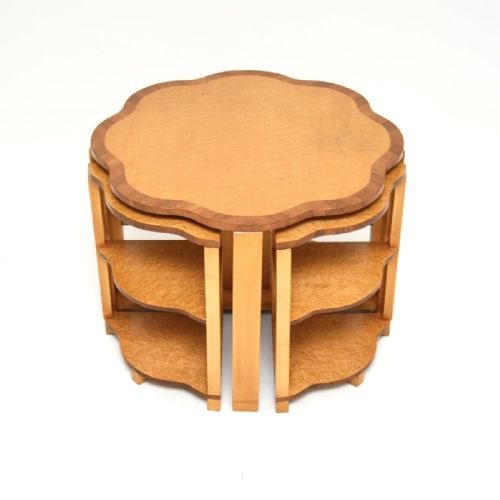
The selections here lean heavily toward Georgian and Regency origins, alongside Edwardian and Art Deco interpretations. Buyers will frequently encounter mahogany carcasses framed by satinwood, rosewood, or kingwood banding.
Makers from the eighteenth century onward utilised these smaller formats to display fine cabinetwork, applying geometric borders to tops and drawer fronts. They serve today just as they did originally, positioned beside seating to hold books, lamps, or tea.
Materials and construction
Construction relies upon solid timber carcasses faced with carefully selected veneers, predominantly mahogany, walnut, and fruitwood. Cabinetmakers applied contrasting timbers such as satinwood, partridge wood, ebony, and rosewood to create thin decorative bands around the perimeter of the top.
Secondary framing often incorporates sturdy native hardwoods to support hinged leaves on Pembroke and Sutherland designs. Brass castors, drop handles, and small drawer fittings complete the construction of the movable forms.
Banded Occasional Table Retail Price Guide 2026
Typical asking prices for banded occasional table among the pieces listed under this phrase on Sellingantiques today, from the lower quarter to the upper quarter. They describe what is for sale here now, not the wider market.
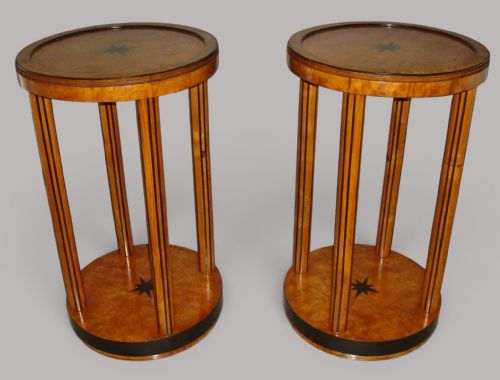
Listings feature mahogany, satinwood, rosewood, and birds eye maple across Georgian, Regency, and Art Deco periods.
Quality differences in the range
Quality rests upon the crispness of the timber selection and the precision of the inlay work. Finer pieces demonstrate seamless transitions where the banding meets the field veneer, with harmonious grain patterns selected by the maker.
Simpler versions rely on basic painted lines or broader, less intricate borders, whereas superior examples use contrasting exotic woods to create distinct visual depth. Original brass hardware, uncompromised hinges, and honest patination elevate the standing of a piece.
The Banded Occasional Table Glossary
- Banding
- A narrow strip of veneer inlaid around the edge of a table top to form a contrasting border. This technique highlights the geometric shape of the surface.
- Pembroke table
- A small rectangular table featuring two hinged drop leaves on opposite sides. Many examples include one or two small end drawers.
- Sofa table
- A long, narrow table traditionally placed in front of a sofa, equipped with drop leaves and often supported by end trestles or pillar legs.
- Sutherland table
- A narrow table with exceptionally wide drop leaves supported by swinging gate legs. When the leaves drop, the table occupies minimal floor space.
- Cross-banding
- Veneer laid so that the grain runs at a right angle to the grain of the main surface. It creates a neat framing effect along the edge of the timber.
Banded Occasional Table: Frequently Asked Questions
What is a banded occasional table used for?
These pieces function as movable surfaces for holding lamps, books, or drinks beside seating arrangements. Their compact proportions allow them to sit easily in corners or beside upholstery without dominating the floor plan.
Drop-leaf variants like Pembroke and Sutherland tables provide expanded surface area only when required. This makes them adaptable for smaller rooms where flexibility is essential.
How do I distinguish Georgian pieces?
Georgian and Regency examples rely on solid timber construction methods, hand-cut dovetails in drawers, and dense mahogany foundations. The banding on these older items is typically executed in satinwood, kingwood, or rosewood rather than printed substitutes.
Surface patination develops naturally over centuries of handling and polishing. Examining the underside and drawer interiors reveals the traditional hand tools used by period cabinetmakers.
How should I care for these tables?
Keep wooden surfaces away from direct heat sources and strong sunlight to prevent the underlying veneers from drying or splitting. Regular dusting with a dry, soft cloth maintains the finish without building up heavy chemical residues.
Applying a traditional beeswax polish occasionally helps nourish the timber and preserve the subtle sheen of the antique finish. Avoid placing damp items directly onto antique wood without protective coasters.
Are Edwardian versions different from Georgian ones?
Edwardian and later iterations often incorporate lighter satinwood panels and more delicate inlay patterns reflecting changing domestic tastes around nineteen hundred. They frequently include nesting coffee tables or lighter Sutherland formats suited to less formal interiors.
Construction methods in the twentieth century involved more mechanized preparation while retaining traditional hand-finishing techniques. These later pieces offer sturdy utility with a brighter, airier timber palette.