



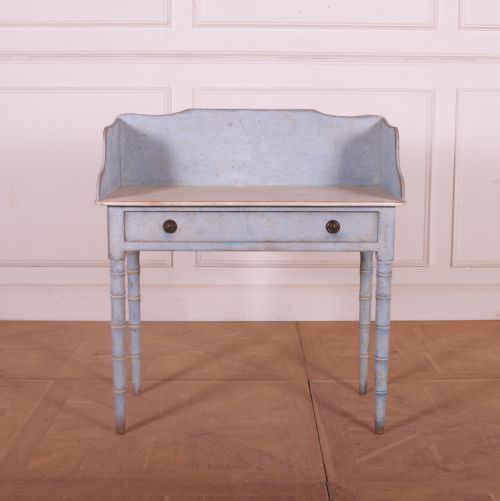


Bamboo Turned Furniture
Bamboo turned furniture brings tactile warmth to any room, offering versatile occasional tables, chests, and beds shaped with distinctive simulated bamboo detailing.
Bamboo Turned Furniture
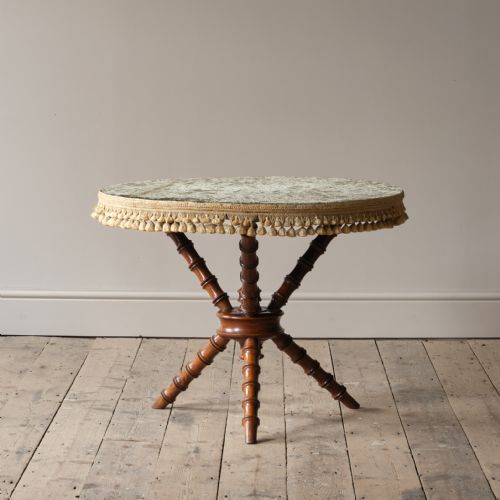
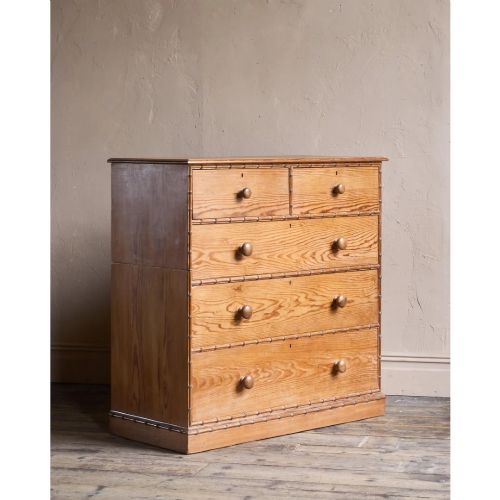
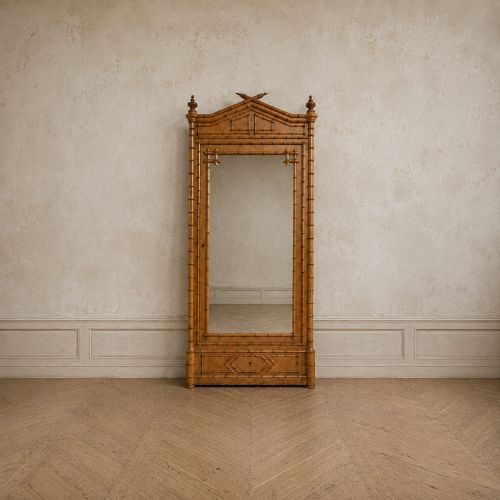
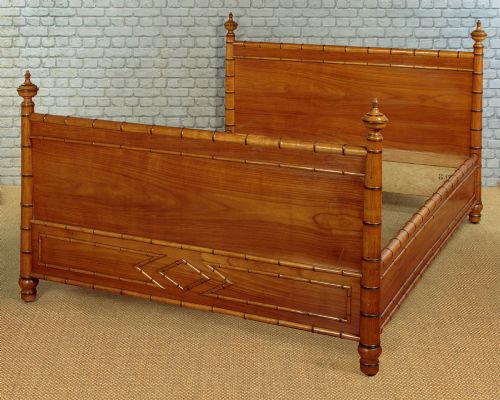
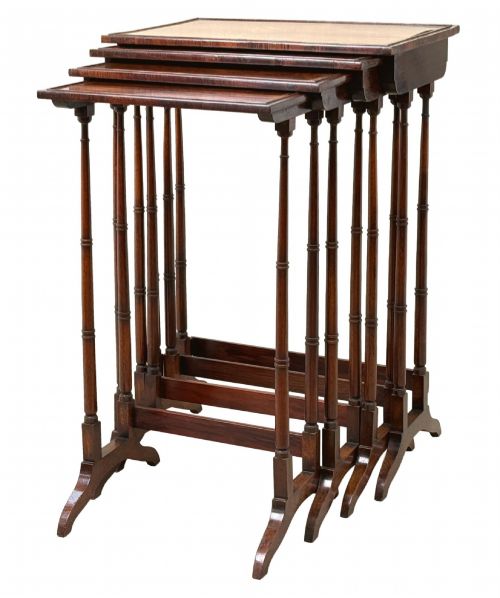
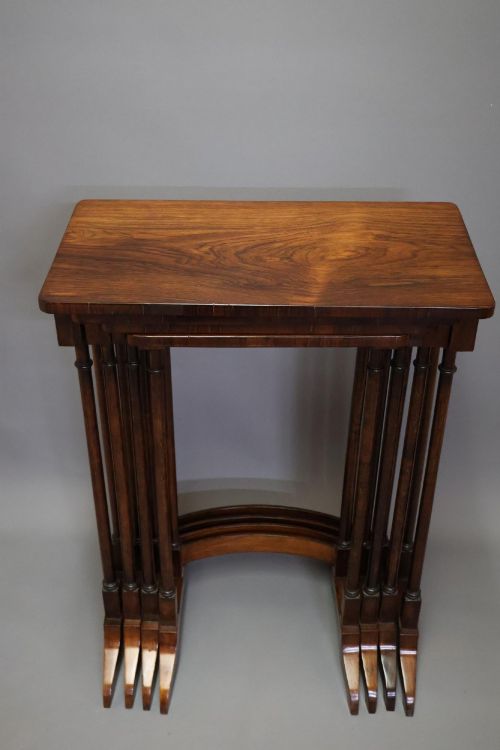
The selection ranges from French Aesthetic Movement armoires in bird's eye maple to Scottish Victorian gypsy tables and Regency rosewood quartetto nests. Pieces often incorporate velvet, glass, and passementerie, alongside campaign washbowl stands and miniature dolls beds.
Victorian faux bamboo models sit alongside earlier Regency rosewood tables and English country items. This variety reflects the widespread 19th Century fascination with exotic natural forms translated into sturdy domestic timbers.
How these pieces were made
Craftsmen shaped dense hardwoods such as rosewood, pine, and bird's eye maple into the characteristic jointed segments and rings that define turned bamboo work. Woodturners used lathes and hand-chisels to replicate the nodes of real bamboo stalks upon solid timber.
Surface detailing relied on simulated finishes, paintwork, or natural grain enhancement to heighten the illusion of exotic cane. Secondary materials like antique velvet, glass, and passementerie were integrated into tables, dressing chests, and seating.
Bamboo Turned Furniture Retail Price Guide 2026
Typical asking prices for bamboo turned furniture among the pieces listed under this phrase on Sellingantiques today, from the lower quarter to the upper quarter. They describe what is for sale here now, not the wider market.
Listings feature turned wood pieces spanning the 19th Century, Regency, Victorian, and Edwardian eras, utilising rosewood, pine, and bird's eye maple.
What varies in quality
The refinement of the turning work dictates the success of the piece, distinguishing precise node carving from simple fluted shaping. Crisp detailing on simulated bamboo joints maintains the structural illusion across legs, stretchers, and frames.
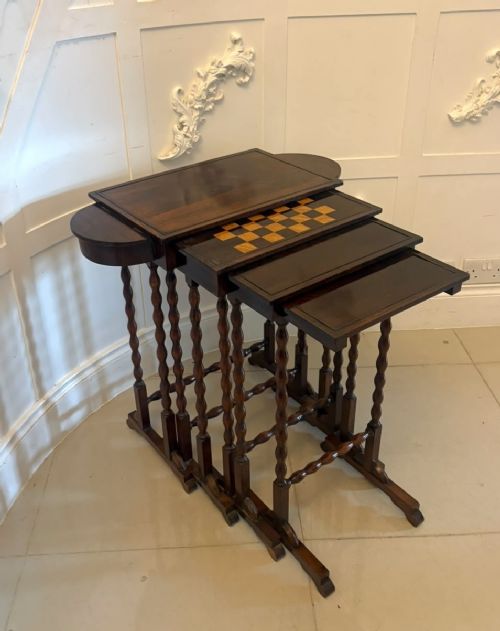
Choice of primary timber elevates the standing of a piece, separating standard turned pine from figured rosewood or bird's eye maple. Integrated elements, such as chess boards within nests of tables or fitted mirrors on armoires, reflect ambitious workshop production.
Howard and Sons·John Taylor Edinburgh
The Bamboo Turned Furniture Glossary
- Quartetto
- A nested set of four occasional tables designed to slide neatly beneath one another. These tables appeared frequently in Regency and Victorian drawing rooms for serving tea or holding small objects.
- Gypsy table
- A small three-legged occasional table, often featuring a draped fabric top or a decorative surface. They gained popularity during the Victorian Aesthetic Movement.
- Faux bamboo
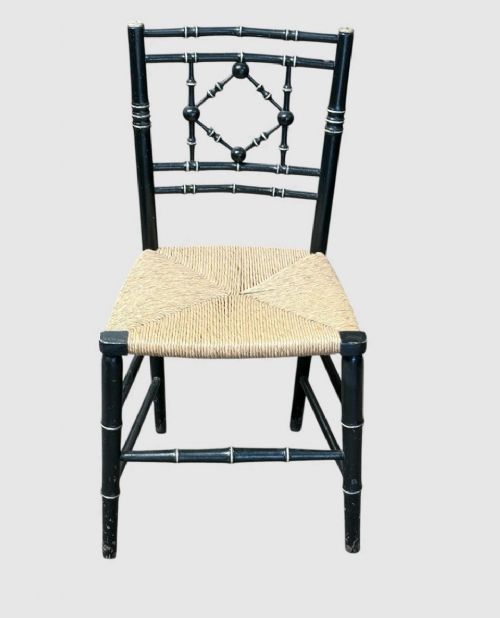
- Wood turned and painted to imitate the segmented stems of natural bamboo. This technique allowed cabinetmakers to achieve an exotic aesthetic using domestic hardwoods.
- Passementerie
- Elaborate trimmings such as edgings, fringes, or tassels used to ornament textile-topped tables or upholstery. It adds texture and colour to Victorian furnishings.
- Campaign furniture
- Portable pieces designed for military travel, featuring screw-in legs or folding frames. These items prioritized sturdy construction and practical disassembly.
Bamboo Turned Furniture: Frequently Asked Questions
How do I identify faux bamboo?
Examine the legs and structural supports for raised rings or nodes carved directly into the solid wood. These decorative sections mimic the natural growth joints of real bamboo cane.
Closer inspection often reveals the underlying grain of rosewood, pine, or hardwood beneath the painted or simulated surface finish.
What is a quartetto nest?
A quartetto nest is a graduated set of four tables designed to stack progressively inside the largest one. They served as space-saving furniture in 19th Century parlours.
Owners could pull them out individually when entertaining guests for tea or card games.
Where were gypsy tables used?
Gypsy tables typically stood in Victorian sitting rooms or drawing rooms as decorative display surfaces. Their lightweight construction made them easy to reposition around the fireplace or window.
Many examples featured draped fabric tops bordered by passementerie trimmings.
How do I care for antique turned wood?
Keep turned furniture away from direct heat sources and strong sunlight to prevent the timber from drying out or splitting. Dust the intricate joints regularly with a soft brush to prevent grime accumulation.
Apply a gentle beeswax polish occasionally to nourish the hardwood surface and maintain its lustre.