




Balloon Back Fireside Chair
A balloon back fireside chair offers curved comfort from the nineteenth century, built for low fireside seating.
Balloon Back Fireside Chair
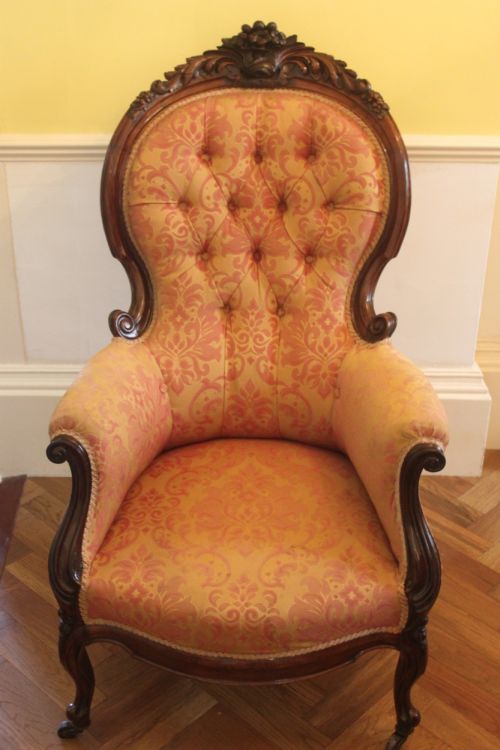
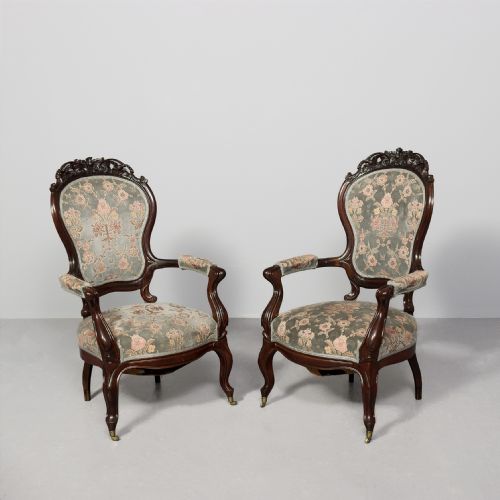
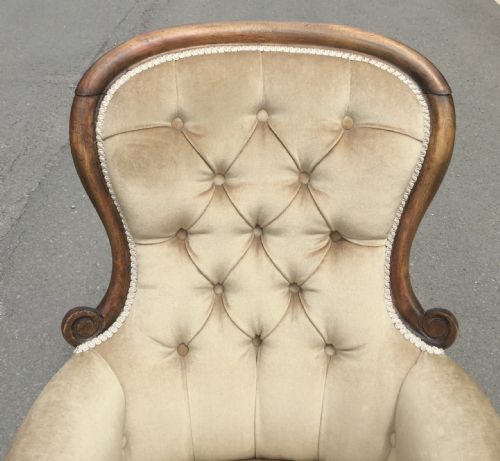
A balloon back fireside chair is a low-slung nineteenth-century seat designed for warmth and conversation near the hearth. The form centres on a characteristic rounded backrest that mimics the swelling profile of a hot air balloon.
Most examples found here hail from the Victorian period, spanning the mid to late nineteenth century alongside later revival interpretations. These pieces appear in forms such as nursing chairs, gentleman's armchairs, and fireside armchairs.
Makers shaped these seating options from dense timbers with upholstered pads designed to sit close to the floor. The silhouette provides generous proportions while keeping the occupant sheltered from draughts.
Materials and construction methods
The frames rely on robust hardwoods including mahogany, walnut, and rosewood, chosen for their strength when carved into sweeping curves. Artisans shaped the characteristic backrails using steam-bending and fine joinery to achieve the continuous oval frame.
Upholstery forms a major part of the construction, utilising traditional materials covered in velvet, damask, or woven fabric. Brass castors frequently support the cabriole or turned legs, allowing easy movement across carpets near the hearth.
Victorian sitters appreciated low frames because heavy floor-length skirts made high seating an awkward daily struggle.
Judging the quality of a balloon back fireside chair
Quality rests upon the crispness of the timber carving and the elegance of the balloon curve in the backrest. Finer examples display fluid lines and seamless joints where the arms meet the uprights.
The choice of primary wood dictates the upper tier of production, with figured mahogany and rich walnut commanding attention over plain timber. Subtleties in the proportions of the low seat and the comfort of the springing distinguish standard utility pieces from high-status commissions.
The Balloon Back Fireside Chair Glossary
- Balloon back
- A rounded, oval-shaped backrest popular in Victorian seating that resembles an inflated balloon. This outline defines the primary aesthetic of the chair.
- Cabriole leg
- A furniture leg that curves outward and then tapers inward with a pad or scroll foot. This shape derives from animal limbs and appears frequently on revival seating.
- Spoonback
- An upholstered chair back hollowed out to resemble the bowl of a spoon, providing ergonomic support for the spine. This shape often accompanies the balloon outline.
- Damask
- A reversible figured fabric traditionally woven on a jacquard loom with patterns visible on both sides. Upholsters apply this textile to lend a formal texture to period frames.
Balloon Back Fireside Chair: Frequently Asked Questions
How do I date a Victorian armchair?
Dating relies on observing stylistic markers, timber choice, and construction techniques recorded across the nineteenth century. Mid-century examples often feature solid mahogany frames with deep hand-carving.
Later Victorian pieces introduce walnut and lighter proportions, while twentieth-century revivals copy these earlier nineteenth-century motifs with modern assembly methods.
Where should I place this chair?
The low stature of a fireside chair makes it ideal for living rooms, studies, or bedrooms where seating height remains modest. Their compact footprints allow them to sit comfortably beside a mantelpiece.
Ensure the room humidity stays moderate to protect the polished hardwood frame and the fabric upholstery from environmental stress.
Are nursing chairs different from armchairs?
Nursing chairs generally lack arms to allow women in historical dress greater freedom of movement while tending to infants or sitting close to the hearth. They share the same low seat height and curved backrests.
Standard armchairs provide enclosed supports for the arms, offering a more formal seating experience by the fireplace.