



Bag Light Fixtures
Bag light fixtures are decorative hanging luminaires featuring cascading crystal elements, chosen for their ability to refract candlelight and electric illumination across period interiors.
Bag Light Fixtures
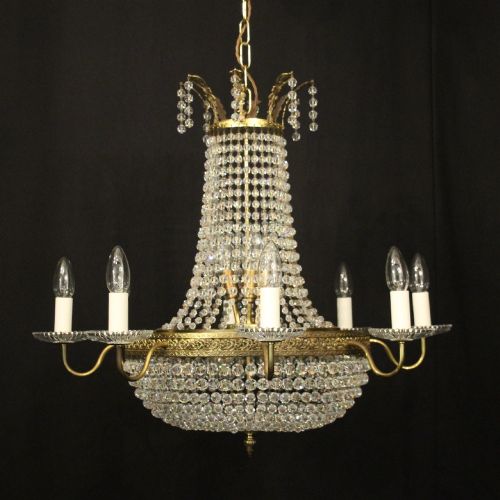
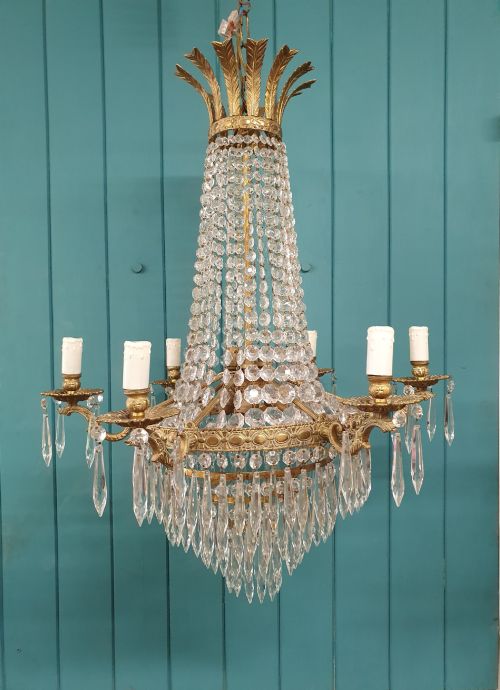
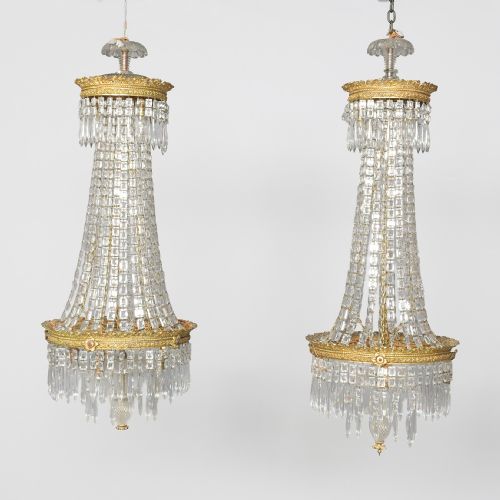
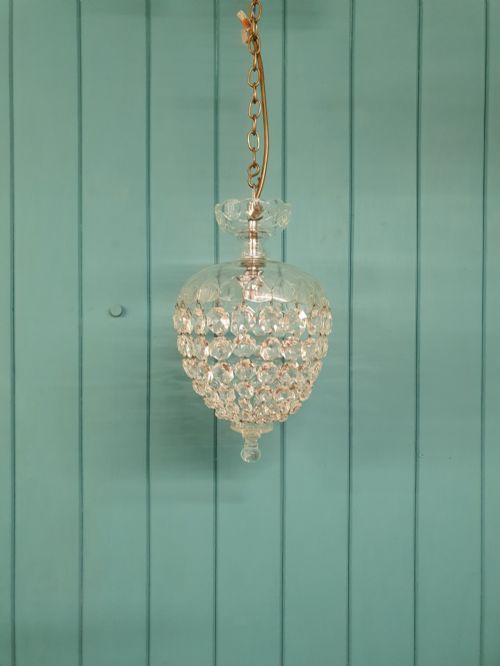
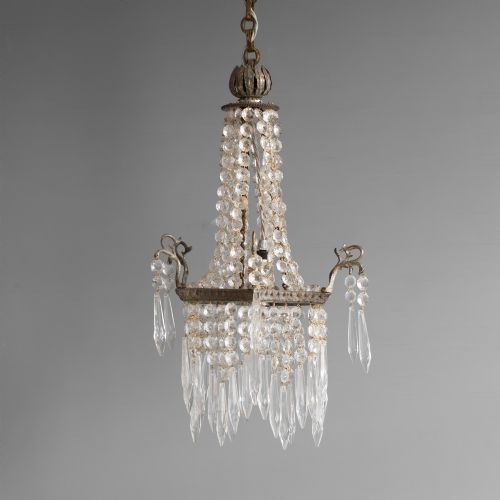
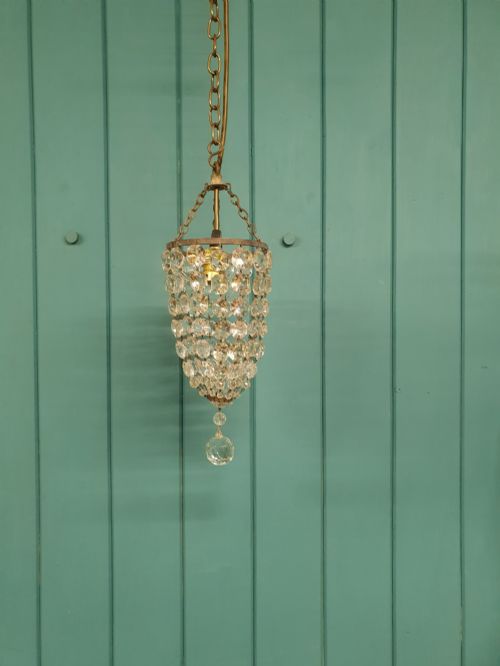
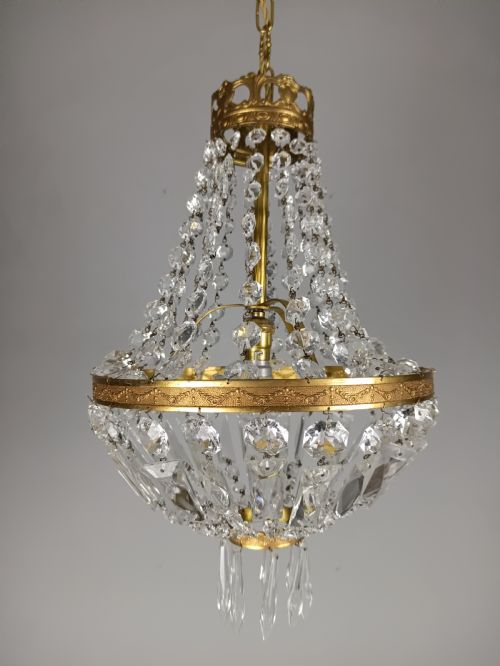
Bag light fixtures combine a crowned upper section with a tapered, gathered lower bag formed of interlocking crystal drops and beads. These pieces appear across periods from the eighteenth century through the 1930s, encompassing Edwardian examples and French revival styles.
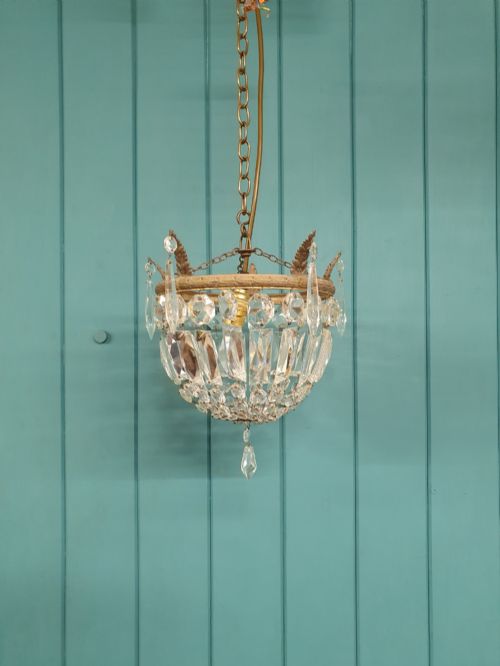
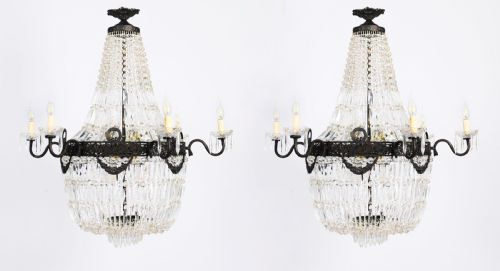
The most common forms on this page include tent and bag chandeliers, ceiling lights, and basket variants constructed from brass or gilt metal mounts. Buyers encounter diverse proportions, ranging from compact ceiling fixtures to large ballroom chandeliers.
Design vocabulary spans French Empire, Regency, Louis Revival, and Art Deco aesthetics, reflecting the decorative preferences of their original eras. Each object type delivers focused downward illumination through its dense configuration of glass components.
How they were made
Makers constructed the framework using cast brass, bronze, and gilt metal to support the weight of numerous glass and crystal components. Metal armatures were shaped into circular crowns, dome tops, and basket frames designed to receive suspension pins.
Workers suspended individual cut glass beads, coffin prisms, and crystal drops in geometric patterns to form the characteristic tent and bag sections. These hanging elements were wired or pinned together manually, creating flexible networks that diffuse light.
Bag Light Fixtures Retail Price Guide 2026
Typical asking prices for bag light fixtures among the pieces listed under this phrase on Sellingantiques today, from the lower quarter to the upper quarter. They describe what is for sale here now, not the wider market.
Listings span periods from the 18th Century through the 1930s, featuring brass, bronze, and cut crystal materials.
What varies in quality
The density and precision of the crystal cutting determine the brilliance of light refraction across the fixture. Superior examples utilise heavy cut glass and hand-finished crystal drops rather than lightweight moulded alternatives.
Metalwork execution separates standard production from finer pieces, evident in the weight of the brass mounts and the refinement of cast details such as leaf decorations. Original patination and intact structural wiring cages preserve the integrity of the period manufacture.
Wedgwood
The Bag Light Fixtures Glossary
- Bag chandelier
- A hanging light fixture featuring a gathered lower section resembling a purse or bag, constructed from thousands of small crystal beads.
- Tent and bag chandelier
- A lighting form that pairs an upper conical tent of strung crystals with a bulbous lower bag element.
- Coffin prism
- A long, flat-cut glass pendant with a wedge profile, frequently suspended from the lower rings of antique chandeliers.
- Gilt metal
- A base metal surface treated with a gold-coloured finish or leaf to imitate solid gold mounts.
- Louis Revival
- A nineteenth and twentieth century design movement that reinterprets French court styles of the seventeenth and eighteenth centuries.
Bag Light Fixtures: Frequently Asked Questions
How do I clean a bag chandelier?
Cleaning requires a specialist glass cleaning solution applied carefully by hand to each individual crystal and bead. Technicians spray the fluid gently while protecting the metal armature beneath.
Alternatively, individual drops can be detached for immersion cleaning, though this demands meticulous record-keeping of their exact placement on the wire frame.
Where should I hang a bag light fixture?
These fixtures suit dining rooms, entrance halls, and reception rooms where ceiling height permits a suspended ornamental fitting. Their concentrated downward light creates an intimate atmosphere.
Consider the drop length relative to the floor clearance and furniture placement to ensure safe passage underneath the lowest crystal fringe.
How do I date an antique bag light?
Dating relies on examining the metal casting techniques, the cut of the crystal prisms, and the wiring configurations used in the frame. Edwardian and 1930s examples often display machine-beaded strands alongside cast brass mounts.
Earlier eighteenth-century and nineteenth-century pieces reveal hand-cut facets on individual prisms and heavier bronze armatures without modern electrical conduits.
Can these chandeliers be rewired for modern use?
Electrical adaptation is standard practice for period lighting to comply with contemporary safety standards and household fittings. Professional restorers replace perished internal wiring while preserving the external metal framework and glass elements.
Low-wattage LED candle bulbs work effectively within these frames to replicate the warmth of historical illumination without generating excessive heat.