




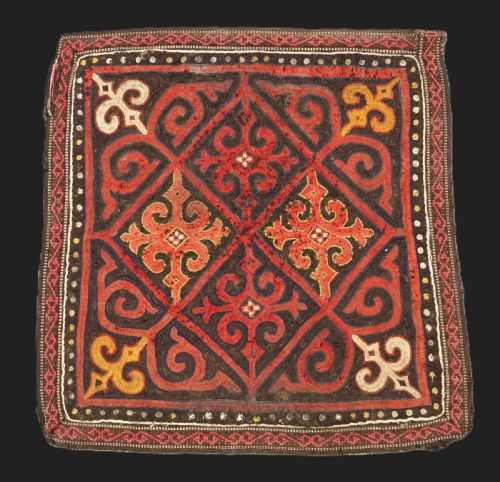
Asian Embroidered Art
Asian embroidered art gathers hand-stitched wall hangings, panels, and ceremonial textiles spanning nineteenth and twentieth century traditions from across Central Asia, China, and India.
Asian Embroidered Art
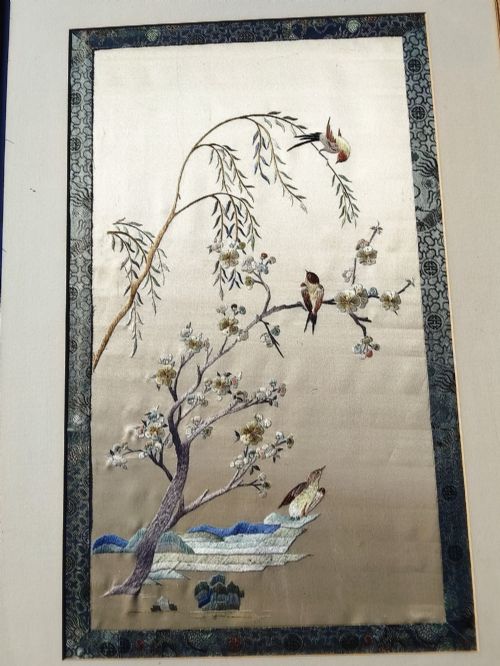
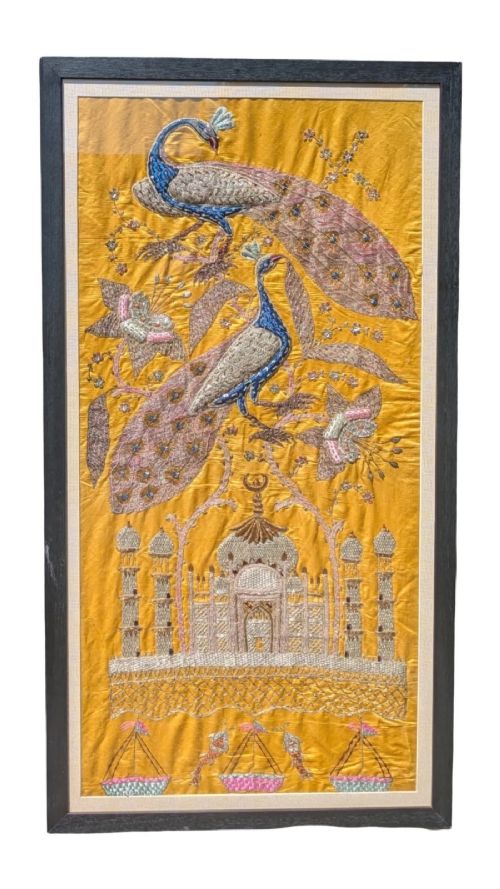
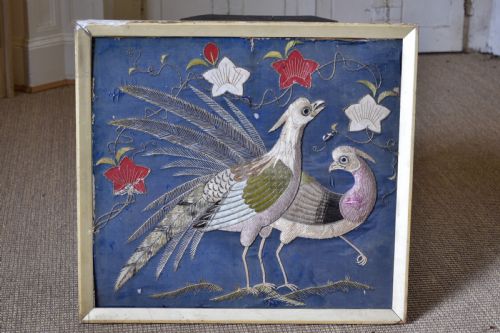
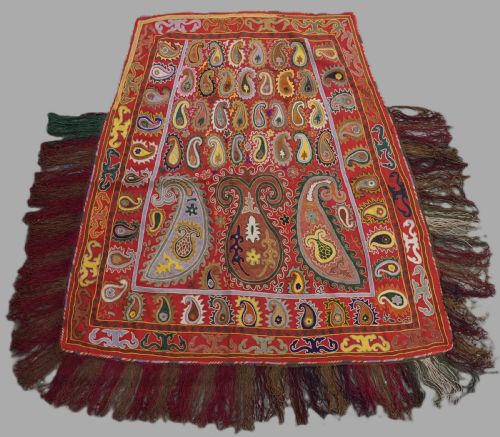
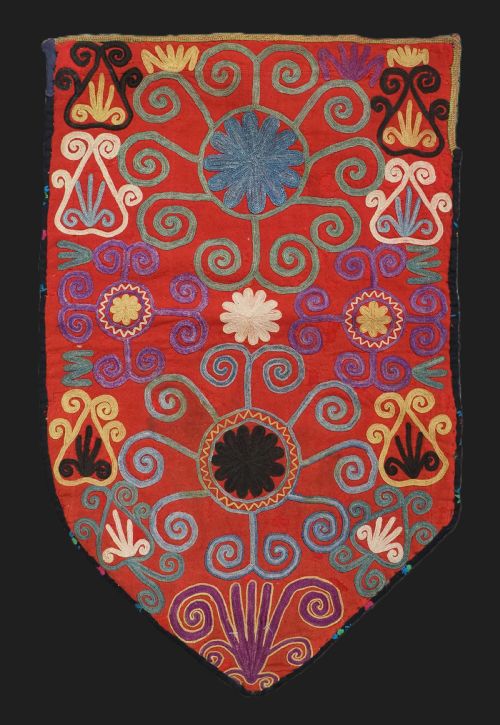
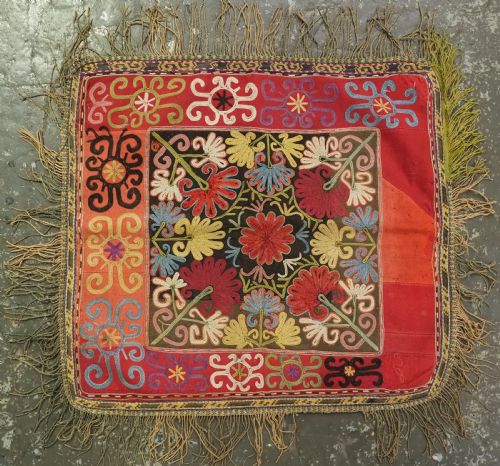
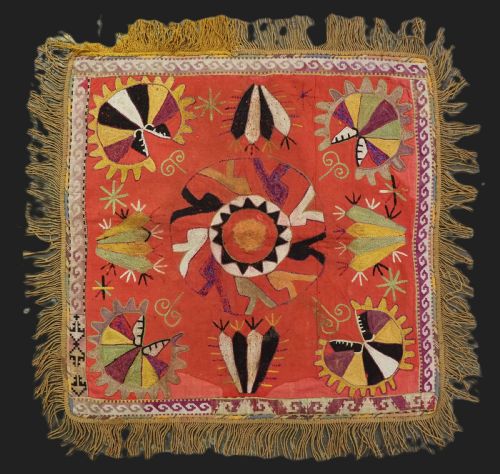
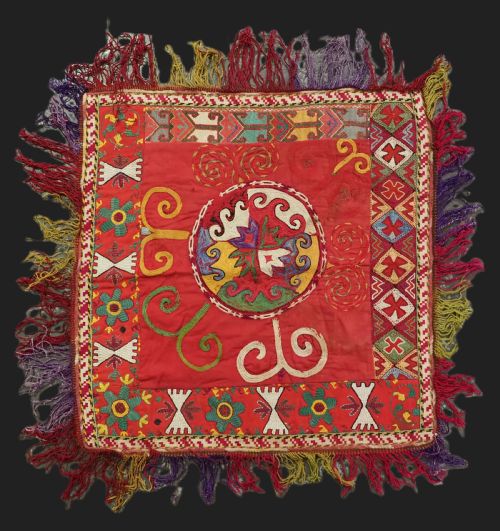
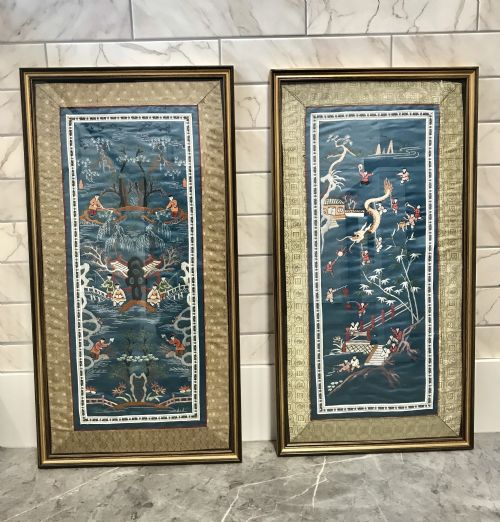
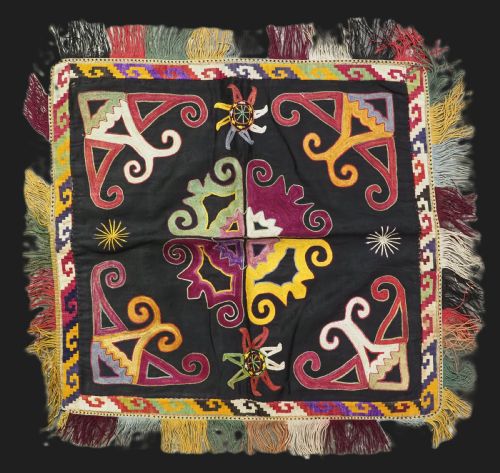
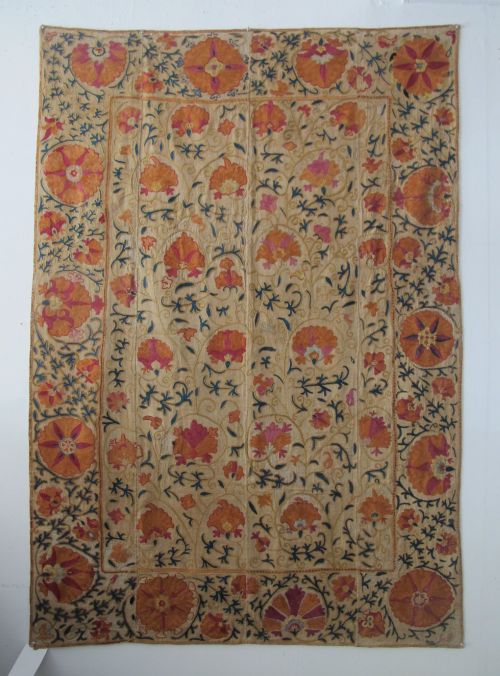
Asian embroidered art encompasses a wide variety of textile traditions, ranging from large Central Asian suzanis and tribal dowry hangings to framed Chinese silk panels and Indian velvet textiles. The most common examples met here are antique Uzbek suzanis and Lakai tribal ilgich pieces created for domestic display and ceremonial use.
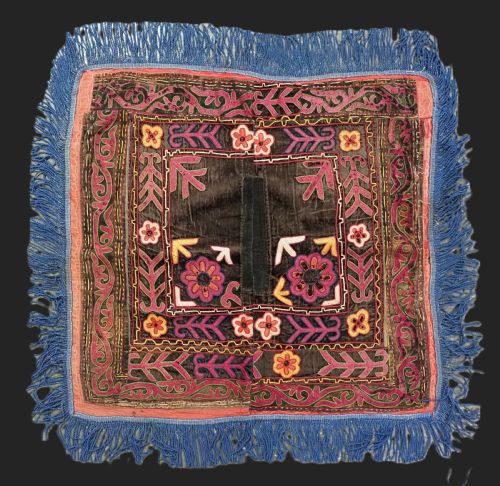
Makers utilised silk, cotton, and wool grounds, applying dense needlework to depict floral motifs, geometric symbols, and figurative scenes. Objects take forms suited to interior decoration, including wall hangings, table screens, and saddle covers preserved under glass or mounted on fabric.
Originating from workshops and nomadic communities in regions such as Bokhara, Tashkent, and Samarkand, these items reflect distinct regional aesthetics. Central Asian tribal pieces contrast with Chinoiserie and Qing dynasty style silk work, offering collectors diverse approaches to historic stitchery.
What varies in quality
Quality in these textiles depends on the density of the stitchwork, the complexity of the design layout, and the preservation of the ground material. Fully embroidered suzanis and finely detailed figural panels demonstrate greater artisan investment than sparse linear compositions.
The integrity of the original ground fabric and the vibrancy of the remaining silk threads determine the visual impact of the piece. Examples featuring balanced palettes and secure mounting or framing hold stronger presence within a collection.
Asian Embroidered Art Retail Price Guide 2026
Typical asking prices for asian embroidered art among the pieces listed under this phrase on Sellingantiques today, from the lower quarter to the upper quarter. They describe what is for sale here now, not the wider market.
Listings feature textiles spanning from 1850 through the 1930s, incorporating silk, wool, velvet, and metallic thread.
The Asian Embroidered Art Glossary
- Suzani
- A large, embroidered tribal textile originating from Uzbekistan and surrounding Central Asian regions, traditionally created as part of a bride's dowry. These pieces typically feature bold floral motifs arranged on cotton grounds.
- Ilgich
- A small embroidered wall hanging or dowry piece produced by the Lakai tribe in Central Asia. They are recognised by geometric motifs and spirited use of silk thread.
- Torba
- A small hanging bag or trapping produced by Turkmen and related tribes, often featuring an embroidered face and secondary highlights. They served both utilitarian and decorative functions within nomadic dwellings.
- Chyrpy
- A traditional ladies ceremonial coat from Turkmenistan, heavily embroidered across the upper torso and back with geometric and floral patterns in silk.
- Palak
- A fully embroidered Tashkent suzani style where the ground fabric is entirely covered in dense needlework, often dominated by large lunar or floral medallions.
Asian Embroidered Art: Frequently Asked Questions
How are antique suzanis displayed safely?
Suzanis are typically mounted on padded wooden stretcher frames or supported by conservation-grade backing fabric to distribute weight evenly.
Direct attachment through the historic textile should be avoided to prevent pulling or tearing the original foundation material.
What is the difference between an ilgich and a suzani?
An ilgich is a specific, generally smaller type of dowry embroidery produced by the Lakai tribe, often displaying distinct geometric shapes.
Suzanis are substantially larger wall hangings created across various urban and rural centres in Uzbekistan with prominent floral layouts.
How do I identify a Lakai tribal piece?
Lakai embroidery is characterised by energetic, highly stylised geometric motifs, asymmetric layouts, and thick silk satin stitches.
These pieces frequently appear as small wall hangings, saddle covers, or domestic furnishings created in Central Asia around the early twentieth century.
Can framed silk panels be kept in sunlight?
Historic dyed silk threads are sensitive to ultraviolet light and will fade significantly if exposed to direct sun for prolonged periods.
Displaying pieces away from windows and using UV-protective glass helps preserve the original colour tones of the needlework.