






Arts Crafts Pot Holder
These arts crafts pot holder pieces bring tactile warmth to interiors through honest hand-hammered metals and rich ceramic glazes.
Arts Crafts Pot Holder
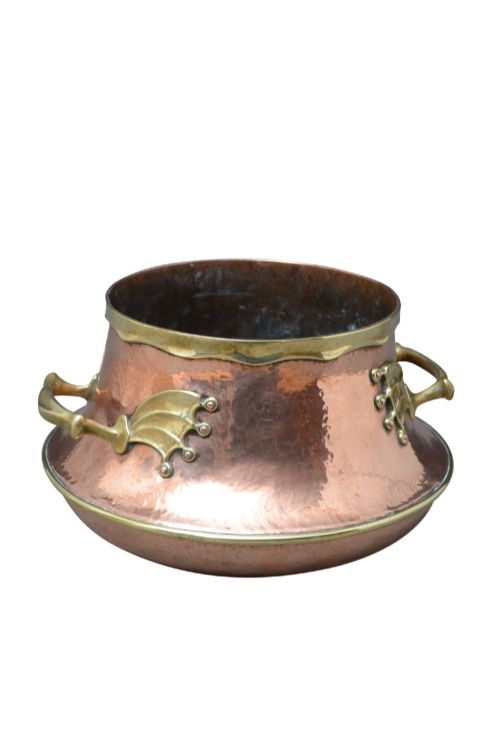
An arts crafts pot holder serves to display plants and foliage within domestic spaces while expressing the hand-worked ideals of the movement. Buyers searching for an arts crafts pot holder encounter substantial vessels designed to hold heavy earthenware pots and greenery.
The selections span jardiniere vessels, planters, waste bins, buckets, and plant stands originating from the late nineteenth century through the early twentieth century. Examples align closely with Victorian, Arts and Crafts, and Art Nouveau design vocabularies.
Formats vary from square brass stands to large vessels featuring lions mask handles or wrought iron supports. The most frequent encounters on this page are metal jardiniere vessels shaped from copper and brass.
How they were made
Makers shaped these vessels primarily from sheet copper and brass, frequently employing hammering techniques to create textured surfaces that caught the light. Wrought iron served structurally for stands, handles, and supports, while ceramic pieces received decorative glazes.
Craftsmen joined heavy sheet metal using traditional methods, attaching decorative elements such as cast brass lions mask handles to the main body. Stoneware and ceramic bodies were thrown or moulded before receiving specialised glazes characteristic of the period factories.
Arts Crafts Pot Holder Retail Price Guide 2026
Typical asking prices for arts crafts pot holder among the pieces listed under this phrase on Sellingantiques today, from the lower quarter to the upper quarter. They describe what is for sale here now, not the wider market.
Lions resting on botanical guard duty appear quite fierce when cast in solid brass upon a jardiniere.
What varies in quality
Quality rests upon the depth and regularity of the hand-hammered work on metal surfaces, distinguishing purposeful hand-craftsmanship from simpler commercial production. Weight and gauge of the copper or brass determine the structural integrity of larger jardiniere vessels.
The refinement of cast additions like lions mask handles or wrought iron legs separates standard utilitarian objects from works designed with distinct artistic ambition. Surface preservation and the undisturbed natural patina of aged copper and brass also elevate the standing of individual pieces.
The Arts Crafts Pot Holder Glossary
- Jardiniere
- A large ornamental pot or stand for holding plants or flowers. These vessels often sit directly on the floor or on dedicated plant stands.
- Planter
- A container used for growing and displaying plants indoors. They differ from standard flowerpots by featuring decorative exterior treatments.
- Wrought iron
- Iron that has been heated and shaped with hand tools by a blacksmith. This material provides sturdy structural support in plant holders and stands.
- Art Nouveau
- A style of art and design characterised by flowing, organic lines inspired by natural forms. This aesthetic appears frequently on brass planters from the early twentieth century.
- Patina
- The natural surface change that develops on metal and wood over extended periods of time. A desirable patination shows age and authentic handling.
Arts Crafts Pot Holder: Frequently Asked Questions
What is an arts crafts pot holder?
An arts crafts pot holder is a decorative vessel or stand designed to contain potted plants inside the home. These items emphasise honest materials and handmade qualities.
They reflect late nineteenth and early twentieth-century design principles, moving away from mass-produced ornament in favour of tactile metalwork and ceramics.
How were these metal vessels used?
These vessels functioned primarily to house indoor potted palms, ferns, and flowering plants during the Victorian and Edwardian eras. They protected interior surfaces while adding organic green elements to rooms.
Larger versions stood directly on the floor or on low plant stands, while others sat upon tables or fireplaces.
How do I care for antique copper?
Antique copper requires minimal intervention to preserve its character and historical surface. Most collectors prefer to leave the natural aged patina untouched rather than polishing the metal to a bright shine.
Gentle dusting with a dry cloth is sufficient for daily maintenance, avoiding harsh chemical cleaners that strip the finish.
How can I tell the period?
Dating relies on stylistic markers, construction methods, and material choices associated with specific eras. Victorian examples often display heavier classical influences, while Art Nouveau pieces favor flowing organic lines.
Arts and Crafts items prioritize visible hand-hammering and sturdy construction using copper, brass, and wrought iron.