

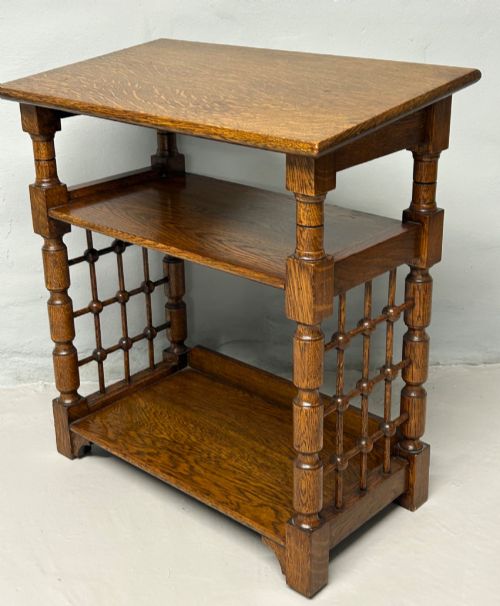


Arts and Crafts Trough
These arts and crafts troughs and companion oak stands bring honest construction and utility into daily rooms.
Arts and Crafts Trough
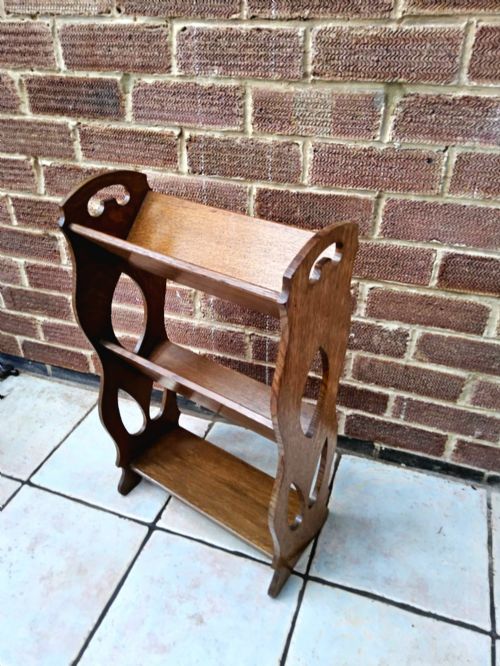
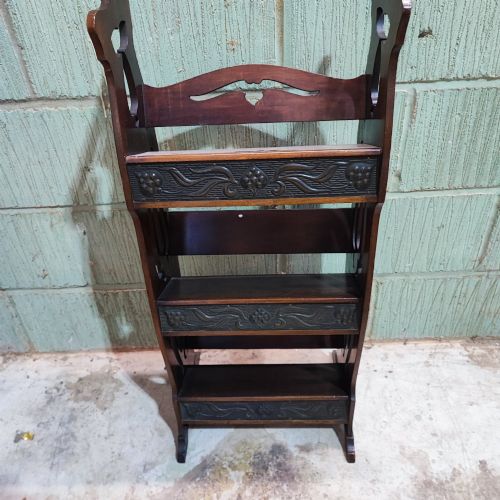
When you search for arts and crafts troughs, you find a practical mix of open-front slope-shelf book troughs, magazine racks, and metal jardinieres designed for domestic use. The pieces on this page span the Victorian, Edwardian, and early twentieth-century periods, showing the characteristic utility of the movement.
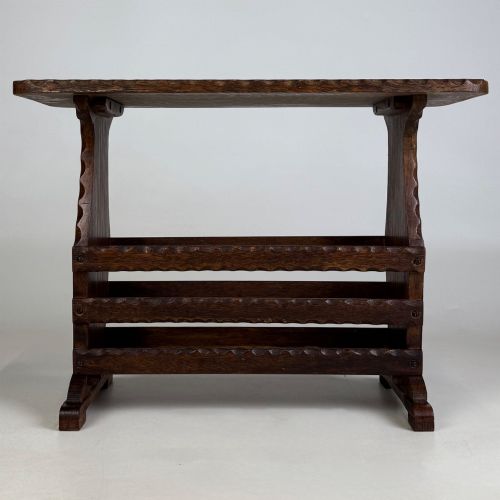
Oak dominates the wooden items, often rendered in golden tones or plain finishes, while metal examples utilise copper and brass for vessels and planters. Forms range from small table-top revolving bookcases to floor-standing book stands and side tables combined with magazine storage.
Origins stretch across British workshops and include French interpretations alongside Irish carved examples. You are most likely to meet sturdy oak book stands and copper vessels bearing simple, functional designs suited to holding books and plants.
Materials and construction
Makers relied heavily on solid oak, mahogany, and satinwood for the wooden furniture, shaping them into slope-shelf bookcases, tables, and racks. Grain pattern and timber selection formed the primary visual interest, sometimes enhanced with modest inlay or carving.
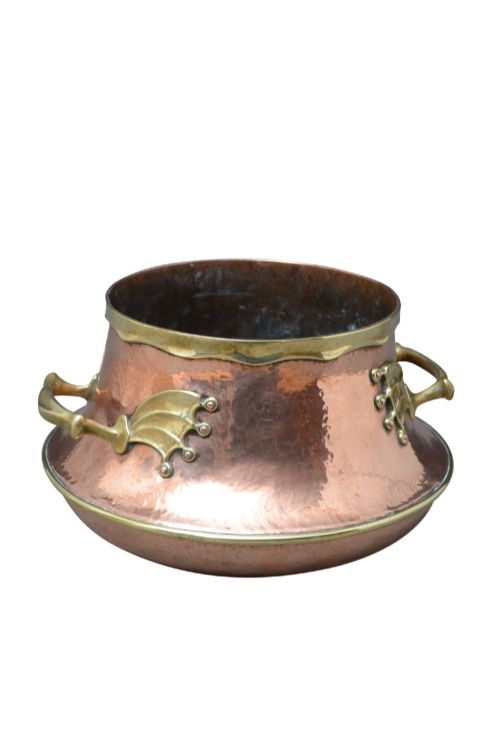
Metal elements like jardinieres and bowls combined copper and brass, occasionally featuring hand-be hammered surfaces or linings of zinc to hold damp plants. Cane and glazed stoneware also appear in specific planter models, providing textural contrast to the timber and metal work.
Construction techniques prioritised straightforward utility, resulting in sturdy open-front shelves, multi-tier bookcases, and stable stands designed to withstand daily handling. Joinery remained functional, supporting the heavy loads of books and potted plants without excessive ornamentation.
Arts and Crafts Trough Retail Price Guide 2026
Typical asking prices for arts and crafts trough among the pieces listed under this phrase on Sellingantiques today, from the lower quarter to the upper quarter. They describe what is for sale here now, not the wider market.
Object forms range widely from two-tier bookcases and revolving stands to copper Gladstone bag planters.
Assessing quality and execution
Quality rests in the integrity of the timber selection and the weight of the metalwork. Superior examples show thoughtful grain matching in the oak or mahogany, alongside clean, purposeful lines in slope-shelf troughs and book stands.
Metal vessels vary according to the thickness of the copper or brass and the crispness of any hand-beaten detailing. Better jardinieres and planters maintain structural rigidity and balanced proportions when loaded with earth or heavy folios.
The degree of maker involvement elevates certain items, seen in crisply carved details on Irish oak stands or attributed workshop pieces. Poorer examples rely on plain, repetitive assembly without the thoughtful proportions that define the better tier.
Heals·Royal Doulton
The Arts and Crafts Trough Glossary
- Jardiniere
- An ornamental pot or stand for holding plants or flowers. These items often feature metal construction like copper or brass, sometimes with inner linings.
- Slope-shelf
- A shelving design where the display surface tilts backward. This keeps books or magazines securely facing upward for easy reading.
- Revolving bookcase
- A small bookcase designed to spin on a central pivot base. They allow convenient access to a collection of volumes from a seated position.
- Golden oak
- A bright, warm finish applied to oak timber. This tone highlights the natural grain patterns popular during the Edwardian period.
- Aesthetic movement
- A late nineteenth-century design current emphasising visual beauty over narrative content. It influenced the decorative metalwork and furniture styles found in this group.
Arts and Crafts Trough: Frequently Asked Questions
How do I use a book trough today?
These open-front troughs suit tabletops, desks, or side tables for holding current reading material and notebooks.
Their shallow angled shelves keep volumes visible and accessible within living spaces or studies.
What is the difference between a trough and a bookcase?
A book trough is typically an open container with a sloped base designed for holding a selection of books upright on a surface.
Bookcases offer multiple stacked shelves for vertical storage of larger libraries.
Can copper planters hold live plants?
Many copper and brass vessels on this page served as jardinieres or plant stands.
Some include original metal or zinc liners intended to protect the exterior structure from moisture.
How do I date an oak book stand?
Dating relies on combining the period evidence like Victorian or Edwardian styles with construction methods and timber treatments.
Golden oak finishes and simple carved motifs typically point toward the late nineteenth or early twentieth century.