

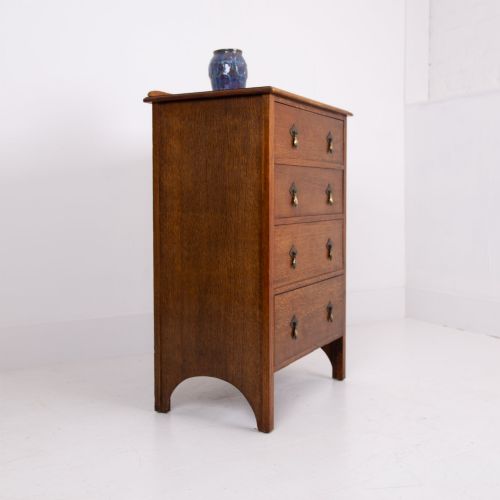
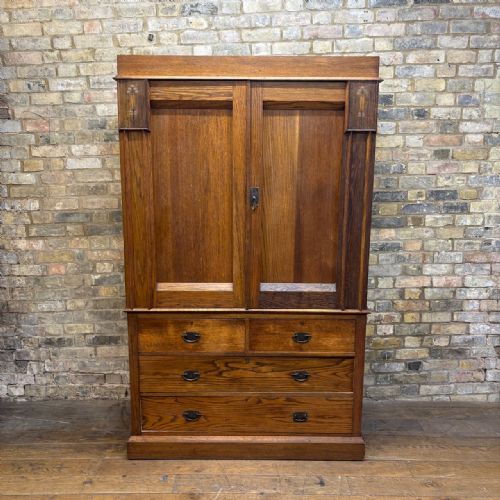
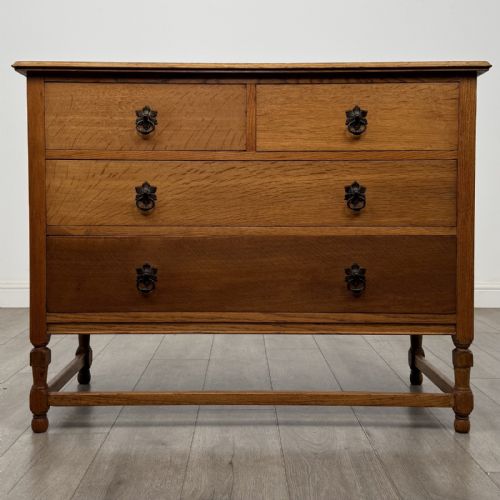
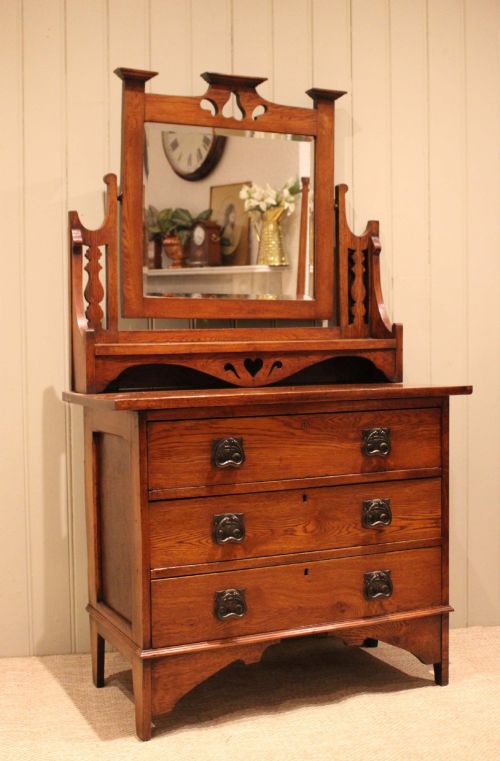


Arts and Crafts Oak Chest of Drawers
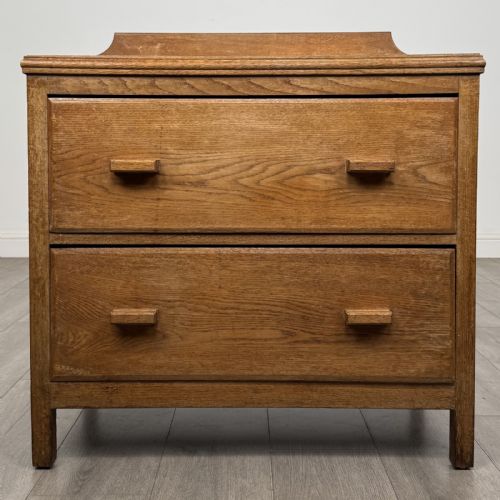
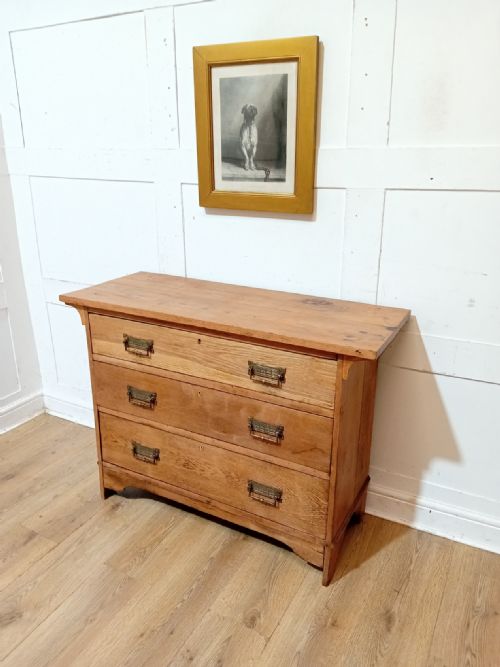
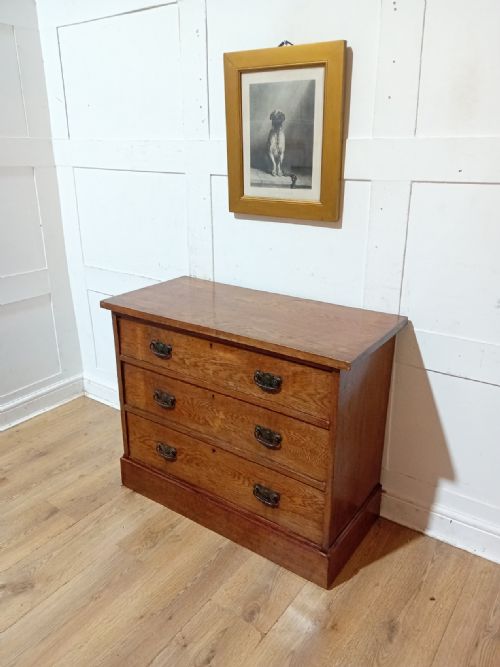
These arts and crafts oak chest of drawers pieces bring honest timber and functional design straight into a modern bedroom.
Arts and Crafts Oak Chest of Drawers
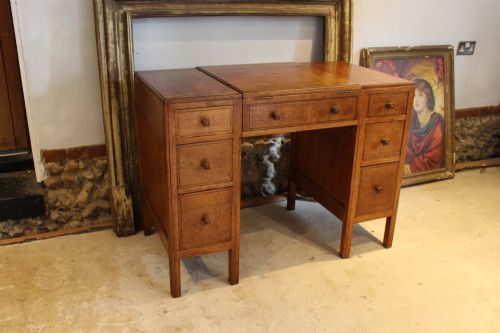
An arts and crafts oak chest of drawers appears across multiple decades, originating primarily from the late Victorian and Edwardian periods up to the nineteen thirties. These bedroom pieces range from standard drawer chests to dressing chests, writing bureaus, and complete bedroom suites.
The version most commonly met on this page is constructed from solid oak, sometimes finished with a raised gallery or incorporated into a larger dressing table. Workshops produced these items in various regional British centres, reflecting the shift away from industrial mass production towards simpler, sturdier forms.
Materials and construction
Makers relied principally upon solid oak, occasionally pairing secondary timbers like ash or incorporating brass hardware, glass mirrors, and ceramic or metal details. Surfaces were often waxed, polished, or treated with a limed finish to highlight the natural grain of the wood.
Joinery remained robust and visible, prioritising structural integrity over applied ornamentation. Drawers were fitted cleanly within frames, and decorative elements derived from the natural properties of the timber rather than elaborate carving.
Arts and Crafts Oak Chest of Drawers Retail Price Guide 2026
Typical asking prices for arts and crafts oak chest of drawers among the pieces listed under this phrase on Sellingantiques today, from the lower quarter to the upper quarter. They describe what is for sale here now, not the wider market.
Some sentry chests were built narrow enough to fit into tight Victorian hallway corners without blocking the umbrella stand.
Judging the standard
Quality rests upon the selection of timber, the integrity of the joinery, and the retention of original fittings such as brass handles and bevelled glass mirrors. Pieces displaying labelled maker attribution or documented workshop origins generally demonstrate superior execution in proportion and detailing.
The refinement of the surface finish and the balance between utility and decorative restraint distinguish standard utilitarian items from those designed by prominent architects and cabinetmakers of the movement.
Heals·Heal And Sons·Wright And Hunter Of Belfast·George Walton·Harris Lebus Of London·Peter Waals·Whytock And Reid Of Edinburgh
The Arts and Crafts Oak Chest of Drawers Glossary
- Raised gallery
- A low wooden upstand or shelf attached to the top rear of a chest, designed to keep items from sliding off. This feature often incorporates small compartments or a mirror.
- Dressing chest
- A lower chest of drawers fitted with a tilting mirror and sometimes small trinket drawers, combining storage with a dressing table function.
- Limed oak
- A pale, pickled finish applied to oak timber to lighten its natural colour and accentuate the grain pattern. Makers utilised this technique to achieve a contemporary aesthetic during the movement.
- Cotswold school
- A regional British design movement associated with handcrafted furniture production, focusing on traditional joinery methods and visible construction. Peter Waals stands as a primary exponent of this tradition.
Arts and Crafts Oak Chest of Drawers: Frequently Asked Questions
How do I care for an oak chest?
Keep the timber away from direct heat sources and sudden humidity changes to prevent the solid oak from splitting or warping over time. Apply a traditional beeswax polish occasionally to maintain the lustre of the waxed surface.
Avoid using modern chemical sprays or silicone polishes, as these build up and dull the natural grain. A soft, dry cloth is sufficient for regular dusting.
Can I use a dressing chest as a normal chest?
A dressing chest functions primarily as a standard chest of drawers with the addition of a mirror superstructure attached to the top. The drawer capacity remains practical for clothing storage.
If the mirror is detachable, the base piece can sit independently in a room lacking the vertical clearance for the full height.
How do I date these chests?
Examine the construction methods, drawer linings, and hardware styles to establish a baseline era, cross-referencing these details with periods spanning from the late nineteenth century to the nineteen thirties. Labelled pieces or documented maker marks provide the most direct confirmation of date.
Stylistic shifts, such as the transition from Victorian Gothic heaviness to lighter Edwardian and Cotswold school designs, also help narrow the decade of production.
What is Cotswold school furniture?
The Cotswold school represents a specific strand of British craftsmanship focused on handcrafted construction, honest materials, and traditional joinery. Pieces from this tradition avoid industrial shortcuts and emphasise the natural qualities of oak.
Furniture from this movement often exhibits clean lines and a direct link to the ideals set down by early craft reformers.