





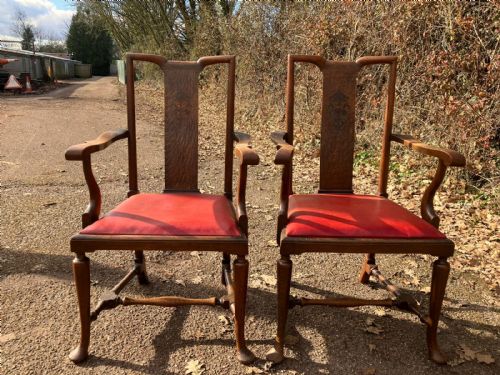


Arts and Crafts Library Chair
An arts and crafts library chair brings sturdy oak and honest joinery to a reading room, offering both comfort and functional utility.
Arts and Crafts Library Chair
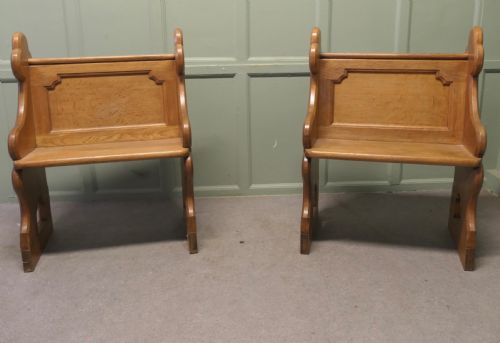
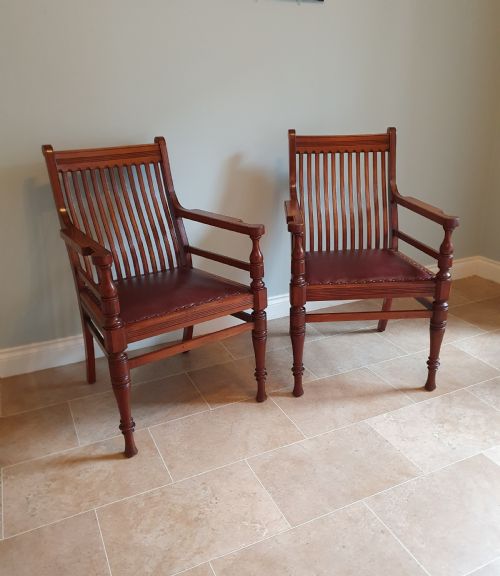
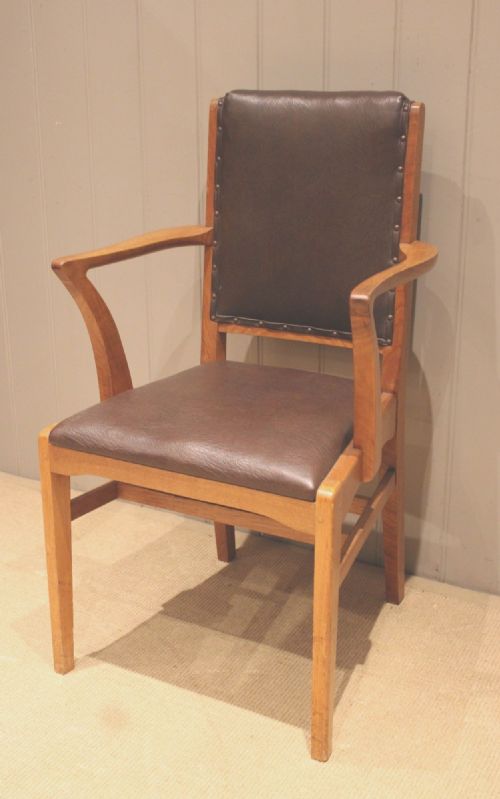
These arts and crafts library chairs span the late nineteenth century through to the early twentieth century, taking forms such as desk armchairs, fireside seats, and clever metamorphic step chairs. Most examples encountered here are built from solid oak or walnut, often fitted with original leather or fabric seats.
Makers of the period favoured straightforward construction over excessive ornamentation, resulting in robust armchairs and hall chairs suited to daily study. Pieces range from plain vernacular designs to sophisticated pieces influenced by the Scottish School and Gothic Revival styles.
The selection includes adjustable reclining models and pairs of chairs designed for partner desks or reading tables. The emphasis throughout remains on practical seating that reflects the ideals of the movement.
Materials and Construction
Oak and walnut form the structural backbone of these chairs, complemented by brass hardware, metal studs, and copper accents. Timber surfaces are typically finished to display the natural grain rather than hidden under heavy varnish.
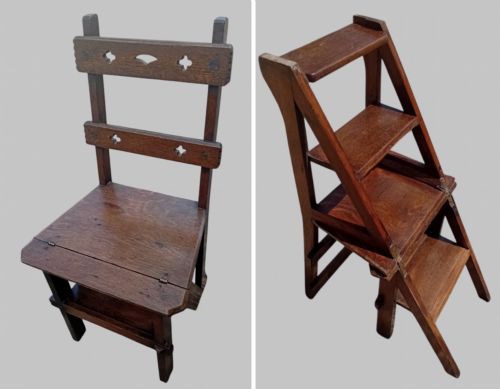
Upholstery relies on durable materials such as leather, velvet, and woven fabric, secured with traditional tacks or decorative studs. Metamorphic designs incorporate clever hinges and pivots that transform a standard armchair into a set of library steps.
Joinery is exposed and honest, celebrating pegged joints and mortise and tenon construction rather than concealing the skeleton of the seat.
Periods represented range from Victorian Gothic Revival and Edwardian workshops through to 1920s designs.
Assessing Quality
Quality in these chairs lies in the weight of the timber and the integrity of the structural frame. Better examples display careful hand-carving and thoughtful proportion, whereas lesser pieces rely on simple, mass-produced turning.
The sophistication of the mechanism distinguishes standard seating from metamorphic library chairs. Smooth movement in folding steps and robust pivoting hardware separate superior workshop output from utilitarian office furniture.
Gillows·Bruce James Talbert·Foot and Sons
The Arts and Crafts Library Chair Glossary
- Metamorphic chair
- A dual-purpose piece of furniture that converts from a library armchair into a set of steps for reaching high bookshelves. This ingenious form relies on hidden hinges and sturdy pivots.
- Scottish School
- A regional manifestation of the Arts and Crafts movement known for clean vertical lines and restrained decoration. Pieces from this tradition often feature simplified structural forms.
- Gothic Revival
- An architectural and decorative style drawing on medieval precedents, evident in pointed arches and heavy carved tracery. This aesthetic often merges with Arts and Crafts framing.
- Pugin style
- A design approach inspired by Augustus Pugin, prioritising structural honesty and medieval ecclesiastical motifs. Such chairs use solid timber and earnest joinery.
- Desk armchair
- A supportive seat designed for prolonged reading or writing, usually featuring arms set at a height to clear a tabletop. These often include swivel mechanisms or adjustable heights.
Arts and Crafts Library Chair: Frequently Asked Questions
What is a metamorphic library chair?
A metamorphic library chair is a dual-purpose piece engineered to transform from a standard armchair into a set of wooden steps. These ingenious items allowed readers to reach high bookshelves without fetching a separate ladder.
The mechanics rely on clever pivots and folding seat backs that lock securely into position whether used for sitting or climbing.
How do I identify Arts and Crafts furniture?
Arts and Crafts furniture is defined by honest construction, exposed joinery, and a celebration of natural wood grains like oak and walnut. Ornamentation is minimal and functional rather than superfluous.
Look for pegged mortise and tenon joints, hand-hammered copper or brass hardware, and sturdy, unpretentious silhouettes.
Where should I place a library chair?
These sturdy chairs suit studies, home libraries, or quiet reading corners where their supportive arms and solid timber frames can be appreciated. They pair well with writing desks or alongside a fireside.
Because many examples feature leather upholstery or reclining backs, they offer practical comfort for daily reading.
How do I care for leather upholstery?
Leather seats require regular dusting with a dry cloth and occasional treatment with a suitable leather conditioner to prevent drying and cracking. Avoid placing antique chairs in direct sunlight or near direct heat sources.
Gentle care preserves the natural patina and keeps the material supple over decades of use.