


Arts and Crafts Compactum
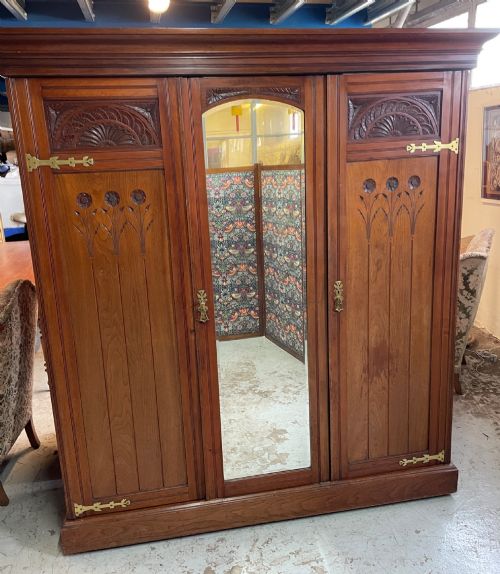
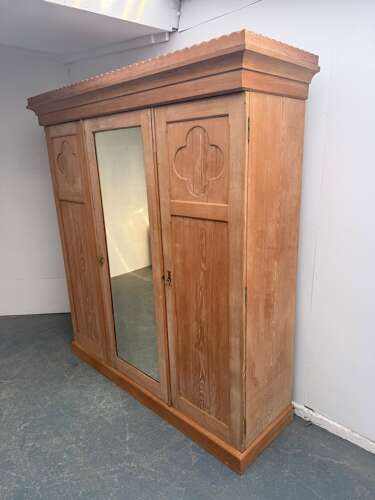
These arts and crafts compactum pieces offer substantial fitted storage in native woods, combining honest construction with practical domestic design.
Arts and Crafts Compactum
An arts and crafts compactum provides an all-in-one bedroom storage solution, combining hanging space, drawers, and shelving within a single large footprint. Buyers seeking these items usually encounter substantial wardrobes in oak, ash, or pitch pine dating from the late nineteenth and early twentieth centuries.
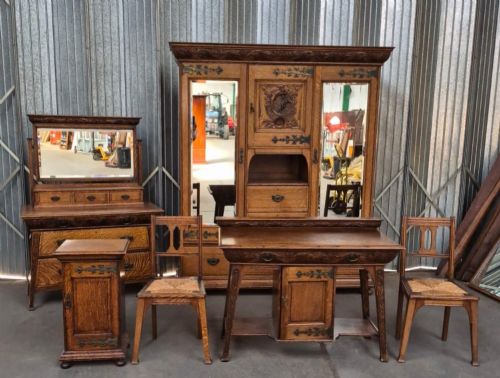
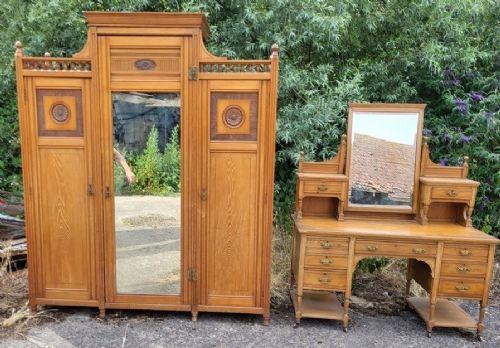
The pieces on this page span the Victorian, Edwardian, and later periods around nineteen hundred, reflecting the shift towards functional furniture. Most examples combine multiple internal compartments, often featuring central mirror doors alongside panelled sections.
Makers utilised resilient timbers to build these substantial pieces, with golden oak and ash appearing frequently across the inventory. Surviving suites sometimes include matching dressing chests and pedestals to complete the bedroom layout.
Materials and Construction
Carpenters built these compactums primarily from solid oak and ash, frequently utilising pitch pine for internal framing and drawer linings. Timber selection focused on durability and honest grain display, avoiding heavy veneers in favour of honest solid construction.
Metalwork played a key structural and decorative role, with exposed brass and iron hinges, handles, and strapwork securing the heavy doors. Glass panels, occasionally in leaded or mirrored formats, added light to tall wardrobe facades.
Listings feature oak, ash, and pitch pine construction, spanning the Victorian period through the nineteen thirties.
Evaluating Craftsmanship
Quality in an arts and crafts compactum rests on the integrity of the timber selection and the precision of the joinery. Finer pieces display well-figured grain, robust internal drawer construction, and original metal hardware rather than later replacements.
The presence of documented workshop labels or distinctive decorative details, such as leaded glass panels or inlaid motifs, separates standard production items from superior examples. Proportion and the clever integration of internal compartments also determine the standing of each piece.
Shapland and Petter·Maple and Co·Heals
The Arts and Crafts Compactum Glossary
- Compactum
- A large multi-functional wardrobe that combines hanging space, sliding trays, and drawers within one housing. This form maximises bedroom storage efficiency.
- Lead light
- A window or door panel composed of small glass panes held together by lead caming. These panels frequently feature geometric arts and crafts designs.
- Pitch pine
- A durable resinous softwood utilised for internal framing and structural elements. Cabinetmakers valued it for its strength and straight grain.
- Gentleman's wardrobe
- A tall storage piece traditionally configured with sliding shelves or shallow drawers on one side and a hanging compartment on the other.
- Dressing chest
- A low chest of drawers fitted with an attached mirror, often produced as part of a larger bedroom suite.
Arts and Crafts Compactum: Frequently Asked Questions
How do I dismantle a compactum for transport?
Most large wardrobes of this period were designed to dismantle into manageable sections, including a cornice, base, and separate side carcases. Removing the internal sliding trays and doors first reduces weight and prevents damage to the hinges during transit.
Securing loose screws and labelling internal components ensures straightforward reassembly in a new room.
Are these wardrobes suitable for modern hangers?
Early wardrobes often feature shallower internal depths than contemporary closets, requiring front-to-back hanging rails or specialised shorter hangers. Some original configurations relied entirely on wooden pegs or sliding clothes trays rather than modern hanging space.
Checking the internal depth before purchase ensures the piece meets everyday wardrobe requirements.
How do I care for the waxed oak finish?
Maintain the timber surfaces by applying a traditional beeswax polish sparingly and buffing with a soft cloth. Avoid placing these pieces near direct heat sources or strong sunlight, which can dry out the historic wood and crack the polish.
Regular light dusting preserves the natural lustre of the oak and ash grain over time.
How do I distinguish Edwardian pieces from Victorian ones?
Victorian examples tend to display heavier proportions and darker finishes, whereas Edwardian pieces often exhibit lighter tones in ash or quarter-sawn oak. The decorative motifs also shift from ornate carved details towards the simpler geometric lines characteristic of the arts and crafts movement.
Examining the construction of internal drawers often reveals clues about the manufacturing period.