



Art Nouveau Storage
Art nouveau storage brings together practical furniture and flowing decorative design from the turn of the twentieth century to organise any room.
Art Nouveau Storage
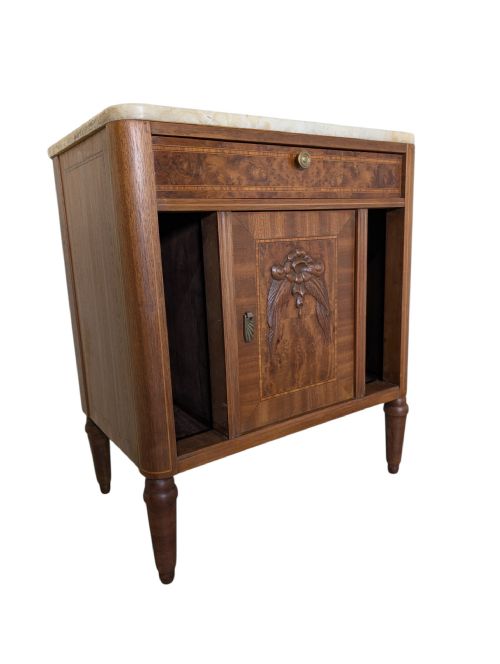
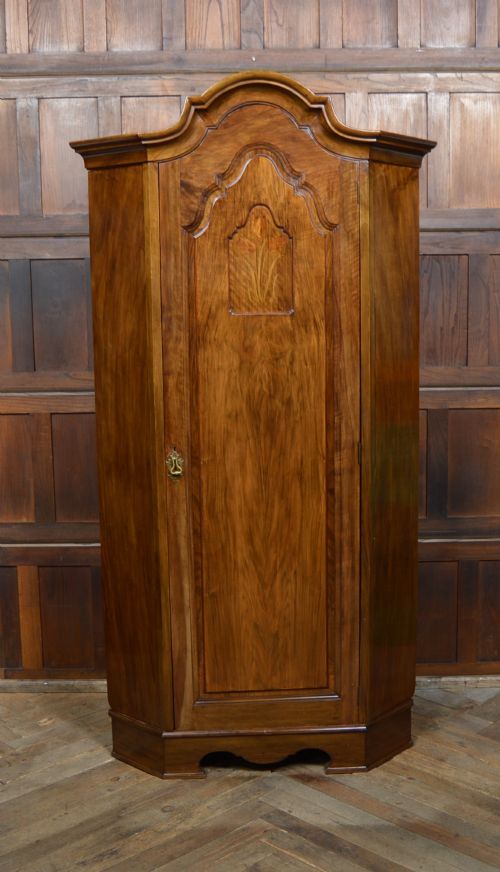
Art nouveau storage spans practical furniture forms designed to conceal clutter while bringing organic, flowing lines into domestic spaces. Buyers seeking these items will find cabinets, settles, music cabinets, and wardrobes originating from the late nineteenth century through to the Edwardian period.
The pieces appearing most frequently range from oak settles and music cabinets to sideboards and pine cupboards. These items bridge utilitarian needs with decorative ambition, drawing on both Arts and Crafts traditions and French continental design.
Origins stretch across England, Scotland, Sweden, and France, reflecting diverse regional interpretations of the style. Makers utilised native and imported timbers like mahogany, walnut, oak, and birch to construct functional household containers.
How they were made
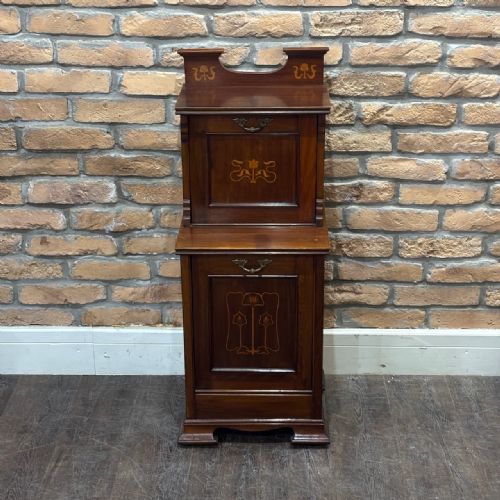
Constructed primarily from solid hardwoods and softwoods such as oak, mahogany, walnut, and pine, these storage pieces rely on traditional joinery paired with decorative elements. Wood inlay, brass fittings, and copper panels frequently accent the structural timber.
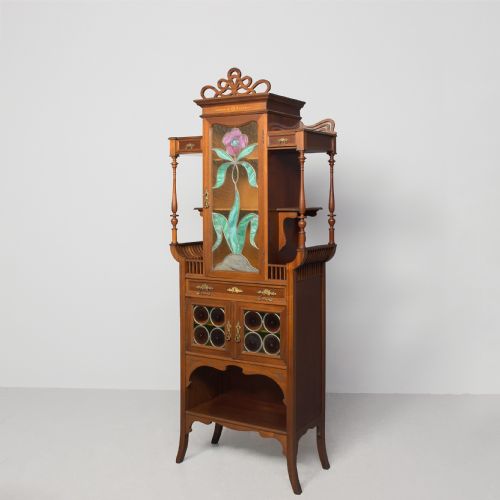
Techniques combine structural cabinet making with decorative surface treatments, including enamel painted glass, wax finishes, and original paint surfaces like brown scumble. Metal components often feature cast iron and beaten brass or copper shaping.
Stylistic details incorporate naturalistic motifs executed through wood marquetry, metalwork, and carved wooden panels. These methods unite structural utility with the characteristic flowing curves of the period.
Art Nouveau Storage Retail Price Guide 2026
Typical asking prices for art nouveau storage among the pieces listed under this phrase on Sellingantiques today, from the lower quarter to the upper quarter. They describe what is for sale here now, not the wider market.
Listings feature oak, mahogany, walnut, pine, birch, brass, and copper across pieces dating from 1880 to the Edwardian era.
What varies in quality
Quality rests in the integrity of the timber selection and the precision of the joinery, distinguishing utilitarian workshop output from ambitious studio pieces. Superior examples exhibit refined proportions and harmonious integration of decorative hardware.
The execution of decorative elements such as wood inlay, hand-beaten copper, and brass mountings dictates the standing of a piece. Finer items demonstrate meticulous attention to surface finish, whether waxed grain or painted detail.
Attribution to documented makers or specific design houses elevates the standing of an item within the field. The fluency of the carving and the preservation of original materials remain central to the distinction.
Shapland and Petter·GM Elwood·JS Henry·James Shoolbred and Co
The Art Nouveau Storage Glossary
- Settle
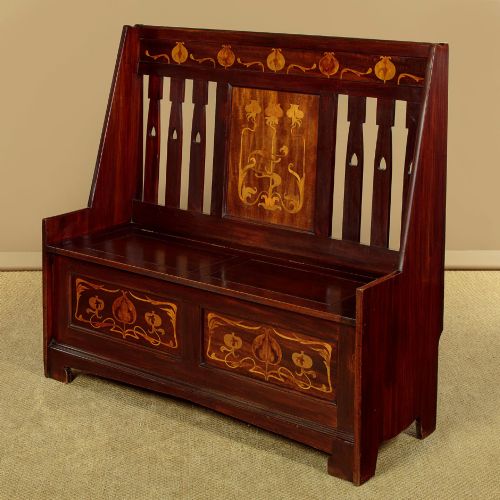
- A wooden bench with a high back, solid arms, and a compartment beneath the seat for storage. These items combine seating with practical containment for hallways and living rooms.
- Music cabinet
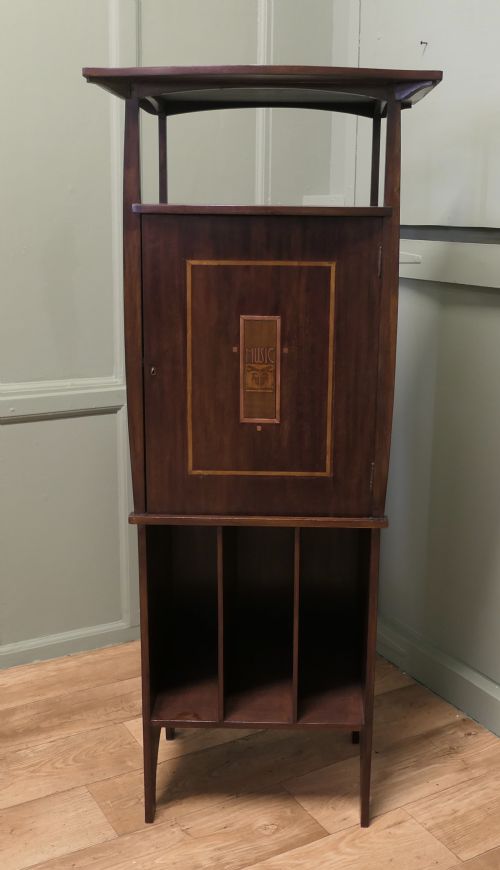
- A specialised small cabinet featuring internal shelves or drawers designed to hold sheet music. They often include fall fronts or glazed doors.
- Scumble paint
- A translucent glaze applied over a base coat and manipulated with combs or brushes to imitate wood grain. It provides a protective and decorative finish on pine furniture.
- Marquetry
- The art of applying decorative veneer pieces to a structure to form designs. Craftsmen utilise various woods to create naturalistic art nouveau motifs.
- Hall stand
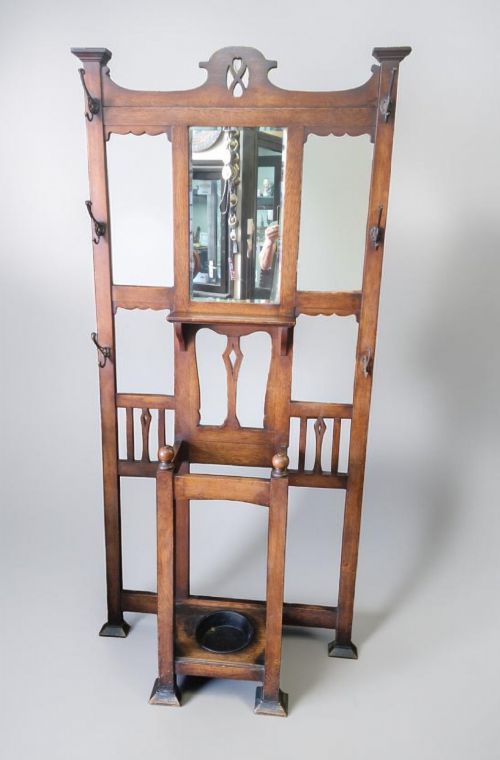
- A piece of furniture combining coat hooks, umbrella wells, and often a small compartment or drawer for gloves. They greet visitors in entrance halls with integrated storage.
Art Nouveau Storage: Frequently Asked Questions
What is an art nouveau music cabinet?
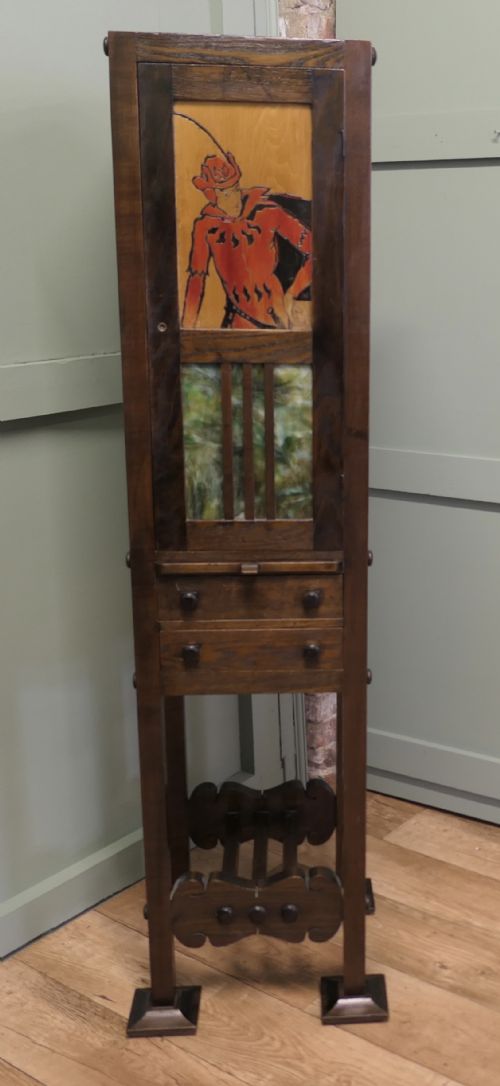
A music cabinet is a tall, slender piece designed specifically to store sheet music inside drawers or behind a door. These items often feature characteristic flowing plant motifs and brass hardware.
They offer compact storage suitable for smaller spaces while serving as decorative focal points in a room.
How do I identify an art nouveau settle?
An art nouveau settle is a wooden bench featuring a high back and a concealed storage box beneath the seat. Look for naturalistic curves, stylized floral inlays, and robust oak construction.
They were placed in hallways or fireside settings to provide both seating and a practical place to store household items.
What materials were used for these storage pieces?
Cabinet makers utilised a range of woods including oak, walnut, mahogany, birch, and pine. Metal accents in brass, copper, and cast iron frequently appear on handles, hinges, and coal bins.
Glass panels and painted finishes also occur, adding colour and texture to cabinets and sideboards.
Where were art nouveau cabinets made?
Production spanned British workshops, Scottish studios, French makers, and Scandinavian cabinet makers. Regional preferences influenced the choice of timber and the interpretation of organic decorative motifs.
English and Scottish pieces often lean towards sturdy oak construction, while French examples favour walnut and fluid carved lines.