


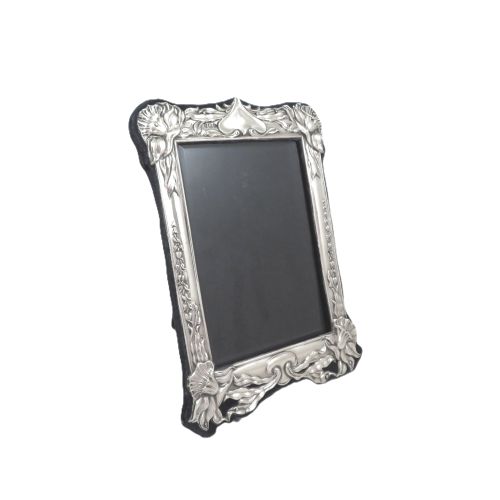


Art Nouveau Silver Picture Frame
An art nouveau silver picture frame brings sinuous organic line and tactile precious metal to your desk, capturing the enduring decorative spirit of the turn of the century.
Art Nouveau Silver Picture Frame
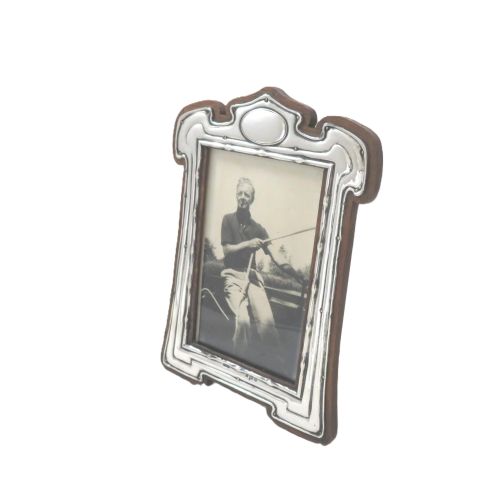
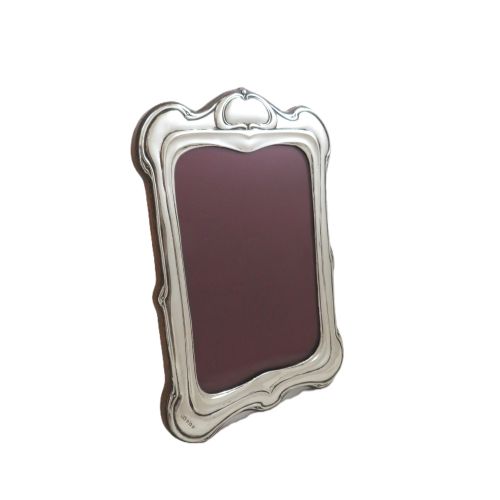
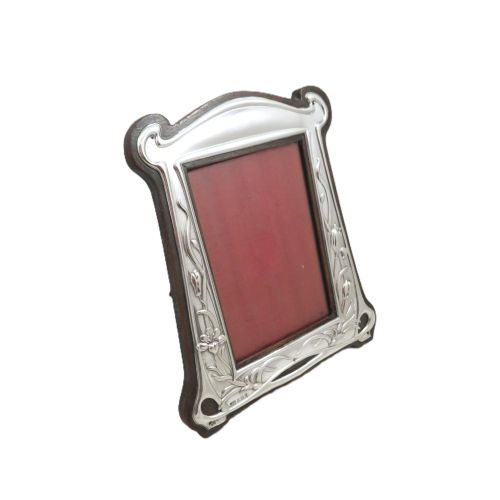
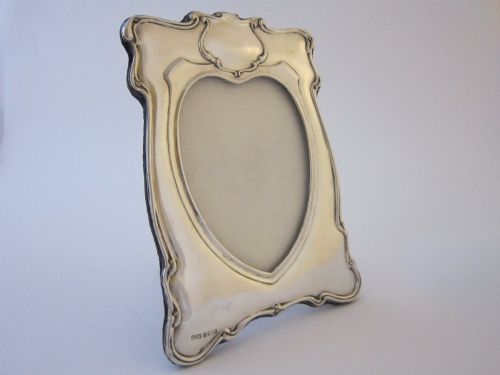
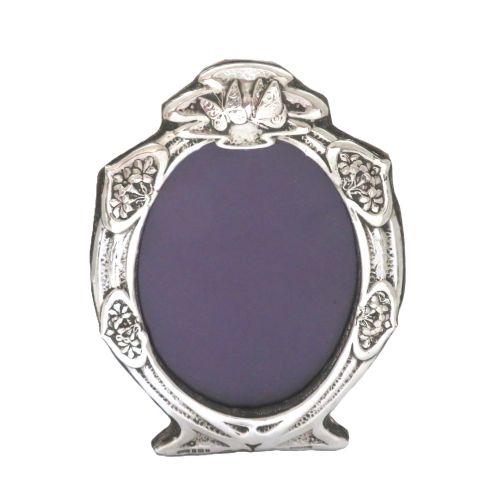
An art nouveau silver picture frame serves primarily to display personal photographs with artistic flair, emerging in various sizes from compact heart-shaped keepsakes to substantial eleven-inch panels. The versions most commonly encountered on this page date from the Edwardian era and the early nineteen-hundreds, reflecting the peak of flowing organic design.
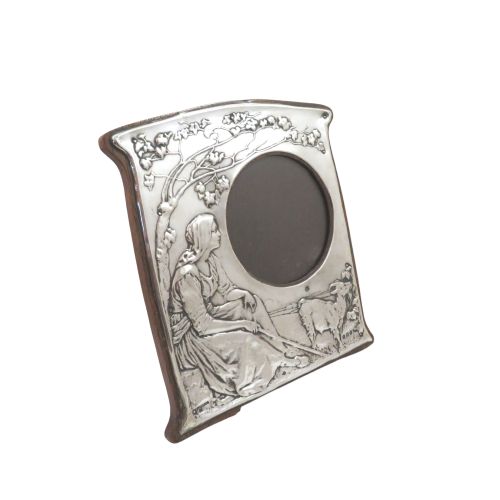
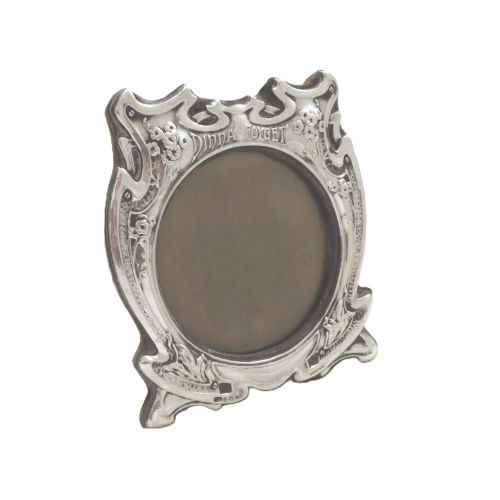
The objects combine functional mounts with distinctive motifs, incorporating romantic inscriptions such as 'Dinna Forget' alongside figural subjects like a girl with a goat or delicate butterfly details. Makers applied these dynamic botanical and figurative elements directly to sterling silver and occasionally pewter.
Beyond standard upright rectangles, the selection includes heart-shaped pieces and unusual geometric silhouettes that depart from traditional framing conventions. These items bridge domestic utility and decorative art, frequently supported by wooden backs lined with fabric or velvet.
How they were made
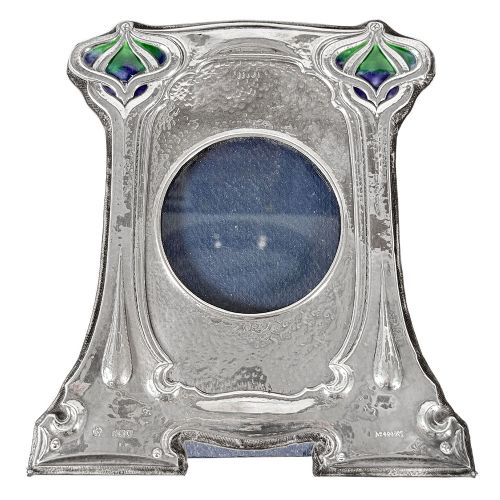
Metalsmiths shaped sterling silver and pewter through heavy embossing, chasing, and planished hammering to create the characteristic undulating surfaces and low-relief motifs of the period. Skilled artisans then integrated vitreous enamel panels to introduce vibrant colour contrasts into the metallic frames.
Frames rely on sturdy wooden internal structures to provide rigidity, covered at the rear with tactile fabrics like velvet to protect the supporting surfaces. Protective glass fronts were fitted to secure the watercolours or photographic prints housed within.
Art Nouveau Silver Picture Frame Retail Price Guide 2026
Typical asking prices for art nouveau silver picture frame among the pieces listed under this phrase on Sellingantiques today, from the lower quarter to the upper quarter. They describe what is for sale here now, not the wider market.
One frame preserves the poignant Scottish phrase 'Dinna Forget' stamped firmly into the silver, quietly pleading from a desk since nineteen-three.
What varies in quality
The depth and crispness of the hand-embossed or planished detail distinguish finer examples from simpler commercial production, as deeper chasing creates stronger shadows and movement. Quality also rests in the presence of complex polychrome enamel work and the structural integrity of the timber and velvet backing components.
Provenance and maker attribution elevate certain pieces significantly, particularly those bearing the marks of established workshops like William Hutton and Sons. The weight of the sterling silver used in the front mount indicates the original investment in materials.
William Hutton and Sons
The Art Nouveau Silver Picture Frame Glossary
- Sterling silver
- A silver alloy containing 92.5 percent pure silver and 7.5 percent other metals, usually copper, providing durability for intricate domestic objects.
- Planished
- A metal surface finish achieved by hammering with a small, flat-faced tool to produce a pattern of subtle, overlapping facets.
- Embossed
- A technique where the metal is raised from the reverse side using punches to create a low-relief decorative design on the front.
- Enamel
- A durable vitreous substance fused to the metal surface through high-temperature firing, adding decorative colour and shine.
- Aesthetic movement
- A late nineteenth-century design current that prioritised sensory beauty and artistic expression over strict historical revivalism.
Art Nouveau Silver Picture Frame: Frequently Asked Questions
How do I clean an art nouveau silver picture frame?
Clean sterling silver gently using a soft microfibre cloth and a specialist silver polish, taking care to avoid abrasive rubbing on embossed details.
Keep polishes away from fabric, velvet, and enamel elements, as chemical residues can permanently stain or damage these delicate surrounding materials.
What periods do these frames belong to?
The pieces on this page primarily date from the Edwardian era and the early nineteen-hundreds, alongside late nineteenth-century aesthetic movement examples.
Stylistic markers include whiplash curves, floral motifs, and hand-hammered surfaces typical of the broader arts and crafts movement.
How were these picture frames used originally?
Families placed them on writing desks, mantelpieces, and side tables to display cherished photographic portraits of relatives and friends.
They functioned simultaneously as personal mementos and miniature works of art that showcased the owner's sophisticated taste in interior decoration.
Can I replace the glass inside my frame?
Glass can usually be replaced by carefully lifting the retaining tabs or pins at the back of the timber and velvet support structure.
Take caution not to bend fragile sterling silver bezels or strain the historical wooden backing when accessing the interior aperture.