

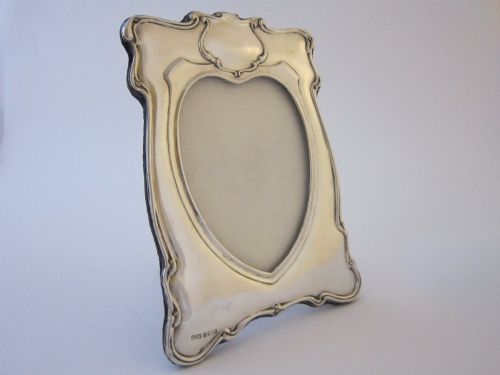
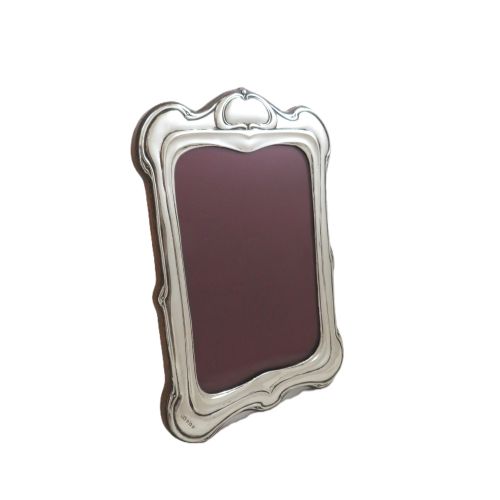
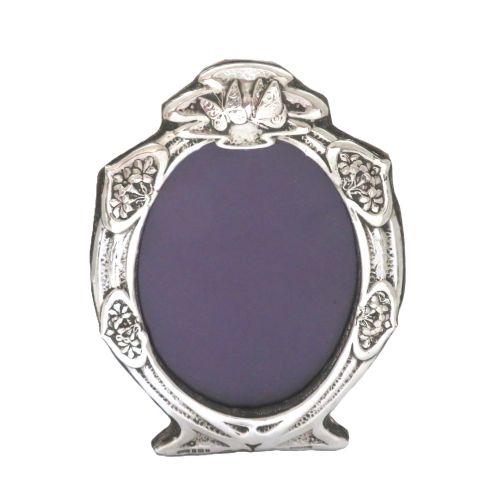
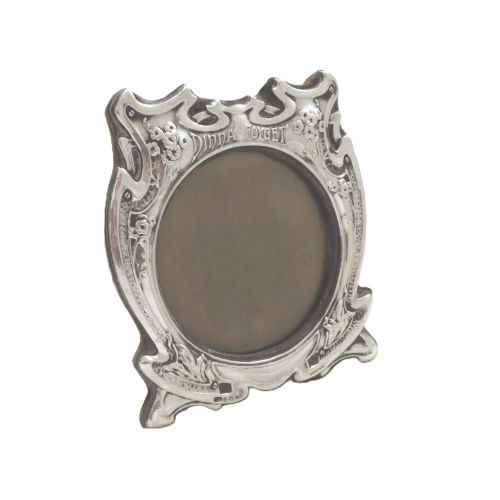
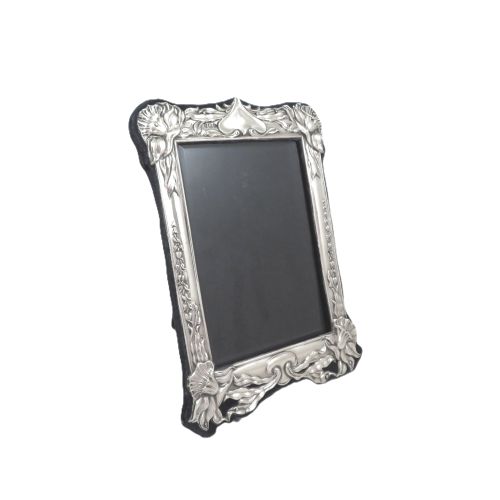


Art Nouveau Silver Photo Frame
An art nouveau silver photo frame brings sinuous organic lines and botanical motifs to the desk or mantelpiece.
Art Nouveau Silver Photo Frame
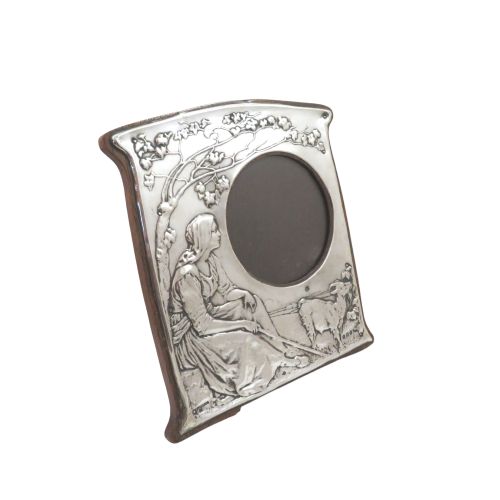
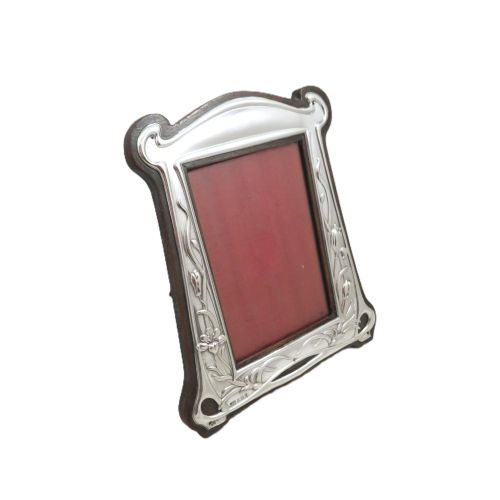
An art nouveau silver photo frame is defined by characteristic whiplash lines, asymmetrical floral motifs, and stylised depictions of animals or figures. Pieces matching this description span the late nineteenth century and the Edwardian period, often displaying hand-embossed or repoussé decoration.
The most common examples on this page are sterling silver photograph frames dating from the early nineteen-hundreds. They frequently incorporate whimsical subjects such as birds, squirrels, butterflies, and human profiles alongside vegetal scrolls.
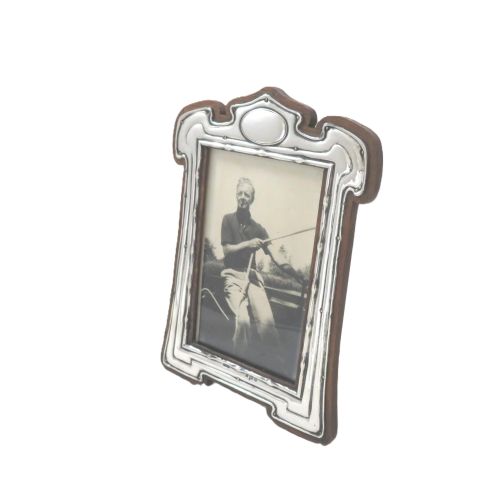
Beyond standard upright rectangles, hunters of these objects encounter heart-shaped formats, oval surrounds, and double-hinged folding pieces. Materials typically combine a sterling silver front with a wooden back and a velvet or fabric support strut.
Materials and technique
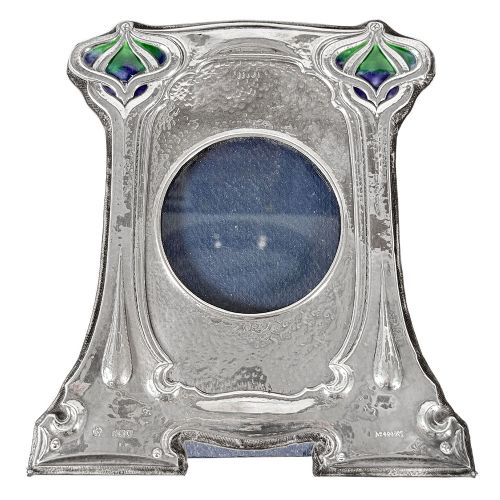
Makers shaped sterling silver sheet metal using hand-embossing and repoussé techniques to raise dynamic, flowing designs from the reverse. Planished finishes appear occasionally, showing subtle hammer marks across the metal surface that demonstrate manual labour rather than industrial stamping.
Enamel work frequently augments the silver mounts, introducing vibrant colour through translucent or opaque vitreous glazes. Pewter also emerges as a medium alongside silver, particularly in pieces influenced by the Aesthetic Movement.
Backings rely on timber such as oak or other woods, finished with fabric or velvet panels to hold the glass and photograph securely in place.
Art Nouveau Silver Photo Frame Retail Price Guide 2026
Typical asking prices for art nouveau silver photo frame among the pieces listed under this phrase on Sellingantiques today, from the lower quarter to the upper quarter. They describe what is for sale here now, not the wider market.
Listings feature sterling silver combined with wood, velvet, glass, and enamel across the Victorian and Edwardian periods.
Judging quality
Quality rests in the depth and crispness of the repoussé work, where deeply chased contours create strong relief against flat backgrounds. Shallower stampings sacrifice the tactile fluidity characteristic of the best workshops.
The weight of the sterling silver sheet dictates durability, separating robust mounts from thinner examples prone to distortion. The treatment of peripheral details, such as the joinery of the easel back and the quality of the glass retaining clips, completes the assessment.
William Hutton and Sons·A and J Zimmerman·Henry Matthews·Laurence Emanuel·William Neale
The Art Nouveau Silver Photo Frame Glossary
- Repoussé
- A metalworking technique where the artisan hammers and pushes the design from the reverse side to form a raised relief on the front. This method allows for highly detailed organic curves.
- Sterling silver
- An alloy consisting of silver and other metals, typically copper, maintaining a standard purity proportion. It provides the malleability required for intricate embossing.
- Aesthetic Movement
- A late nineteenth-century design current emphasising visual beauty above narrative content. Pewter and silver pieces from this period often display restrained naturalistic motifs.
- Easel back
- A hinged wooden or fabric-covered support strut attached to the reverse of the frame. It allows the object to stand upright on a flat surface.
Art Nouveau Silver Photo Frame: Frequently Asked Questions
How do I date an art nouveau silver photo frame?
Dating relies primarily on the hallmark stamped into the silver border, which identifies the assay office, metal purity, and date letter. Stylistic markers like organic motifs and whiplash lines generally point to the turn of the twentieth century.
Additional clues appear in the construction of the wooden back and the type of fabric used for the easel support. Comparing these elements with documented examples helps narrow down the decade of manufacture.
How were these frames used originally?
Victorians and Edwardians placed these items on mantelpieces, writing desks, and dressing tables to display portraits of family members. They functioned as both decorative art objects and sentimental keepsakes.
The inclusion of folding double formats allowed individuals to carry or display images of multiple relatives simultaneously in domestic interiors.
How should I clean a silver frame?
Cleaning requires a soft microfiber cloth and a mild silver polish formulated to preserve delicate embossed details. Harsh scrubbing can wear down the raised repoussé work and damage any surrounding enamel.
Care must be taken to avoid getting liquid polish onto the wooden backing or velvet lining. Gentle maintenance preserves the natural patina accumulated over decades.
What is the difference between art nouveau and arts and crafts frames?
Art nouveau frames favour asymmetrical, flowing plant motifs and dynamic whiplash lines designed to suggest natural growth. Arts and crafts examples tend to display a more restrained, structural approach with visible hand-crafting marks.
Both movements overlapped chronologically, and some workshops combined elements from each style in their silverwork and enamel embellishments.