

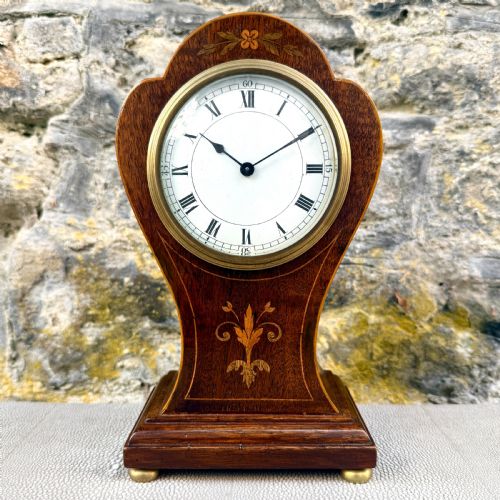


Art Nouveau Inlay Table
An art nouveau inlay table brings flowing organic motifs and precise woodwork together, offering a striking centrepiece for any room.
Art Nouveau Inlay Table
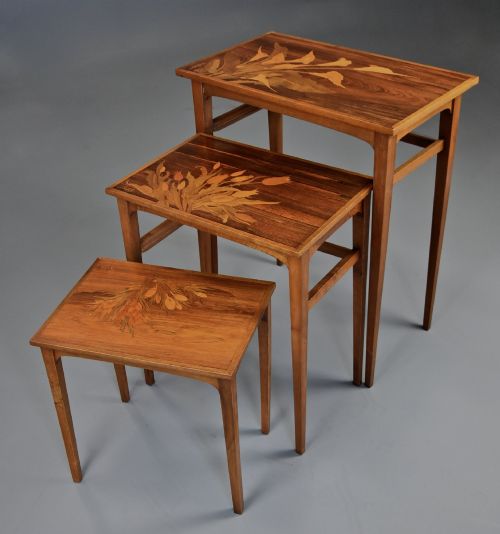
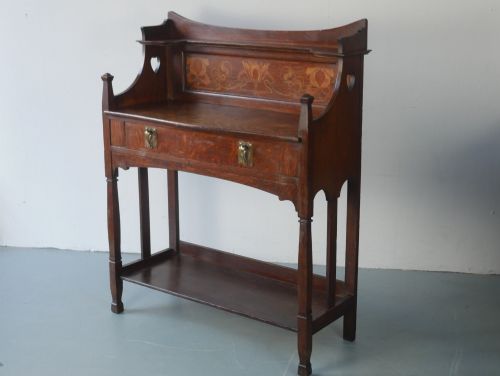
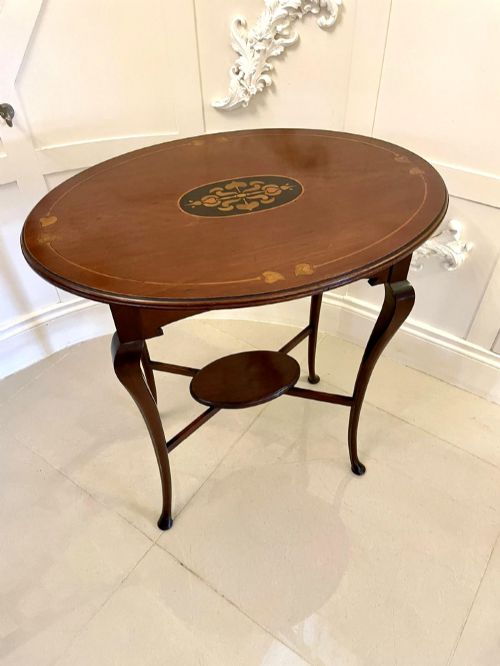
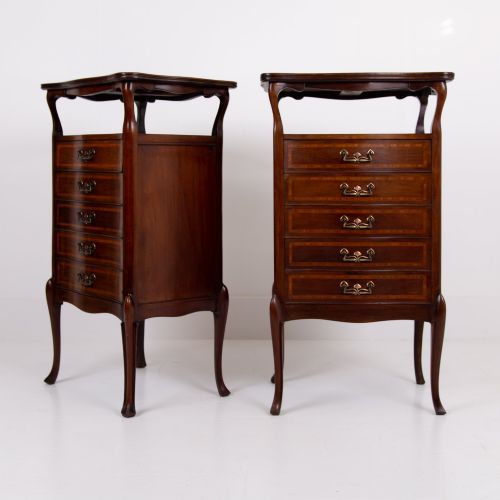
When you search for an art nouveau inlay table, you encounter occasional tables, side tables, lamp tables, and occasional side tables that showcase the defining decorative language of the turn of the twentieth century. These pieces emerge predominantly from the Edwardian era and around nineteen hundred, alongside related forms like revolving bookcases and occasional tables.
The aesthetic embraces floral motifs, particularly poppies, alongside curvilinear marquetry executed in contrasting timbers. Most examples follow traditional forms adapted to the fluid, nature-inspired lines characteristic of the movement.
Materials and construction
Cabinet makers utilised primary timbers such as mahogany, oak, satinwood, and coromandel as a base for intricate wood inlay. Workshops applied contrasting veneers to build up floral and botanical patterns across the tops and panels.
Makers integrated materials like brass and glass into specific furniture forms, while specialised techniques allowed for ebonised finishes and multi-wood specimen surfaces.
Art Nouveau Inlay Table Retail Price Guide 2026
Typical asking prices for art nouveau inlay table among the pieces listed under this phrase on Sellingantiques today, from the lower quarter to the upper quarter. They describe what is for sale here now, not the wider market.
Judging quality in these tables
Quality rests upon the precision of the marquetry and the choice of timbers, where crisp edges in the wood inlay separate standard production from superior cabinet work. The harmony between the structural timber, such as mahogany or satinwood, and the applied decorative elements dictates the visual success of the piece.
Proportion and the fluidity of the design line determine the refinement of an example. Finer tables display deliberate restraint and balanced composition rather than excessive ornamentation.
Emile Galle·Carlo Bugatti
The Art Nouveau Inlay Table Glossary
- Inlay
- A technique where pieces of contrasting timber or material are fitted into a recess in a base surface to form a flat decorative design. This method defines the primary surface decoration on these tables.
- Marquetry
- The art of applying pieces of veneer to a structure to form decorative patterns, often depicting flowers or natural scenes. It requires considerable skill to align the grain and colour.
- Satinwood
- A hard, durable timber with a characteristic golden-yellow sheen and satiny lustre. Makers utilised this wood to create bright, luminous backgrounds for darker inlay motifs.
- Coromandel
- A dense, heavily figured timber valued for its rich dark brown colour and striking black streaks. It provides a dramatic backdrop for fine cabinet work.
- Edwardian
- Pertaining to the period of the reign of King Edward VII, spanning from nineteen hundred and one to nineteen ten. Furniture from this era often lighter in scale than Victorian pieces.
Art Nouveau Inlay Table: Frequently Asked Questions
What defines an art nouveau inlay table?
These tables are characterised by sinuous, organic lines and floral marquetry motifs, created during the late nineteenth and early twentieth centuries.
Craftsmen used contrasting woods set into mahogany, oak, or satinwood bases to produce detailed botanical designs.
How do I care for my inlaid table?
Keep the wood conditioned with appropriate wax polish and avoid placing the table in direct sunlight or near heat sources.
Protect the surface from moisture by using coasters and dusting regularly with a soft, dry cloth.
Are these tables suitable for daily use?
Occasional tables and lamp tables function well for everyday placement in living spaces, holding lamps or small decorative objects.
Care should be taken with veneered and inlaid surfaces to prevent scratching or impact damage to the delicate marquetry.
How can I tell the period of a table?
Examine the construction methods, timber choices, and stylistic markers such as poppy motifs characteristic of the Edwardian era.
Circa dates typically centre around nineteen hundred, reflecting the height of the international art movement.