



Art Glass Perfume Flacon
An art glass perfume flacon holds scent in a sculptural vessel that defines a dressing table.
Art Glass Perfume Flacon
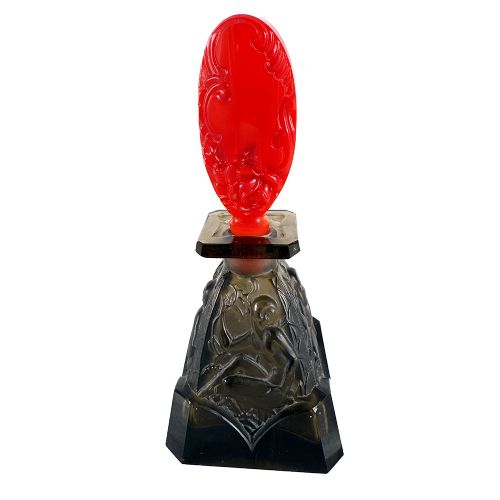
When you search for an art glass perfume flacon, you enter a sphere of decorative vessels spanning the early twentieth century, with the 1930s representing the most frequent finds on this page. These pieces emerge predominantly from French and Czech workshops, capturing the distinct design movements of their time.
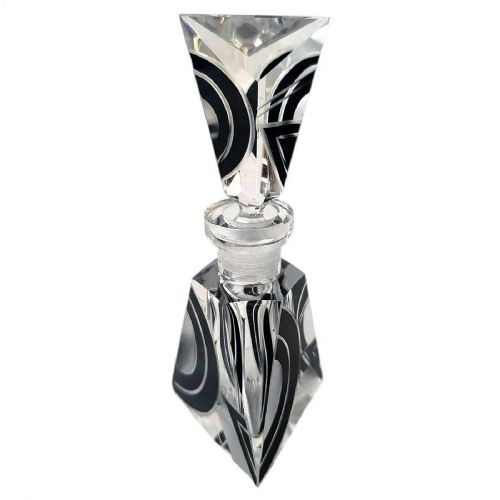
The dominant styles divide cleanly into two camps. You encounter the curving, organic motifs of Art Nouveau alongside the sharp angles and geometric patterns of Art Deco.
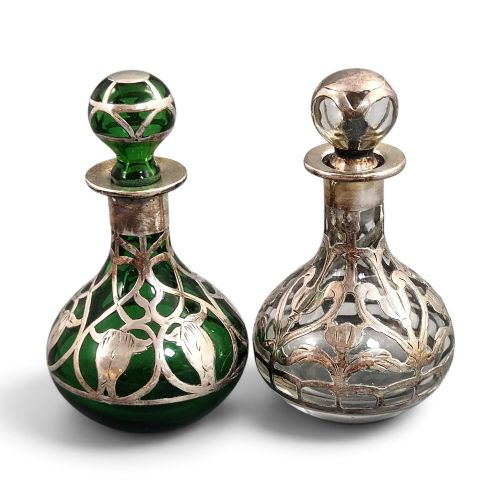
The primary forms take shape as perfume bottles and scent bottles, designed either as standalone glass sculptures or encased in metal mountings.
Materials and construction
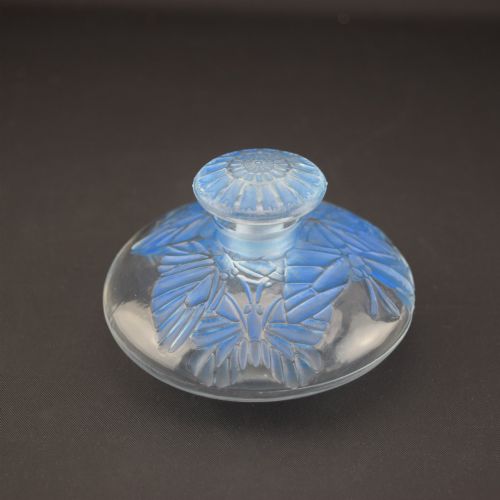
Makers utilised clear, frosted, pressed, and opalescent glass, frequently shaping the material through moulding techniques to achieve tactile, three-dimensional surfaces. These glass bodies often incorporate coloured variants such as blue hues.
Metal and enamel work complement the glass construction. Sterling silver overlay and guilloche enamel frequently encase the bottles, whilst intricate enamel detailing decorates the exterior surfaces.
Several bottles feature moulded butterflies on their stoppers, ready to take flight from your dressing table.
Assessing quality
Quality separates mass-produced items from masterworks through the crispness of the mould work and the depth of the glass relief. Pieces by celebrated designers exhibit superior clarity in the opalescent or frosted effects.
The integration of secondary materials dictates distinction. Finely executed guilloche enamel and substantial sterling silver mounts elevate a piece above simpler glass forms.
Rene Lalique·Gorham·Karl Palda·Sabino
The Art Glass Perfume Flacon Glossary
- Opalescent glass
- Glass that displays a milky, translucent appearance with milky-blue highlights when lit. This effect is achieved by adding specific chemical agents to the molten batch.
- Guilloche enamel
- Decorative metalwork covered in translucent enamel over an engine-turned background. This technique produces repetitive geometric patterns beneath the glossy coloured surface.
- Sterling silver overlay
- Silver decoration fused or applied directly onto the exterior of a glass vessel. The metal is typically pierced into decorative patterns before application.
- Moulded glass
- Glass shaped by being pressed into a metal or wooden form while molten. This method allows for consistent replication of complex sculptural designs and relief patterns.
Art Glass Perfume Flacon: Frequently Asked Questions
How do I clean a vintage scent bottle?
Vintage glass vessels require gentle maintenance to preserve delicate enamel and silver components. Warm water and mild soap suffice for the interior, avoiding harsh abrasives.
Metal mounts and enamelled surfaces should be kept dry. Polish sterling silver carefully to avoid touching adjacent glass or enamel panels.
Are these bottles safe for modern perfume?
Most antique and vintage bottles serve primarily as decorative objects rather than functional daily dispensers. Older stoppers may not form an airtight seal, leading to evaporation of modern scents.
Precious glass and enamel can also be sensitive to the alcohol and oils present in contemporary fragrances. Enjoy them on display rather than for regular use.
How can I tell Art Deco from Art Nouveau?
Art Nouveau pieces from the Edwardian era rely on asymmetrical, flowing lines inspired by natural forms such as flowers and insects. You see sinuous curves framing the glass bodies.
Art Deco designs from the 1930s embrace symmetry, strict geometry, and stylised motifs. These later pieces favour clean angles and structured patterns.
Why do some opalescent pieces change colour?
Opalescent glass contains chemical compounds that react to the angle of light passing through the vessel. Transmitted light often appears warm, whilst reflected light catches a milky blue.
This optical play was a deliberate achievement by period glassmakers to add dimension to moulded relief details. Different batches and makers produced varying intensities of this effect.