


Art Deco Trolley
An art deco trolley brings functional elegance to hosting, offering tiered surfaces and wheeled convenience from the interwar period.
Art Deco Trolley
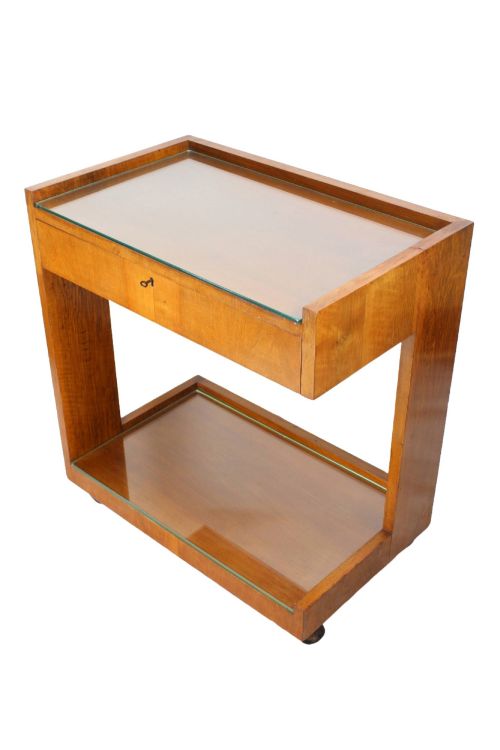
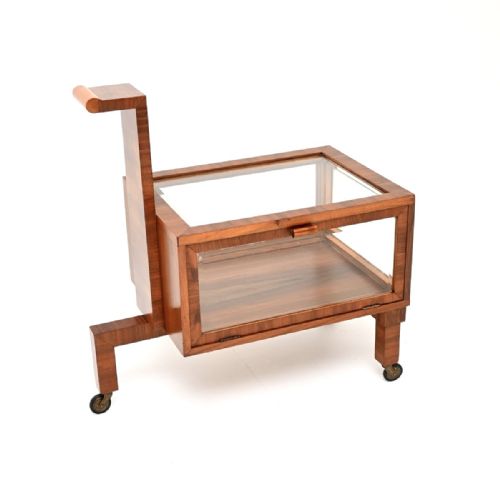
When searching for an art deco trolley, you encounter practical serving furniture designed for drinks, tea, and dining. The versions most commonly met on this page date from the nineteen-thirties and twenties, appearing as two-tier or three-tier carts and side tables.
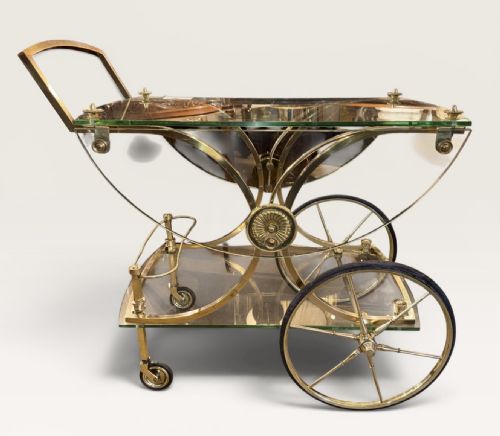
Makers and designers produced these serving pieces in varied formats, including circular bar carts, metamorphic tables, and specialised hostess trolleys. Walnut, mahogany, and oak form the wooden structures, whilst chrome and brass provide metal framework.
English and French examples dominate the selection, showing the distinct regional interpretations of the style. Certain pieces incorporate glass or mirror tops, adding reflective surfaces suited to cocktail service.
How they were made
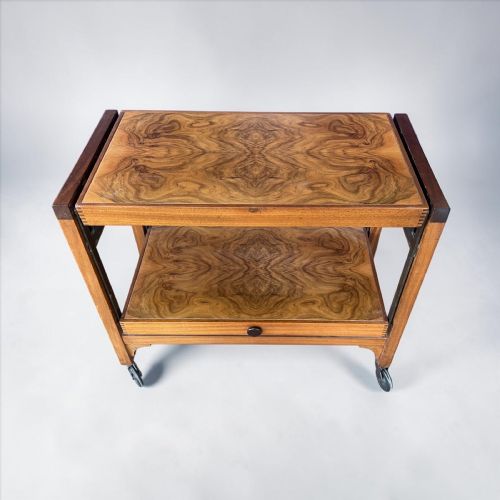
Craftsmen utilised figured veneers such as burr walnut and amboyna applied over solid timber foundations. Cabinetmakers combined traditional woodworking joinery with modern metalworking techniques to build the frames.
Metal elements relied on chrome-plated steel, brass, and aluminium to achieve the sleek metallic finishes characteristic of the period. Glass and mirror panels were fitted into wooden or metal tiers to serve as durable serving surfaces.
Listings feature items spanning the nineteen-twenties through the nineteen-forties, constructed from walnut, mahogany, oak, chrome, brass, and glass.
What varies in quality
The standard of timber selection and veneer matching defines the upper tier of these pieces. Fine examples display carefully arranged grain patterns across circular trays and tiered shelves, whereas ordinary items utilise plain timber surfaces.
Engineering complexity separates basic serving tables from high-end metamorphic or pop-up cocktail carts. Superior pieces feature smooth mechanical actions, substantial metal fittings, and robust casters that support the weight of glassware and bottles.
Maison Bagues·Epstein·Drakes·Elkington·Incorporall
The Art Deco Trolley Glossary
- Metamorphic
- Furniture designed to transform its shape or function through folding or lifting mechanisms. This allows a standard serving table to convert into a cocktail bar or expanded surface.
- Hostess trolley
- A wheeled serving cart equipped for hospitality duties such as drinks or food distribution. These units typically feature multiple tiers and easy-rolling casters.
- Burr walnut
- Timber cut from the gnarled growths of walnut trees, yielding highly decorative swirling grain patterns. Cabinetmakers prize this material for tabletops and decorative panels.
- Savoy
- A circular trolley design associated with high-end hospitality and named after iconic hotel standards of the era. These round carts facilitate easy movement in confined spaces.
Art Deco Trolley: Frequently Asked Questions
What is an art deco trolley used for?
These pieces served primarily for dispensing drinks, tea, and meals during home entertaining in the interwar decades. They provided movable storage surfaces that could be wheeled between rooms.
Today, owners utilise them as permanent cocktail bars or mobile side tables in living spaces. Their tiered construction accommodates glassware, bottles, and bar accessories efficiently.
How do I date an art deco trolley?
Dating relies on identifying materials, hardware styles, and construction methods typical of the nineteen-twenties and nineteen-thirties. Pieces from the twenties often feature heavier traditional silhouettes, whilst thirties examples embrace streamlined chrome and glass.
Makers' marks, where present, help pinpoint the origin and manufacture date. Examining the casters and joinery also provides clues regarding the decade of production.
Are these trolleys sturdy enough for daily use?
Most surviving examples remain robustly constructed from solid hardwoods and metal frames designed to bear the weight of heavy serving vessels. The original casters generally allow smooth movement across modern flooring.
Careful handling of mirrored glass tops and veneered surfaces ensures these vintage items endure regular service. Periodic checking of joints and wheel fixtures maintains their structural integrity.
What distinguishes French art deco from English pieces?
French trolleys frequently showcase adventurous material combinations, such as amboyna wood paired with elaborate brass detailing or high-style chrome work. They often reflect luxury salon aesthetics of the period.
English variants tend to focus on practical walnut or oak construction with straightforward tiered shelving. Both origins demonstrate the versatility of the style during the interwar era.