

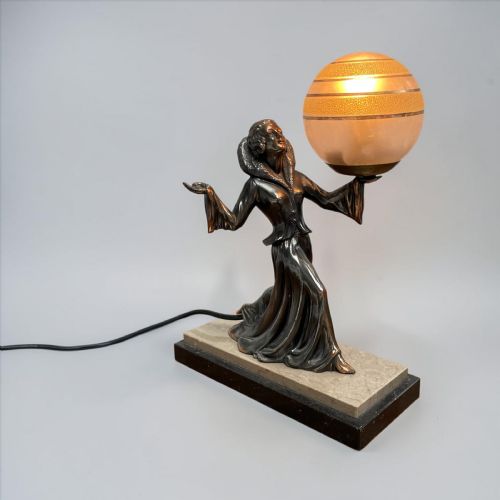



Art Deco Spelter Lamp
An art deco spelter lamp brings striking figurative design and warm illumination into a room, combining cast metal figures with stone bases and glass shades.
Art Deco Spelter Lamp
An art deco spelter lamp is a decorative lighting piece typically featuring a cast metal figure mounted on a heavy stone base. These table lamps and mood lamps capture the characteristic sculptural motifs of the 1920 and 1930 periods.
The versions most commonly met on this page include figural designs depicting standing ladies, pierrots, and seagulls in flight. These pieces function as both functional night lights and striking sculptural centrepieces.
Originating predominantly from France, these items pair patinated metal work with contrasting elements of marble and onyx. The combination creates a distinct silhouette representative of French art deco style.
How they were made
Makers utilised spelter, a zinc-based alloy, for the figural components due to its suitability for detailed casting. This metal frequently received a dark or patinated finish to simulate richer metals.
The figures sit atop sturdy bases cut from marble or onyx, providing necessary weight and stability for the tall compositions. Glass components, including frosted and opaline varieties, house the bulb and soften the light output.
Art Deco Spelter Lamp Retail Price Guide 2026
Typical asking prices for art deco spelter lamp among the pieces listed under this phrase on Sellingantiques today, from the lower quarter to the upper quarter. They describe what is for sale here now, not the wider market.
The listings show table lamps and mood lights exclusively from the 1920 and 1930 periods, incorporating marble, onyx, and various glass shades.
What varies in quality
The selection and density of the supporting stone bases also signal quality. Richly veined marble and substantial pieces of onyx elevate the physical presence of the lamp compared to plainer stone mounts.
P.Sega
The Art Deco Spelter Lamp Glossary
- Spelter
- A zinc alloy commonly used as an economical alternative to bronze for decorative sculptures and lamp figures. It takes patination well but remains softer than true bronze.
- Onyx
- A banded variety of chalcedony quartz utilised for the heavy bases of these lamps. Its translucent layers provide a polished, decorative surface.
- Patinated Metal
- Metal treated with chemical solutions to produce a specific surface colour or aged finish. This technique enhances the depth of the figural details.
- Opaline Glass
- A semi-translucent white glass that diffuses light evenly across the lamp shade. It became popular during the nineteenth and twentieth centuries for decorative lighting.
- Mood Lamp
- A smaller lighting piece designed to create ambient atmosphere rather than bright task illumination. These often take the form of night lights.
Art Deco Spelter Lamp: Frequently Asked Questions
What is an art deco spelter lamp?
An art deco spelter lamp is a decorative lighting fixture featuring a cast metal figure mounted on a stone base, popular during the 1920 and 1930 periods.
These pieces often depict human figures or nature scenes, combining sculptural art with functional illumination.
How were these lamps used originally?
They served as decorative table lamps and low-illumination night lights in domestic interiors during the interwar years.
Their primary purpose was to provide soft ambient lighting while acting as sculptural art objects in living spaces.
How do I care for spelter?
Spelter requires gentle cleaning with a dry cloth to preserve the patinated surface finish without abrasive chemicals.
Keep the metal away from excessive moisture to prevent corrosion and protect the underlying alloy.
What materials make up the base?
The bases are constructed from heavy natural stones such as marble and onyx.
These materials provide a stable foundation to balance the weight of the metal figures mounted on top.
How do I identify the period?
The period is identified through the characteristic geometric and figurative motifs of the 1920 and 1930 art deco styles.
Materials like frosted glass, patinated spelter, and contrasting marble further point to this specific era of design.