


Art Deco Ruby Engagement Ring
An art deco ruby engagement ring brings together vivid crimson and crisp geometric metalwork for a striking hand presence.
Art Deco Ruby Engagement Ring
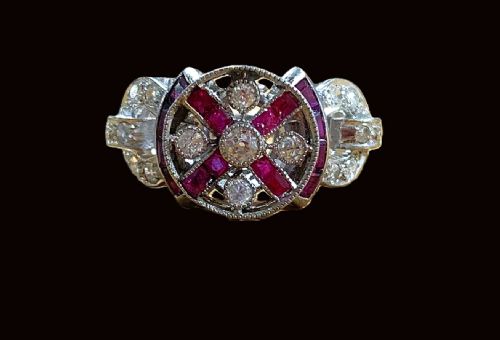
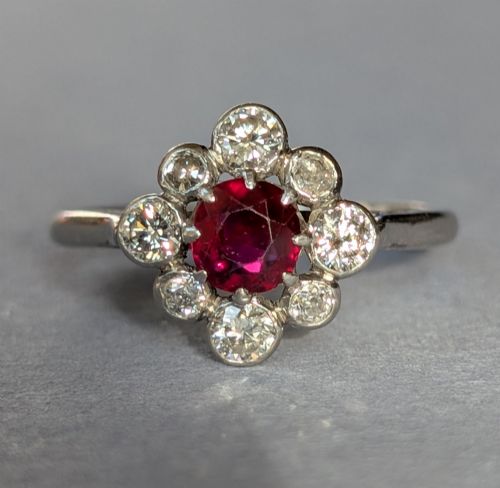
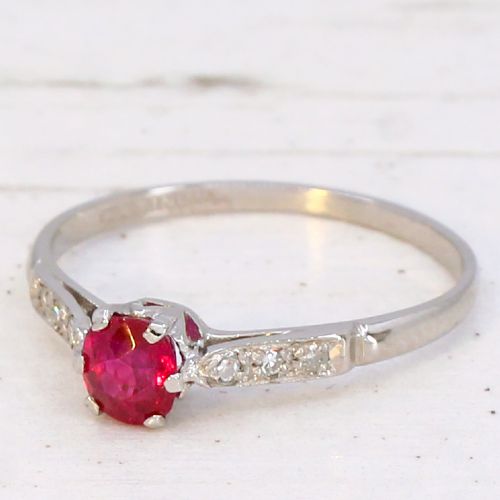
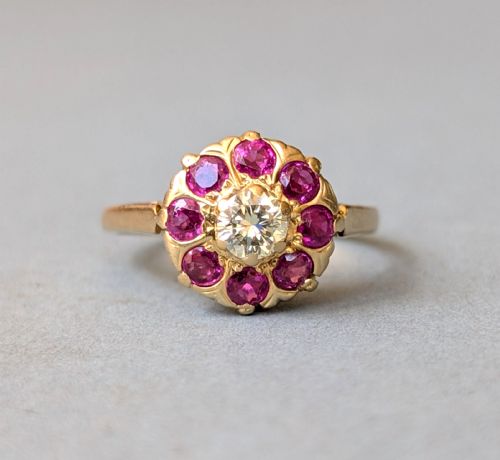
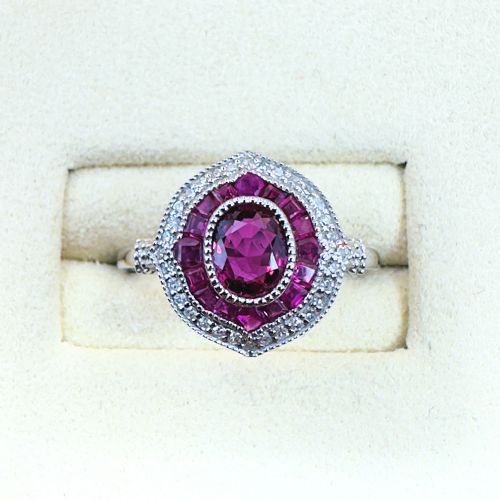
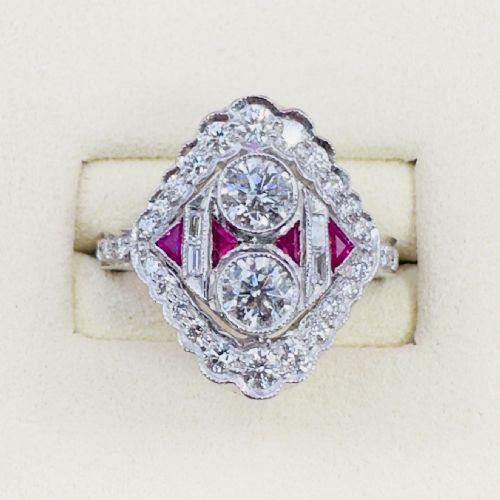
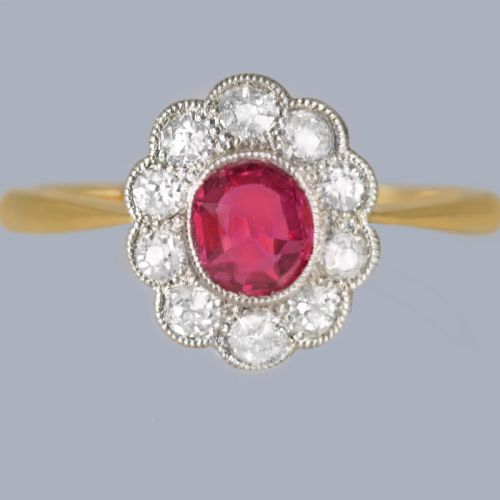
An art deco ruby engagement ring typically pairs a vivid red centre stone with bright diamond accents set in symmetrical arrangements. These dress rings reflect the geometric leanings of the interwar years alongside survivals from Edwardian workshops and later mid-century revivals. Buyers encounter everything from compact cluster settings to elongated navette and target designs.
The dominant material combinations rely heavily on durable platinum and various shades of gold, including 18ct yellow gold and 18ct white gold. The central rubies range from unheated Burmese stones originating in Mogok to natural corundum set alongside old cut or rose cut diamonds. Forms span traditional three-stone configurations, five-stone bands, and elaborate halo clusters.
Materials and construction
Goldsmiths of the period utilised platinum and 18ct gold to build robust yet delicate basket settings that held gemstones securely while maximising light entry. Platinum provided the structural strength needed for fine millegrain edges and pierced gallery work without adding unnecessary bulk.
Stones were hand-cut and arranged to contrast the deep red of the ruby with the sharp brilliance of old cut, rose cut, or oval diamonds. Gemmological reports often accompany these pieces to verify natural origins and treatments, pointing to meticulous craftsmanship in stone selection.
The listings span materials from platinum and 18ct white gold to traditional yellow gold, showcasing diverse manufacturing choices across the decades.
Distinguishing fine examples
Quality rests heavily on the origin and optical characteristics of the ruby itself, with unheated Burmese stones commanding particular attention from collectors. The saturation of the crimson hue and the clarity of the gemstone dictate much of the inherent value.
Execution of the metalwork also separates standard production from superior output. Crisp geometric lines, secure prong or bezel placement, and undamaged millegrain detailing indicate a higher standard of period benchwork.
The Art Deco Ruby Engagement Ring Glossary
- Navette
- A boat-shaped ring setting that tapers to sharp points at either end. This elongated silhouette sits prominently along the finger.
- Target ring
- A circular cluster design featuring concentric rings of contrasting gemstones around a central stone. The concentric bands create a bullseye visual effect.
- Millegrain
- A decorative technique featuring a row of tiny raised metal beads along the edge of a setting. It softens the metal transition next to the stones.
- Old cut
- A precursor to the modern brilliant diamond cut, characterised by a smaller table, higher crown, and open culet. These stones display a softer, chunkier light return under candlelight.
Art Deco Ruby Engagement Ring: Frequently Asked Questions
How do I care for my ring?
Clean the piece gently using warm soapy water and a soft brush to remove daily oils from beneath the stones. Avoid harsh ultrasonic cleaners, particularly if the ruby has undergone standard clarity enhancement treatments.
Have a professional jeweller inspect the claw settings periodically to ensure the platinum or gold remains secure. Removing the ring during heavy manual labour prevents unnecessary wear to the delicate metalwork.
Are these rings suitable for daily wear?
Rubies rank nine on the Mohs hardness scale, making them exceptionally durable for everyday use on the hand. The surrounding gold or platinum settings provide adequate protection when constructed with solid bezels or sturdy prongs.
Prudent owners still remove vintage jewellery during gardening, exercising, or heavy lifting to protect antique metal edges. Routine checks by a specialist help maintain the structural integrity of the original mount.
How can I date an art deco ring?
Dating relies on stylistic markers such as geometric symmetry, stepped shoulders, and the prevalence of platinum over yellow gold. Hallmarks stamped inside the band often provide assay office marks and date letters that narrow down the year of creation.
Gemstone cutting styles also offer clues, as old cut diamonds and specific step cuts predate the standardised modern brilliant cut. Comparing the construction methods against documented timelines helps confirm the era.
What does unheated Burmese mean?
This designation refers to natural rubies originating from the Mogok region of Burma that have not undergone thermal enhancement. Earth-mined stones with this pedigree display desirable natural saturation and inclusions appreciated by collectors.
Independent gemmological certificates usually accompany these specific pieces to verify their geographic origin and lack of heat treatment. Such documentation adds notable provenance to vintage jewellery.