
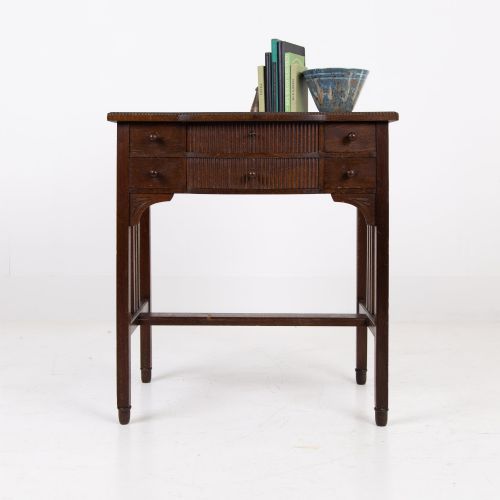
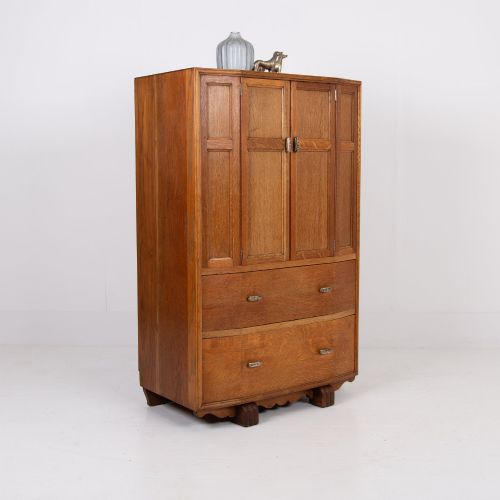


Art Deco Oak Drawers
Art deco oak drawers combine honest timber with geometric lines, offering sturdy storage anchored in the interwar period.
Art Deco Oak Drawers
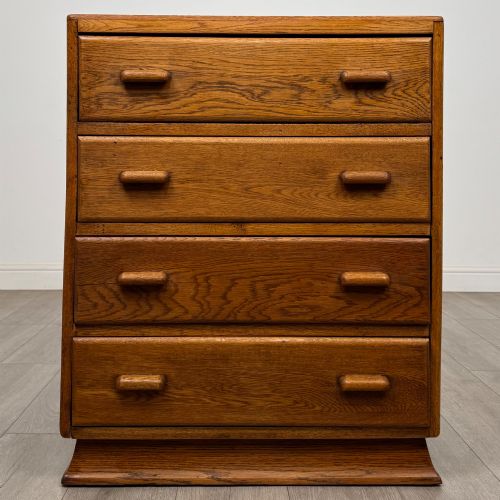
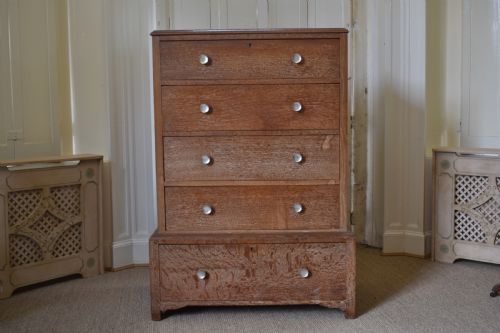
Art deco oak drawers encompass a sturdy range of storage furniture spanning chests of drawers, tallboys, bedside cabinets and haberdashery counters. When searching for art deco oak drawers, buyers encounter pieces primarily originating from the 1930s alongside earlier Edwardian examples and items produced in the 1920s.
The selection ranges from compact bedside tables and dressing chests to expansive shop display counters and tall chests. Many pieces display straightforward rectilinear forms, while others adopt modernist curves or incorporate limed finishes typical of the period.
Makers and retail influences visible across the records include Gomme, Dudley & Co, Warings, Rowley, and pieces reflecting the clean-lined aesthetic associated with Heal's. This grounding in specific interwar workshops helps buyers identify genuine period manufacture against later reproductions.
How they were made
Makers constructed these cabinets using solid oak and oak veneers, occasionally employing pollard oak or incorporating macassar ebony for contrasting detail. Timber selection prioritized strong grain patterns, which were sometimes treated with a limed finish to lighten the surface and accentuate the texture.
Metal components played a structural and decorative role, with chrome handles, brass fittings and occasional glass elements defining the interwar aesthetic. Construction techniques combined traditional joinery with clean geometric banding and marquetry inlay to achieve the characteristic modernist look.
Several chests double as sewing storage, proving that interwar makers believed even spare bobbins deserved a modernist home.
What varies in quality
Quality rests upon the integrity of the timber preparation and the precision of the geometric detailing. Pieces finished in limed oak or featuring contrasting veneers like macassar ebony demonstrate greater ambition in design than plain utility models.
Original hardware, including chrome and brass pulls, alongside intact maker labels or distinct workshop attributions, elevates a piece above standard mass-produced items from the same decade.
Dudley & Co·Gomme·B Cohen & Sons·Rowley·Warings Waring & Gillow
The Art Deco Oak Drawers Glossary
- Limed oak
- A wood treatment that uses a white or pale paste rubbed into the open grain of oak to create a pale, textured finish. This technique gained immense popularity during the interwar period for modern bedroom furniture.
- Haberdashery counter
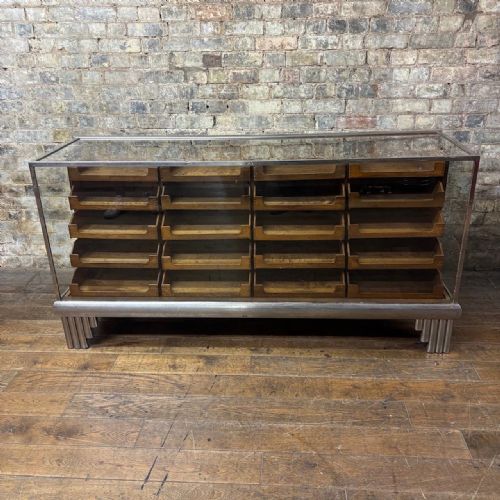
- A shop display cabinet featuring multiple shallow drawers, often with glass panels or fronts. Originally utilised in retail drapery stores, these units are now repurposed for domestic storage.
- Tallboy
- A tall chest of drawers, typically comprising a chest placed upon a further base or built as a single elongated vertical unit. They maximise vertical storage capacity while occupying a minimal floor footprint.
- Pollard oak
- Timber taken from trees that have been pollarded, resulting in a gnarled grain pattern filled with small clustered knots. It provides a highly decorative surface figure highly prized by cabinet makers.
- Marquetry
- The art of applying pieces of veneer to a structure to form decorative patterns and pictures. In interwar furniture, geometric marquetry often complements the clean architectural lines of the design.
Art Deco Oak Drawers: Frequently Asked Questions
How do I identify a 1930s piece?
Look for characteristic geometric hardware, clean rectilinear proportions and lighter finishes such as limed oak rather than dark Victorian polishes. Maker labels or stamps frequently confirm the interwar production date.
Construction methods also provide clues, as hardware transitions toward modern chromium plating while retaining solid oak carcass construction.
Are bedside cabinets sold as pairs?
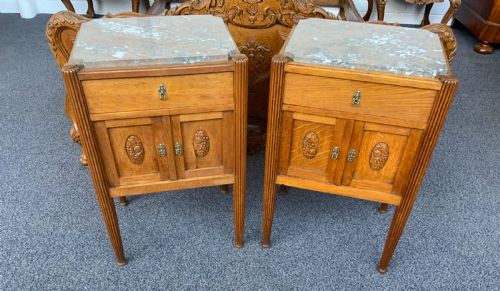
Many bedside cabinets and tables from this era survive and are listed as matching pairs for symmetrical bedroom placement. Single cabinets also appear frequently depending on how they were originally purchased.
Checking dimensions and handle styles ensures consistency when pairing separate cabinets together in a bedroom scheme.
What is a haberdashery counter used for today?
Haberdashery counters feature numerous shallow drawers originally designed for ribbons, threads and small drapery items in shops. In modern homes, they function well for storing jewellery, stationery, or accessories.
Their glass fronts and compartmentalized layouts make them popular statement pieces for hallways and living rooms.
How do I care for limed oak?
Dust surfaces regularly with a soft, dry cloth and avoid harsh chemical cleaners that can strip the delicate white grain filler. Keep the timber away from direct heat sources and strong sunlight to prevent warping and discoloration.
Applying occasional specialist wax helps protect the wood and maintain the subtle contrast of the limed finish.