
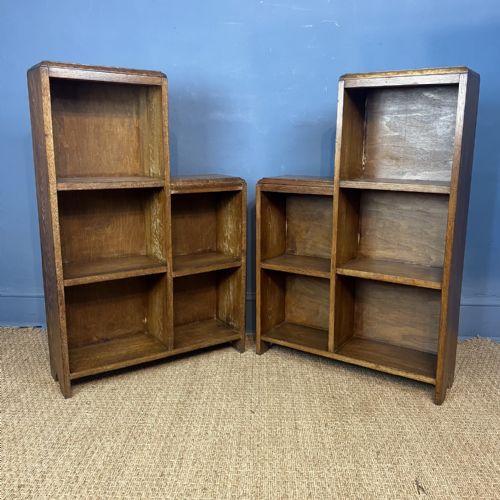


Art Deco Oak Bookshelf
An art deco oak bookshelf brings architectural geometry and warm grain into a room, offering sturdy storage for a working library.
Art Deco Oak Bookshelf
When you search for an art deco oak bookshelf, you are looking at practical furniture shaped by twentieth-century design movements. These pieces range from upright open bookcases to low book tables and side tables with integrated shelving.
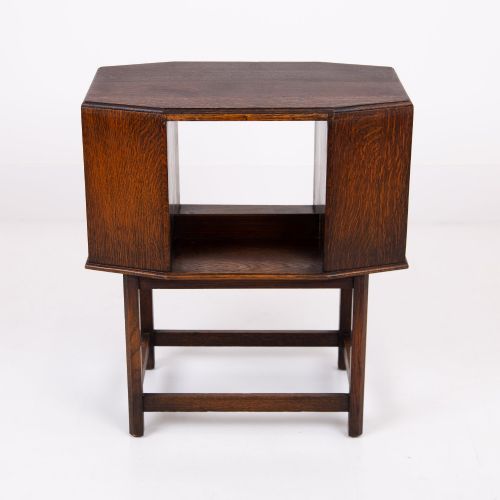
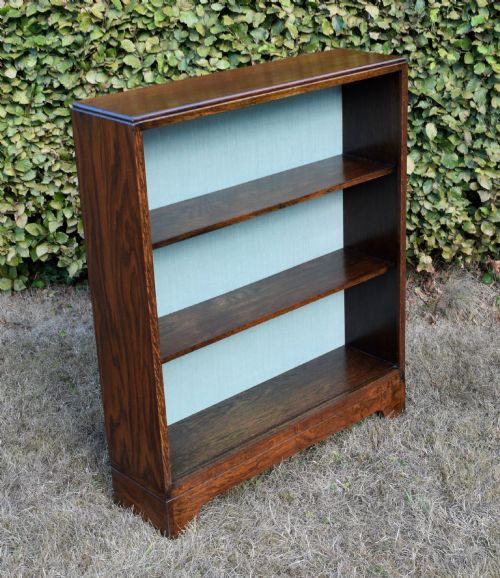
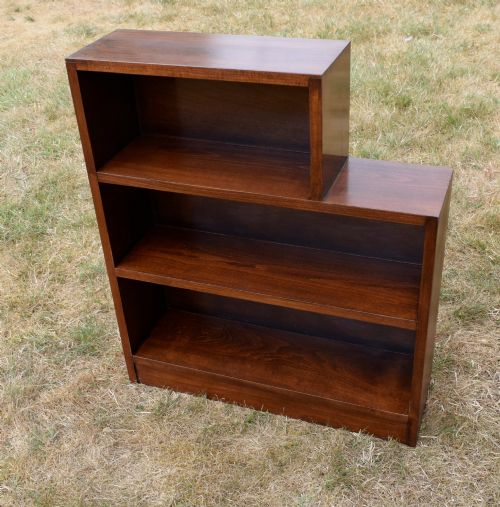
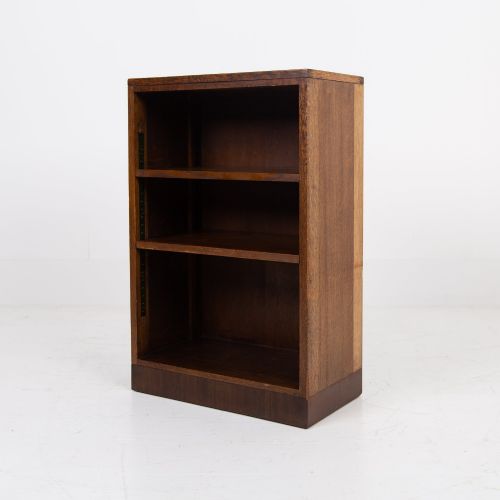
The versions you are most likely to meet on this page date predominantly from the nineteen-thirties, with occasional pieces from the Edwardian era and the nineteen-twenties. They appear in forms such as waterfall bookcases, display cabinets with glass, and compact book troughs.
Makers and designers of the period utilised oak alongside walnut, timber, metal, fabric, and leather to create functional pieces for the home. Their geometric lines and occasional decorative mouldings define the distinct aesthetic of the era.
Materials and construction
Makers built these shelves using solid oak and selected timber, often enhanced by distinctive grain patterns. Construction methods included straightforward joinery designed to support heavy volumes while maintaining clean architectural lines.
Some examples incorporate secondary materials such as glass for display cabinets, leather top inserts, and subtle metal or fabric accents. Mouldings applied to the front added depth and shadow to the otherwise streamlined forms.
Keep an eye out for the unusual bookshelf featuring carved wooden horses.
Judging quality and design
Quality in these pieces rests upon the crispness of the geometric mouldings and the careful selection of the oak timber. Pieces attributed to specific workshops display superior proportion and structural balance compared to simpler commercial versions.
The integration of functional elements, such as leather tops or clever partitioning in book tables, distinguishes finer examples. Finish also plays a part, with limed oak treatments and polished surfaces revealing the natural grain to greater effect.
Heals·Betty Joel
The Art Deco Oak Bookshelf Glossary
- Waterfall bookcase
- A shelving unit where each tier steps back progressively from the bottom to the top, creating a cascading profile.
- Limed oak
- A wood finish created by applying a white pigment into the open pores of oak to lighten its tone and accentuate the grain.
- Book trough
- A small V-shaped or open-topped container designed to hold a selection of books upright on a desk or table.
- Display cabinet
- An enclosed piece of furniture featuring glass panels to protect books or objects while keeping them visible.
- Open bookcase
- A shelving unit without doors, allowing direct access to the books stored within.
Art Deco Oak Bookshelf: Frequently Asked Questions
What defines an art deco oak bookshelf?
These pieces combine straightforward storage with the geometric lines and stepped forms characteristic of twentieth-century design. They utilise oak timber, often featuring clean vertical panels or decorative front mouldings.
They reflect the transition from ornate historical styles toward more functional, streamlined domestic furniture.
Where were these bookcases used?
They were designed for domestic living rooms, studies, and bedrooms to keep working libraries organised and accessible. Compact versions like book tables and side table bookcases suited smaller urban spaces.
Their practical layouts allowed them to fit easily beside armchairs or against plain walls.
How do I style one at home?
An oak bookshelf pairs well with neutral walls and mid-century or modern interior schemes that allow the wood grain to stand out. You can fill the shelves with books, ceramics, or small display objects to balance negative space.
Keep the arrangement uncluttered to let the architectural lines of the woodwork remain visible.
How do I tell periods apart?
Edwardian examples tend to lean towards traditional proportions with heavier decorative flourishes, while pieces from the nineteen-thirties embrace bolder geometric shapes and modernist restraint. The use of limed oak finishes often points towards specific interwar workshop aesthetics.
Construction details and hardware styles also help anchor a piece to its specific decade.