


Art Deco Mirror Stand
An art deco mirror stand brings the geometric lines and gleaming surfaces of the interwar period directly onto a dressing table.
Art Deco Mirror Stand
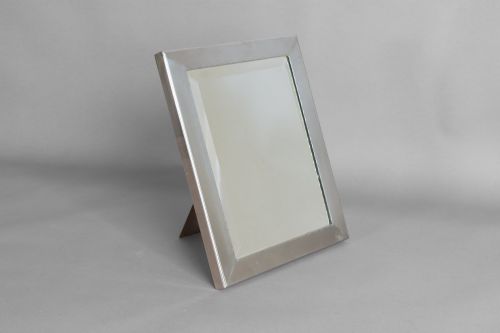
When you search for an art deco mirror stand, you encounter pieces designed for dressing tables, vanities, and display surfaces from the early decades of the twentieth century. These objects function primarily as vanity mirrors, cheval dressing mirrors, and small mirror plateaus originating from the 1910s, 1920s, and 1930s. French examples appear frequently alongside British pieces, often utilising easel backs or heavy bases for stability.
The form ranges from compact table mirrors with chrome or silver plate frames to larger freestanding walnut pieces and triptych arrangements. Alongside dedicated mirrors, the selection includes related tabletop accessories and vanity items that share the distinct aesthetic vocabulary of the period. Most pieces rely on clean geometric silhouettes or subtle curves rather than ornate carving.
Materials and construction
Makers constructed these pieces using a combination of structural metals and reflective glass, frequently employing silver plate, chrome, brass, and iron alongside solid and veneered walnut. Frames were cast, forged, or joined with precision, holding bevelled or flat mirror plates securely within the housing. Easel mechanisms and pivoting hinges allowed the glass to tilt smoothly for the user.
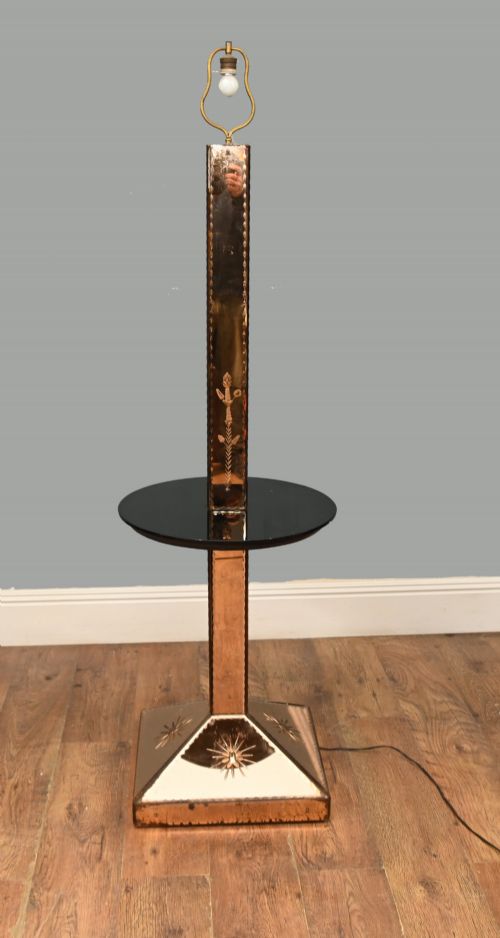
Mirrored glass formed the primary visual element, sometimes enhanced with etching, mercury backing, or integrated frames of contrasting dark wood. Metal components received polished or brushed finishes to catch the light, typical of the industrial and domestic output of the era.
Listings feature mirror stands utilising materials such as silver plate, chrome, brass, walnut, and iron across the 1910s, 1920s, and 1930s.
Assessing quality and finish
Quality in an art deco mirror stand lies in the weight of the metal and the richness of the timber grain, distinguishing heavy cast frames and solid walnut from lighter plated substitutes. Superior pieces feature robust pivoting mechanisms that hold their position firmly without sagging over time. The clarity of the mirror plate and the crispness of any applied etching also signal higher manufacturing standards.
French and specialised workshop examples often display finer attention to detail in the joinery and metalwork finish compared to mass-produced domestic alternatives. The integration of the stand with the mirror frame, whether through cast brackets or fitted wooden supports, indicates the original maker's investment in durability and design.
The Art Deco Mirror Stand Glossary
- Cheval mirror
- A freestanding full-length or dressing table mirror suspended in a frame that allows it to swing. This form lets the user adjust the angle of reflection entirely independently of a wall or furniture piece.
- Silver plate
- A thin layer of silver applied to a base metal such as brass, copper, or nickel-silver. It provides the lustrous appearance of solid silver while utilising a more durable or economical core.
- Triptych mirror
- A three-panel mirror where the outer two wings hinge to fold inward. This design allows the user to view themselves from multiple angles simultaneously.
- Mirror plateau
- A mirrored tray or plateau used originally as a table centrepiece to display ornaments, silver, or glassware. The reflective surface doubles the visual impact of the objects placed upon it.
Art Deco Mirror Stand: Frequently Asked Questions
What is an art deco mirror stand?
An art deco mirror stand is a freestanding or table-top reflective glass piece produced during the 1920s and 1930s. These items range from small vanity mirrors to large dressing table fixtures supported by metal or wooden frames.
They combine utility with the characteristic geometric and sleek design language of the interwar period.
How do I clean an antique mirror?
Clean the glass gently using a soft cloth and a mild, ammonia-free glass cleaner sprayed onto the cloth rather than directly onto the mirror. This prevents moisture from seeping behind the silvering or settling into the wooden and metal joints.
Take care around the edges of the mirror plate where the original backing may be delicate or worn.
Where should I place a vanity mirror?
Position your vanity mirror on a sturdy dressing table, chest of drawers, or sideboard where natural or artificial light can strike the glass. Ensure the supporting surface is level so the pivoting frame operates without strain.
These pieces suit both period interiors and modern rooms seeking a touch of metallic shine.
How can I tell the 1920s pieces apart?
Pieces from the 1920s often feature distinctive silver plate, brass, or wrought iron work alongside early modernist influences. Look for hallmarks of French craftsmanship, easel supports, and geometric motifs that define the decade.
Later 1930s variants frequently introduce more streamlined chrome finishes and extensive use of walnut.