

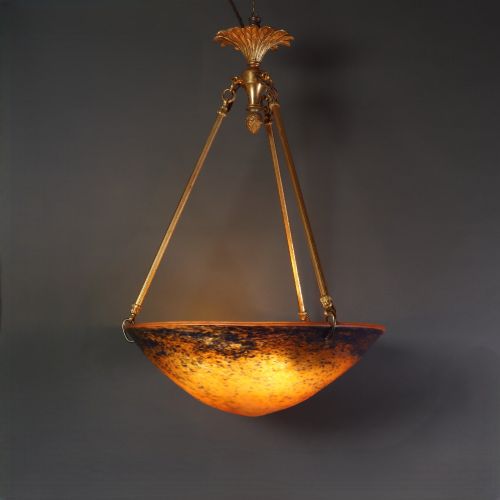


Art Deco Metal Bowl
An art deco metal bowl brings geometric punch and industrial sheen to a room, exactly why collectors hunt for these striking vessels.
Art Deco Metal Bowl
When you search for an art deco metal bowl, you encounter vessels shaped by the design grammar of the early twentieth century. The examples recorded here span the decades from nineteen ten to nineteen thirty, capturing the shift toward streamlined forms.
The most common formats on this page include fruit baskets, serving dishes, and footed comports designed for display and utility. French makers feature strongly, alongside English pewter and German silver plate.
These vessels sit naturally on sideboards or dining tables, offering a distinct profile that reflects the modernist aesthetic of the period.
How they were made
Makers utilised metals such as chrome, silver plate, pewter, and gilt metal to achieve durable yet lustrous surfaces. Hammered finishes appear on pewter vessels, showing the hand of the artisan in the beaten texture.
Some designs incorporate contrasting elements like ebonised wood handles or glass inserts, pairing industrial metals with organic materials for visual balance.
Art Deco Metal Bowl Retail Price Guide 2026
Typical asking prices for art deco metal bowl among the pieces listed under this phrase on Sellingantiques today, from the lower quarter to the upper quarter. They describe what is for sale here now, not the wider market.
One lonely comport from nineteen thirty managed to escape the cutlery drawer entirely to live its best life as a fruit basket.
What varies in quality
Quality rests in the crispness of the geometric stamping and the integrity of the plating over the base metal. Superior examples retain their original silver or chrome coat without heavy wear through to the substrate.
Weight and balance distinguish finer vessels from simpler production pieces, with better bowls offering a satisfying heft and secure footed bases.
Armada Pewter·Brille Paris·Christofle Gallia·Julien Glass·W M F
The Art Deco Metal Bowl Glossary
- Comport
- A decorative dish raised on a stem, used for serving fruit or sweets at the table. These elevated vessels create height in a display.
- Pewter
- A malleable alloy traditionally composed of tin alloyed with copper and antimony. It takes a soft lustre and accepts hand hammering well.
- Silver plate
- A thin layer of silver bonded to a base metal such as brass or copper. This technique offered the luxury of silver at a lower cost.
- Taza
- A shallow cup or chalice on a foot, often used for presentation or serving. The form echoes Renaissance vessels reinterpreted in modern styles.
- Plating
- The application of a thin metallic coating onto a different metal surface. It provides the appearance of solid precious metal.
Art Deco Metal Bowl: Frequently Asked Questions
How do I clean an antique metal bowl?
Wash gently with warm soapy water and dry immediately with a soft cloth to protect the surface. Avoid harsh chemical dips that strip original patination from plated or pewter finishes.
Silver plate requires a gentle cream formulated for plated wares to prevent wearing through to the base metal. Pewter benefits from occasional light polishing to maintain its soft grey tone.
Are these bowls suitable for daily use?
Most serving dishes and fruit baskets function well for dry goods or display purposes. Care should be taken with acidic foods that might react with older metal surfaces.
Silver-plated and chrome vessels handle normal domestic service well if washed by hand rather than placed in modern dishwashers.
How do I date an art deco bowl?
Examine the maker marks stamped on the base, which often identify the foundry or manufacturer active in the interwar period. Stylistic cues such as stepped motifs, geometric handles, and streamlined chrome point to production around nineteen thirty.
Earlier pieces from nineteen ten often show lingering art nouveau curves before the rigid geometry of the twenties took hold.
What is the difference between chrome and silver plate?
Chrome offers a hard, bluish-white industrial sheen that resists tarnishing and requires little maintenance. Silver plate provides a warmer, softer glow that develops a gentle patina over decades of handling.
Silver-plated items generally date earlier in the century, while chrome gained widespread popularity in French and British manufacturing during the nineteen thirties.