


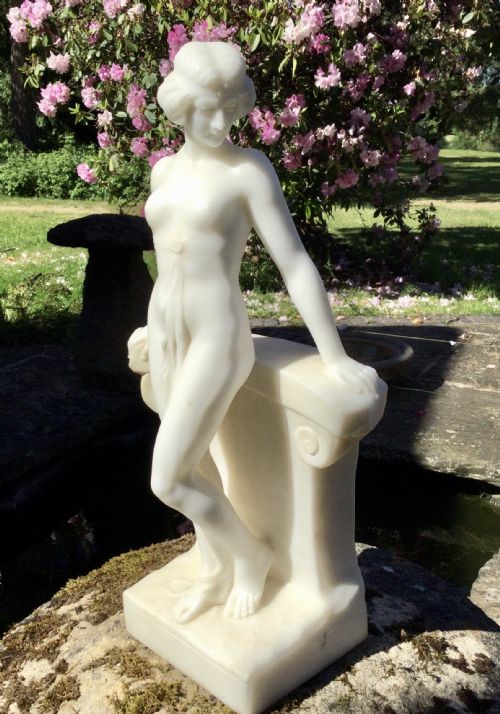


Art Deco Maiden Sculpture
An art deco maiden sculpture captures the stylised elegance of the early twentieth century through female figures cast in bronze, carved in marble or moulded in glass.
Art Deco Maiden Sculpture
An art deco maiden sculpture takes the form of dancing girls, busts and full-length figures cast during the interwar period, alongside earlier nineteenth-century marble works that anticipated the aesthetic. These pieces range from studies of individual figures to elaborate centrepiece bowls incorporating human forms.
The versions most commonly met on this page belong to the nineteen-twenties and nineteen-thirties, reflecting the sculptural output of European studios during the height of the modern movement. Figures are frequently depicted in dynamic motion or stylised repose, drawing on classical motifs adapted to contemporary tastes.
Materials and construction
Bronzes are cast using the lost-wax method and frequently paired with bases of green onyx or white marble, creating a heavy and stable foundation for the figures. Gilt bronze and ivory details are also utilised to add textural contrast and visual richness to individual studies.
Terracotta and earthenware provide modelled alternatives to metal casting, while moulded glass is employed for translucent architectural and sculptural figures. Artisans combine these varied media to achieve the clean lines and distinct surfaces characteristic of the period.
Art Deco Maiden Sculpture Retail Price Guide 2026
Typical asking prices for art deco maiden sculpture among the pieces listed under this phrase on Sellingantiques today, from the lower quarter to the upper quarter. They describe what is for sale here now, not the wider market.
Materials represented across the selection include green onyx, gilt bronze, ivory, earthenware and white marble.
Assessing craftsmanship
The distinction between standard commercial output and superior work lies in the sharpness of the chasing on bronze surfaces and the precision of the carving in marble or terracotta. Finer pieces demonstrate a careful attention to anatomical proportion and drapery that elevates the stylised design.
Signatures of named sculptors and the integration of diverse materials such as carved ivory or multiple metal tones elevate the status of a piece. The quality of the supporting stone base, particularly polished green onyx or veined marble, further indicates the original tier of production.
Bruno Zach·C J R Colinet·Zoldan Kovats·Gilbert Privat·Ferdinand Preiss·Marius Ernest Sabino·C Neuhaus
The Art Deco Maiden Sculpture Glossary
- Caryatid
- A sculpted female figure serving as an architectural support or incorporated into decorative objects. These figures stand upright to bear the weight of a frieze or bowl.
- Gilt bronze
- Bronze that has been coated with a thin layer of gold or gold amalgam. This finish provides a bright metallic sheen that resists tarnishing.
- Green onyx
- A banded chalcedony variety frequently utilised for the heavy bases of twentieth-century sculptures. Its translucent green layers offer a contrasting plinth for dark metal figures.
Art Deco Maiden Sculpture: Frequently Asked Questions
What is an art deco maiden sculpture?
These pieces are decorative figures created primarily in the nineteen-twenties and nineteen-thirties, depicting female subjects in bronze, marble, terracotta and glass. They reflect the dominant artistic trends of the interwar period through stylised postures and modern garment designs.
Buyers sought them then, as now, for their ability to anchor a room's interior design scheme. They function well as standalone display objects on mantelpieces or side tables.
How were chryselephantine figures made?
Makers combined metal casting with carved sections of elephant ivory to construct these detailed sculptures. The bronze formed the clothing and hair, while the exposed skin and faces were carved from ivory.
This demanding composite technique required specialist workshops to join the disparate materials securely. The resulting contrast in texture and tone remains a defining characteristic of the style.
How do I distinguish bronze from terracotta?
Bronze is a metal alloy produced through casting, resulting in a heavy object with a cold touch and a patinated surface. Terracotta is a fired earthenware clay that feels porous and lighter, possessing a matte red-brown appearance unless painted.
Sculptors utilised metal for durable, sharp-edged studies and clay for softer, modelled busts. Each medium requires entirely different maintenance and handling approaches.
How should I display these sculptures?
Place figures on stable, level surfaces away from direct sunlight and extreme temperature fluctuations. Heavy stone and metal bases provide natural stability, but delicate glass or ivory elements require careful placement to avoid accidental knocks.
Allow sufficient space around the object so its silhouette remains visible from multiple angles. Avoid using harsh chemical cleaners on patinated metal or porous terracotta surfaces.