



Art Deco Footboard
An art deco footboard brings distinctive 1930s geometry and rich timber grains directly to a bedroom scheme.
Art Deco Footboard
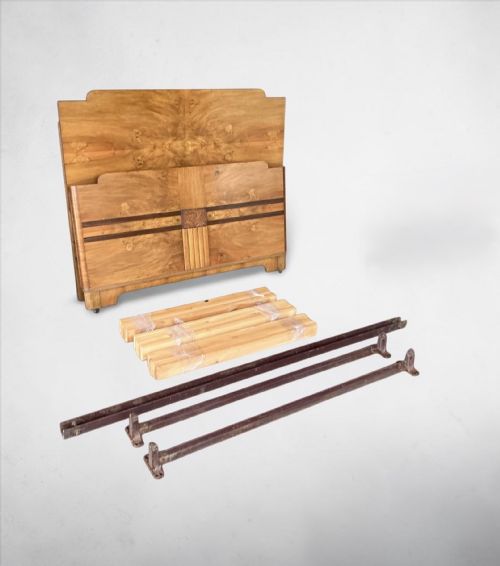
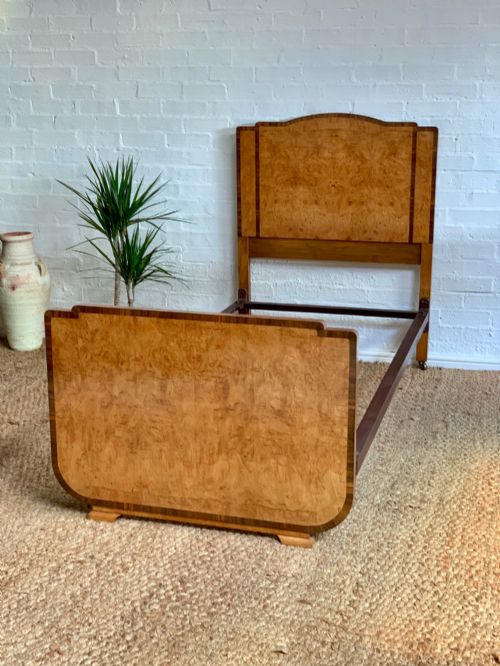
An art deco footboard forms part of a bedstead or double bed originating predominantly from the 1930 and 1920 periods. Buyers encounter these components paired with matching headboards in single, double, and king size formats.
The objects appear in stylistic expressions typical of the interwar decades, including curvaceous silhouettes and architectural Odeon forms. French examples also surface alongside ensuite marble top nightstands.
Most items emerge in solid timber or veneered configurations, often constructed as part of complete bed frames rather than standalone panels.
How they were made
Cabinet makers utilised walnut, burr walnut, satinwood, and birds eye maple, applying veneers to create striking symmetrical grain patterns across large surfaces. Solid walnut and carved figured walnut also feature heavily in the construction.
Iron and steel elements appear in the structural framing of certain pieces, providing robust internal support beneath the decorative wooden outer layers.
Art Deco Footboard Retail Price Guide 2026
Typical asking prices for art deco footboard among the pieces listed under this phrase on Sellingantiques today, from the lower quarter to the upper quarter. They describe what is for sale here now, not the wider market.
What varies in quality
The selection of timber veneer determines much of the visual hierarchy, with highly figured burr walnut and blonde birds eye maple sitting at the upper end of decorative appeal. Plain timber surfaces offer a more subdued aesthetic.
Execution of carved details and the fluidity of curvaceous woodwork separate standard production from superior pieces attributed to notable makers such as Waring & Gillow.
Waring and Gillow
The Art Deco Footboard Glossary
- Burr walnut
- A wood harvested from walnut tree growths that yields intricate, swirling grain patterns. It was favoured by interwar cabinet makers for decorative veneer work on prominent surfaces.
- Birds eye maple
- A figured timber exhibiting small, swirling knots resembling tiny eyes. This light material creates a striking contrast against darker woods.
- Satinwood
- A durable hardwood with a lustrous, satin-like sheen and a natural golden yellow tone. It provides a bright finish on mid-century bed frames.
- Odeon style
- An architectural design influence derived from cinema architecture of the era. It relies on stepped curves and bold, streamlined proportions.
- Bedstead
- A complete framework of a bed, incorporating both head and foot sections to support a mattress. These structures define the primary silhouette of period bedroom furniture.
Art Deco Footboard: Frequently Asked Questions
What periods do these pieces date from?
The listings span the 1920 and 1930 decades, capturing the height of interwar design.
Most surviving examples cluster tightly around 1930, reflecting the peak of this specific aesthetic movement.
Which timbers are most common?
Walnut dominates the material palette, appearing in both solid form and as figured veneer.
Satinwood, birds eye maple, and burr walnut also feature prominently across the available bed frames.
Do these items come as complete beds?
Many examples are offered as full bed frames or bedsteads featuring matching head and foot sections.
Some French configurations even include coordinated ensuite marble top nightstands.
What sizes are available?
The selection includes single and double beds alongside larger king size formats.
Specific dimensions vary according to regional French and English manufacturing standards of the period.