




Art Deco Enamelled Cufflinks
Art deco enamelled cufflinks bring sharp geometric colour to a cuff, offering genuine period style from the 1920s to the 1940s.
Art Deco Enamelled Cufflinks
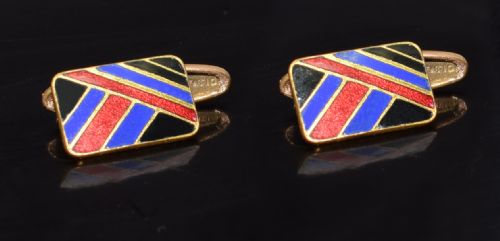
When you search for art deco enamelled cufflinks, you find matching pairs of gents accessories designed for formal shirting. The vast majority of these pieces originate from around 1930, capturing the modernist spirit of the era in compact metalwork.
Most examples take the form of geometric shapes featuring coloured enamel panels set into metal mounts. These items are distinctively masculine in their proportions, often built as matching pairs designed to secure French cuffs.
The aesthetic leans heavily towards modernist design, utilising clean lines and contrasting colour palettes such as green and black or blue and white. They represent a specific functional jewellery type intended for daily wear by gentlemen of the period.
Materials and construction
The foundation of these accessories relies on metals ranging from silver, silver plate, and brass to solid 18ct yellow gold. Vitreous enamel provides the vibrant colour, fused to the metal surface through intense heat.
Makers shaped the metal into geometric forms, recessing areas to receive the coloured enamel paste before firing and polishing the surface smooth. Chain links frequently connect the double-sided faces on gold and silver variations.
Green and black geometric enamel motifs let a gentleman sneak a tiny pop of modernist art onto his cuffs.
Judging quality in enamel cufflinks
The distinction between tiers rests upon the base metal and the precision of the vitreous enamel work. Solid 18ct yellow gold pieces represent a higher standard of manufacture compared to silver-tone metal or brass alternatives.
The crispness of the geometric design and the integrity of the enamel filling dictate the overall finish. Smooth, even colour application without chips or heavy surface wear distinguishes the finer examples.
The Art Deco Enamelled Cufflinks Glossary
- Vitreous enamel
- Glass powder fused to metal under high heat to create a hard, coloured decorative surface. This technique produces the glossy finish seen on period pieces.
- Gents cufflinks
- Fasteners designed for men's shirts, featuring decorative faces linked across the buttonholes. They are typically larger and sturdier than women's equivalents.
- Modernist
- A design style prioritising clean geometric lines and functional forms over ornate historical decoration. This approach defines the visual character of the 1930s.
- Chain link
- A flexible connector joining the two decorative ends of a cufflink rather than a rigid bar. This traditional construction allows the fastener to sit comfortably through fabric.
Art Deco Enamelled Cufflinks: Frequently Asked Questions
How do I wear vintage cufflinks?
Insert the toggle or smaller face through the two buttonholes of a French cuff shirt so the decorative front remains outward facing. Ensure the connecting chain or bar sits comfortably across the fold of the fabric.
These pieces suit both formal tailoring and smart casual shirting. Handle the enamel faces with care when fastening to avoid striking hard surfaces.
What metals were used in the 1930s?
Gents accessories from this decade utilise a broad spectrum of materials depending on the intended quality. Options range from precious metals like 18ct yellow gold and silver down to brass, silver-tone metal, and silver plate.
Vitreous enamel is then applied to these metal bases to introduce bold blocks of colour. The weight and back fittings usually indicate which metal category the piece belongs to.
Are these items matching pairs?
The majority of listings consist of matching pairs designed to be worn together on both wrists. Each component mirrors the geometric pattern and colour scheme of its counterpart.
Occasionally, single items appear in archives, but paired sets remain the standard format for gents shirting. Checking the dimensions ensures consistency across both sides of the cuff.
How should I clean enamel jewellery?
Wipe the metal and enamel surfaces gently with a soft, damp cloth to remove everyday dust and oils. Avoid harsh chemical dips or ultrasonic cleaners, which can damage the glass paste or underlying metal.
Store the items individually in a soft pouch to prevent the metal mounts from scratching the enamel faces. Regular gentle maintenance preserves the glossy finish of the vitreous decoration.