
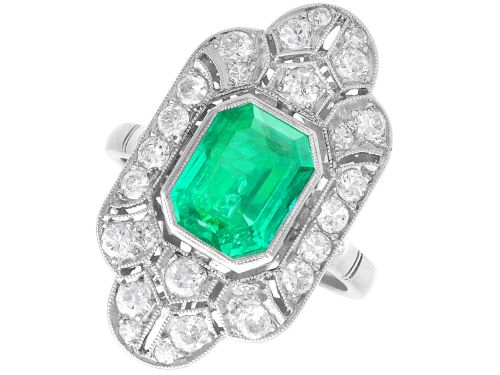
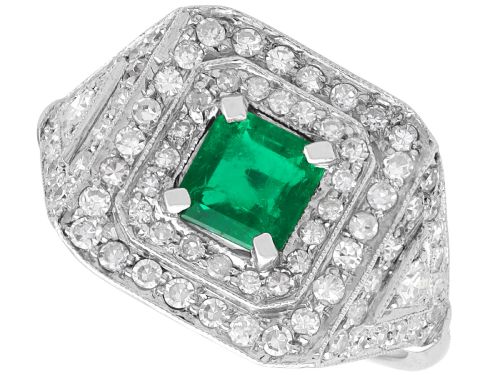
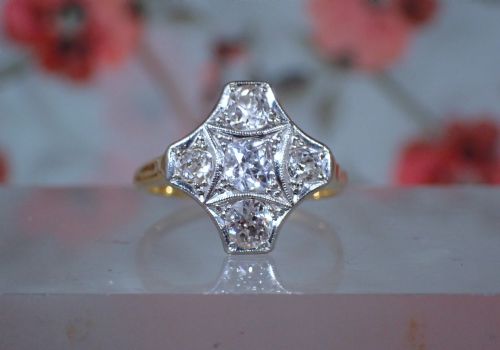
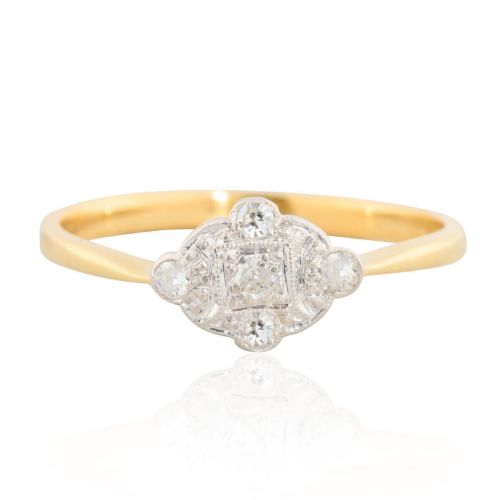


Art Deco Diamond Plaque Ring
When you handle an art deco diamond plaque ring, you touch a flat, geometric face of stones designed to sit low and wide upon the finger.
Art Deco Diamond Plaque Ring
An art deco diamond plaque ring presents a geometric face of diamonds, often shaped as an elongated rectangle, lozenge, or panel resting flat against the hand. These creations function primarily as dress or cocktail rings, drawing the eye through symmetry, openwork filigree, and low profiles typical of the period.
The pieces you encounter here date predominantly from the 1920s and 1930s, though examples reach into Edwardian origins and later vintage revivals from the 1940s, 1950s, and 1960s. Alongside pure diamond compositions, many combine the central stones with calibré-cut sapphires, rubies, or sections of black onyx.
Makers shaped these panels using platinum or 18ct gold, often pairing a platinum top with a yellow or white gold shank to securely hold tiny, intricate settings. They survive as testament to an era obsessed with architectural rigour and clean, linear design in personal ornamentation.
How they were made
Goldsmiths and platinum-smiths of the period relied heavily on platinum for its strength, allowing them to forge razor-thin metal ribbons and delicate millegrain borders without losing structural integrity. This heavy use of platinum permitted intricate piercing and knife-edge wire work that white gold could not sustain with the same finesse.
Diamonds within these plaques were predominantly old European cuts, transitional cuts, or rose cuts, displaying chunky facets that caught candlelight differently than modern brilliant cuts. Gemstones like sapphires, rubies, and onyx were frequently custom-cut in precise geometric shapes - such as baguettes, triangles, or French cuts - to interlock seamlessly within the metal framework.
Listings demonstrate a heavy reliance on platinum and 18ct gold, paired with old cut diamonds, sapphires, rubies, and onyx across the 1920s and 1930s.
What varies in quality
The distinction between ordinary and exceptional examples rests upon the architectural complexity of the openwork metal and the precision of the stone geometry. Master jewellers achieved a seamless integration where the metal recedes, leaving the eye to perceive only a shimmering tapestry of diamonds and contrasting colour.
Quality also manifests in the harmony of the secondary gems, such as uniformly saturated French-cut sapphires or deep, unbroken black onyx panels. Lesser examples rely on repetitive, heavy casting rather than hand-pierced detailing, yielding a rigid face that lacks the lightness and fluidity of top-tier work.
The Art Deco Diamond Plaque Ring Glossary
- Plaque ring
- A ring featuring a flat, ornamental panel that sits horizontally across the finger. These wider faces allowed artisans to deploy dense geometric diamond patterns.
- Millegrain
- A technique involving a row of tiny, bead-like metal points decorating the edges of settings. This delicate texture softens the boundary between metal and skin.
- Old cut
- A diamond cut executed by hand before modern machinery standardised proportions. These stones possess smaller tables, higher crowns, and deeper pavilions.
- Calibré cut
- Coloured gemstones individually shaped and cut to fit a specific geometric setting within a design. They create solid blocks of uninterrupted colour alongside diamonds.
- Openwork
- Metalwork pierced and cut away to form an airy, lace-like pattern behind or around the stones. It reduces weight while maximising the passage of light through the plaque.
Art Deco Diamond Plaque Ring: Frequently Asked Questions
How do I wear a plaque ring safely?
Because these flat faces sit wide across the knuckle, take care to remove them during heavy manual tasks to protect the delicate platinum prongs and millegrain edges.
Store them individually in soft pouches to prevent the harder diamond edges from scratching neighbouring pieces in your collection.
Are these rings suitable for daily wear?
While platinum provides robust durability for the top mounting, the slim shanks and antique settings require mindful treatment during everyday activities.
Routine inspection by a jeweller ensures the tiny claw settings holding the old-cut diamonds remain secure against the rigours of regular use.
How do I tell an original 1920s ring from a later style?
Original pieces display hand-forged platinum work, authentic old or transitional cut diamonds, and signs of genuine age in the wear of the lower band.
Later interpretations often utilise modern casting techniques, heavier gold weights, or standardised modern brilliant-cut diamonds that alter the historic light play.
What metals were used in art deco rings?
Platinum was the absolute metal of choice for top-tier work during the period, prized for its strength and bright white finish that did not distract from the stones.
Gold appeared frequently in the shanks, ranging from 18ct yellow gold to white gold, and occasionally lower 9ct or 14ct standards depending on the origin.