





Art Deco Console
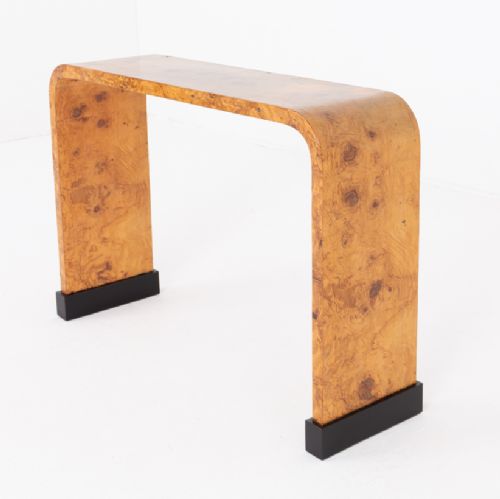
An art deco console brings striking architectural lines to a hallway or living room, combining bold geometric forms with rich figured timbers.
Art Deco Console
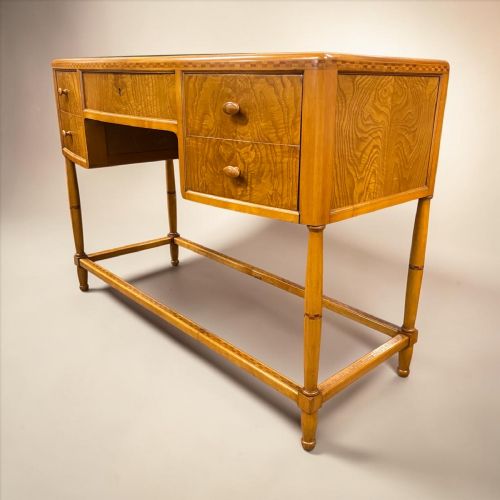
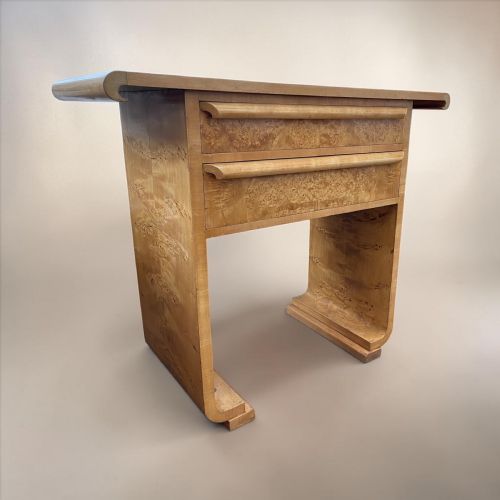
When searching for an art deco console, buyers encounter narrow, wall-abutting tables designed primarily for entrance halls, living rooms, and reception spaces. These pieces emerge predominantly from the nineteen-thirties and nineteen-twenties, showcasing the characteristic linear geometry and stepped profiles of the period.
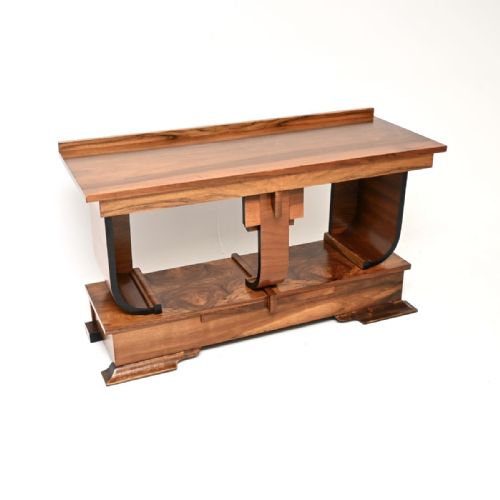
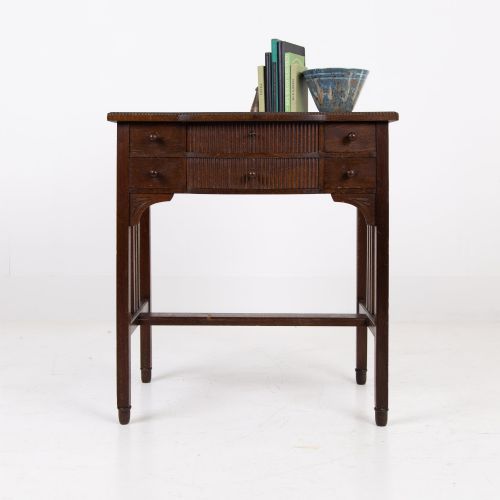
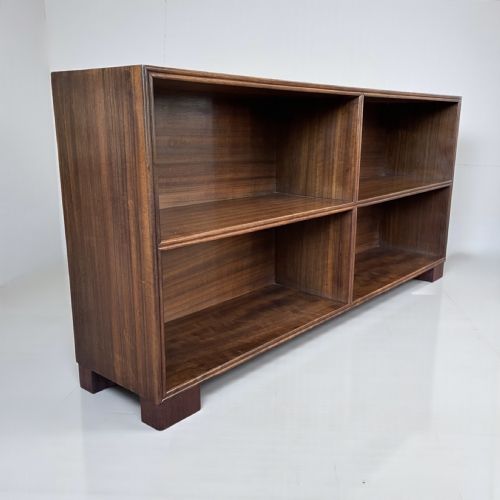
The versions most commonly met on this page include walnut and burr walnut console tables, often paired with serving tables, side tables, and occasional desks. Makers such as Maurice Adams, Hille, and Epstein produced notable examples in this category, alongside English, French, and Scandinavian variations.
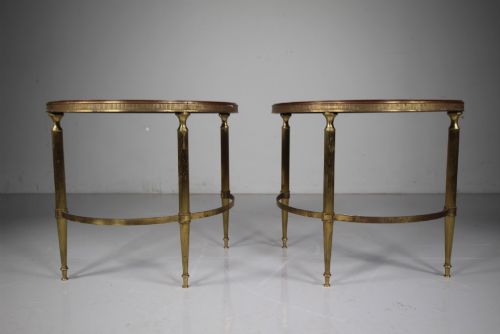
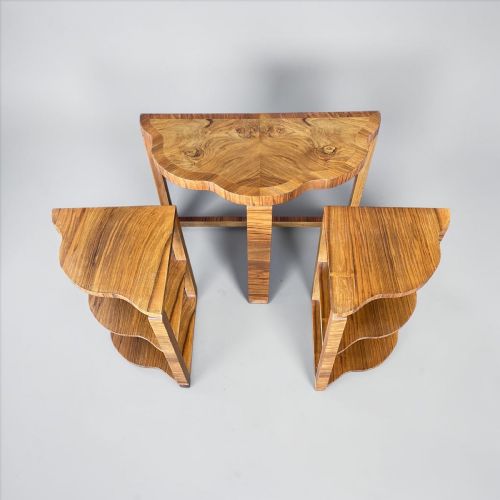
Beyond standard console tables, the category extends to include demi-lune tables, oak modernist designs, and gilt wood overmantel pier console tables. Each object serves a functional surface role while functioning as a primary decorative statement within a room.
Materials and construction
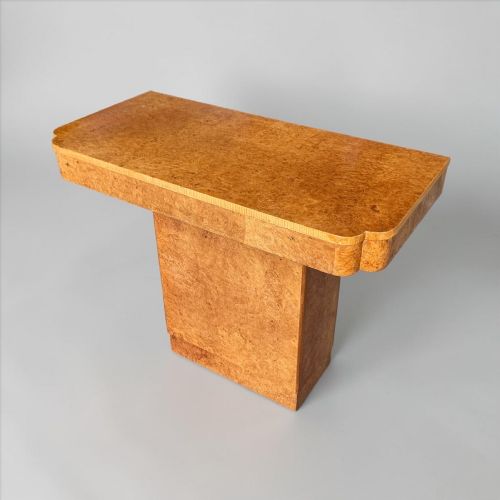
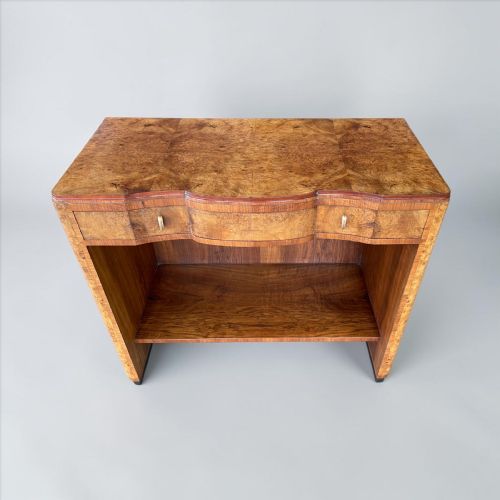
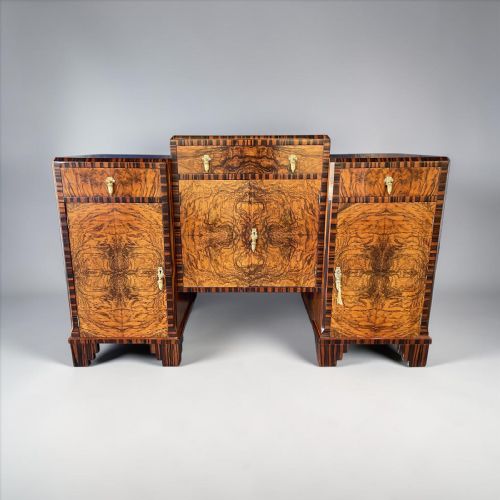
Construction relies heavily on timber framing finished with decorative veneers, particularly burr walnut, walnut, birds-eye maple, and elm. Cabinetmakers utilised these figured woods to create striking grain patterns across flat surfaces and curved aprons.
Additional detailing incorporates ebonised wood, brass fittings, and glass elements to contrast against the warm tones of the primary timbers. Traditional joinery underpins these builds, supporting both rectilinear silhouettes and curved demi-lune forms.
Listings feature items spanning the nineteenth century through the nineteen-forties, constructed from timber, brass, glass, and burr walnut veneer.
Assessing quality
Quality in these pieces is dictated by the selection and matching of wood veneers, where symmetrical grain patterns across a top surface denote superior craftsmanship. Maker attribution, through stamps or known provenance linked to houses like Heals of London or Fortnum and Mason, elevates a piece significantly.
The sophistication of the silhouette also separates standard production from finer output, with stepped profiles, contrasting ebonised highlights, and integrated brass work demonstrating greater maker ambition.
Maurice Adams·Hille·Fortnum and Mason·Epstein·Heals of London
The Art Deco Console Glossary
- Burr Walnut
- A figured wood harvested from walnut tree growths, producing swirling, intricate grain patterns prized for tabletop surfaces. It was widely utilised by cabinetmakers during the interwar period.
- Demi-Lune
- A half-moon shape applied to table tops and frames, allowing the piece to sit flush against a wall while projecting outward. This form is common in period hall and console tables.
- Ebonised Wood
- Timber treated with a dark finish to imitate ebony, providing sharp contrast against lighter veneers like walnut or maple. It appears frequently on mouldings and structural accents.
- Console Table
- A long, narrow table designed to stand against a wall, frequently supported by decorative brackets or slender legs. These tables act as functional ledges for display in entrance spaces.
Art Deco Console: Frequently Asked Questions
Where should I place an art deco console?
These narrow tables suit entrance halls, narrow corridors, and reception rooms where floor space is limited yet a decorative surface is required. Their shallow depth allows them to sit flat against a wall without obstructing walkways.
Pairing a console with a mirror or lighting above creates a balanced focal point upon entering a home. They function well for displaying ceramics, lamps, or everyday items.
How do I care for walnut veneer surfaces?
Polishing veneer surfaces with a traditional wax maintains the moisture in the timber and protects the grain from drying out. Avoid placing these tables in direct sunlight or near heat sources to prevent the veneer from lifting.
Use coasters and felt pads beneath objects placed on the surface to guard against scratches and moisture rings. Gentle dusting with a soft cloth keeps the finish clear.
What distinguishes a console from a side table?
Console tables are specifically proportioned to stand against a wall, often featuring a finished front and sides while the back remains plain or straight. Side tables are generally freestanding and designed to be accessed from multiple angles.
Console designs also tend to be narrower and taller, serving architectural display purposes rather than immediate seating utility. Many feature wall-anchoring elements for stability.
How do I identify nineteen-thirties furniture styles?
Nineteen-thirties design relies on streamlined geometry, smooth curved surfaces, and minimal carved ornament in favour of bold timber grains. Pieces from this decade often embrace stepped forms and contrasting dark and light woods.
Hardware is typically restrained, utilising simple brass or ebonised pulls that complement the linear structure. The overall aesthetic prioritises clean silhouettes and functional elegance.