

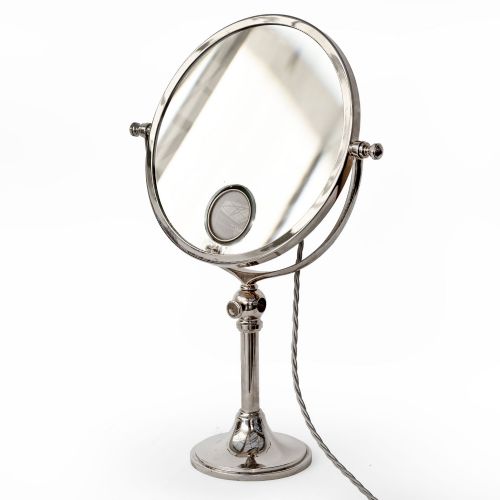



Art Deco Chrome Mirror
An art deco chrome mirror brings the clean, industrial glamour of the interwar years straight into a modern interior.
Art Deco Chrome Mirror
When you search for an art deco chrome mirror, you are looking for functional objects from the 1920s and 1930s that combine polished metal framing with reflective glass. These pieces span straightforward wall-hanging formats to specialised shaving mirrors and elaborate fire surrounds.
The versions you are most likely to encounter on this page range from compact bathroom vanity pieces to large wall mirrors, often displaying geometric framing or plain circular forms characteristic of the period.
Materials and construction
The pieces rely primarily on chrome plating applied over a metal or steel substrate, delivering a bright, corrosion-resistant finish typical of twentieth-century manufacturing. This reflective metal is paired with glass, frequently incorporating mirrored glass panels and occasionally coloured peach, blue or green glass elements.
Construction techniques of the era involved securing the glass within metal channels, sometimes alongside enamel or brass details, to create rigid, unified structures designed for domestic or commercial utility.
Art Deco Chrome Mirror Retail Price Guide 2026
Typical asking prices for art deco chrome mirror among the pieces listed under this phrase on Sellingantiques today, from the lower quarter to the upper quarter. They describe what is for sale here now, not the wider market.
Soldiering on through the decades, one unusual wall mirror even comes complete with a mounted soldier figure.
Judging quality in interwar mirrors
Quality in these objects rests on the crispness of the framing geometry and the condition of the reflective surface. Superior pieces often incorporate architectural side panels, unusual adjustments, or integrated clock movements that elevate them beyond standard utility.
The weight of the metal framework and the clarity of the underlying glass distinguish robust workshop production from lighter domestic items.
Smiths Clock Company·Richard Hudnut
The Art Deco Chrome Mirror Glossary
- Chrome
- An electroplated chromium finish providing a hard, bright, silver-coloured surface that resists tarnishing. It defines the metallic sheen of interwar design.
- Modernist
- A design style prioritising clean lines, minimal ornamentation, and functional form over historical revival. It heavily influenced 1930s metalwork.
- Venetian mirror
- A style of mirror featuring etched or layered glass sections surrounding the central plate. These often appear on decorative trays and wall pieces.
- Cheval mirror
- A full-length mirror hung in a frame that allows it to tilt. They were designed for dressing areas and bedrooms.
Art Deco Chrome Mirror: Frequently Asked Questions
How do I clean an art deco chrome mirror?
Use a soft microfibre cloth with warm soapy water for the chrome frame, ensuring you dry it thoroughly to prevent spotting. Clean the glass separately with a standard glass spray.
Avoid abrasive scouring pads or harsh chemical cleaners, as these can strip the chrome plating or damage the mirrored backing over time.
Were these mirrors made for bathrooms?
Many surviving examples were indeed produced for bathrooms, dressing rooms, and shaving routines. Adjustable arm mirrors and wall-mounted vanity pieces were staples of interwar hygiene spaces.
Others served decorative roles in hallways, living rooms, and above mantelpieces as part of broader interior design schemes.
How do I date a 1930s chrome mirror?
Dating relies on stylistic markers such as geometric symmetry, stepped frames, and the integration of coloured glass panels. Maker marks on associated components like clock movements also help establish exact periods.
Construction methods, including the transition from heavy cast brass bases to lighter steel and chrome assemblies, further narrow down production eras.
Can I hang a heavy wall mirror safely?
Wall-mounted pieces require appropriate fixings suited to the weight of the metal frame and glass plate. Securely anchoring into wall studs or using heavy-duty wall plugs is essential.
Because many period frames lack modern mounting brackets, professional framing advice is often recommended before installation.