


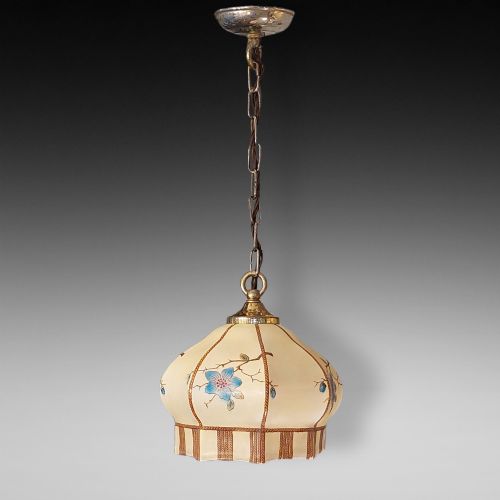
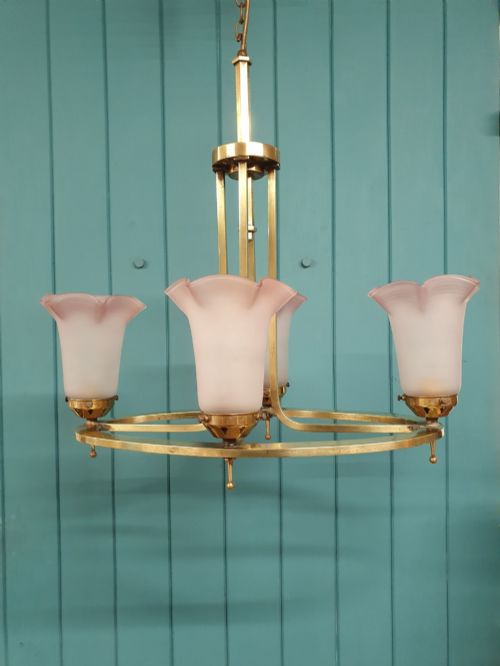

Art Deco Ceiling Lamp
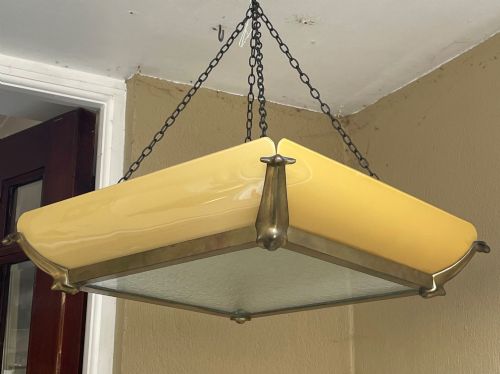
An art deco ceiling lamp brings architectural geometry and diffused illumination into a room, making it a focal point for period interiors.
Art Deco Ceiling Lamp
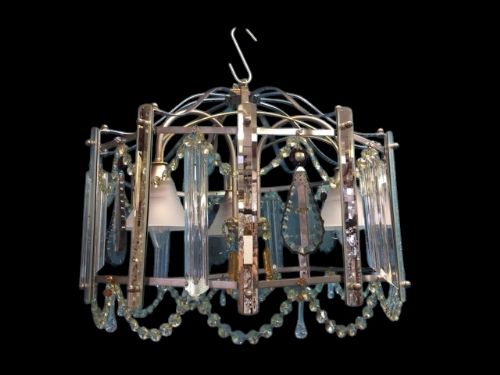
An art deco ceiling lamp is a form of overhead lighting that encompasses pendant lights, chandeliers, flush plafonniers, and hanging lanterns. These fixtures originate primarily from the 1920s and 1930s, though related examples stretch from the Edwardian era through to the mid-century.
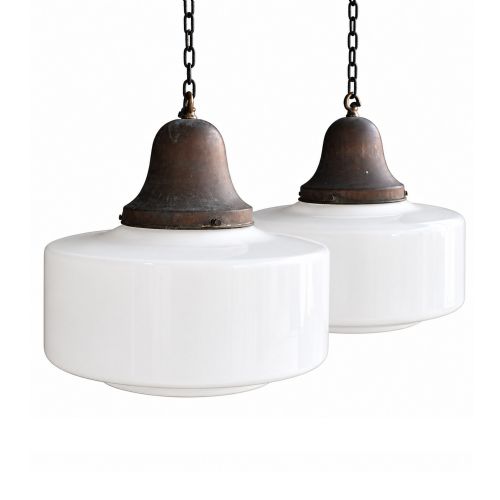
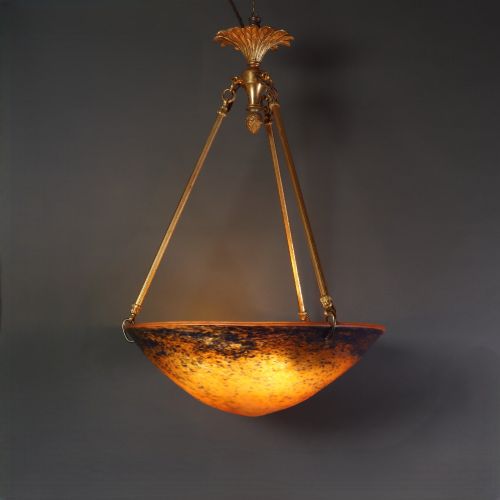
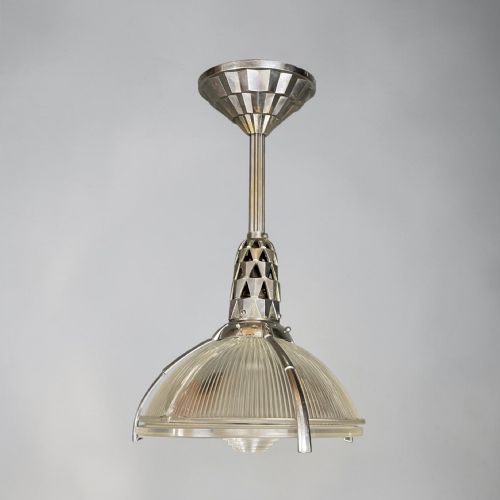
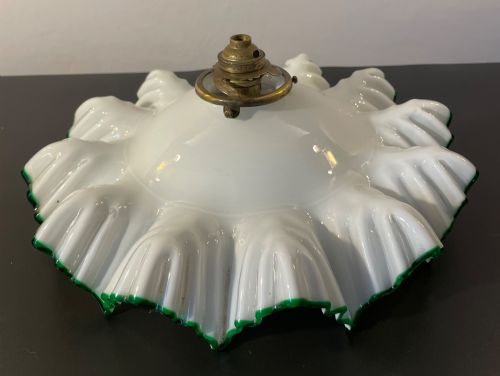
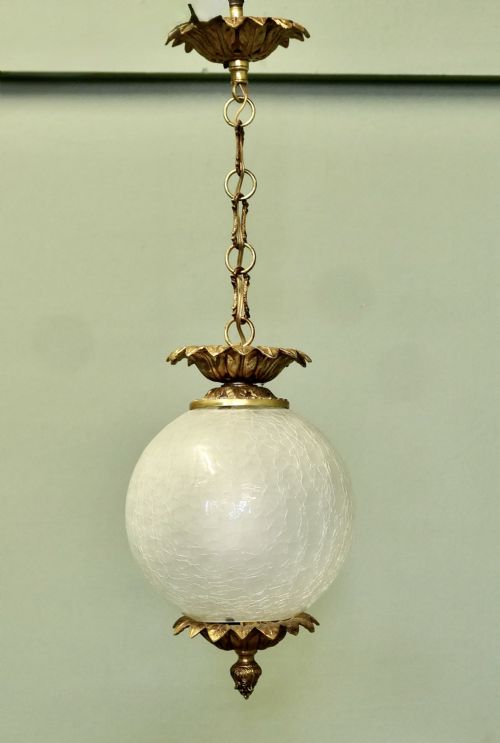
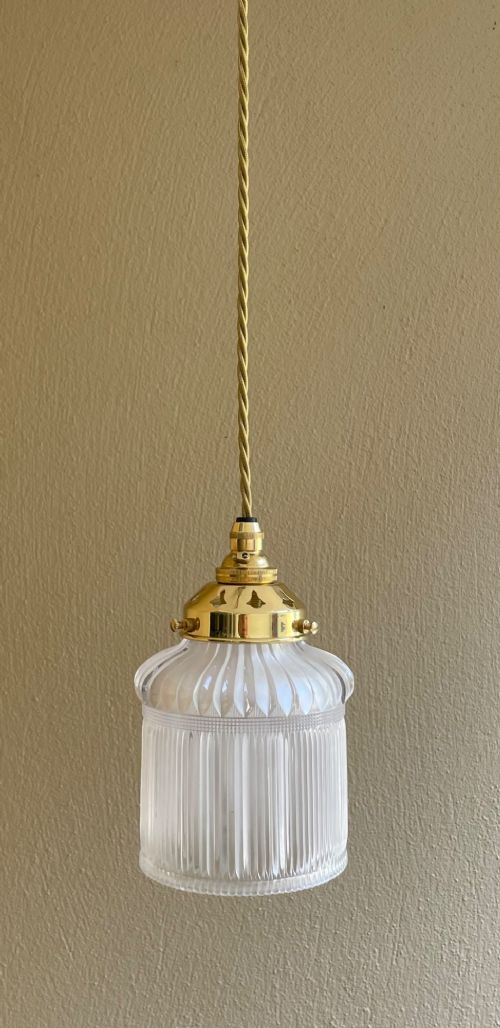
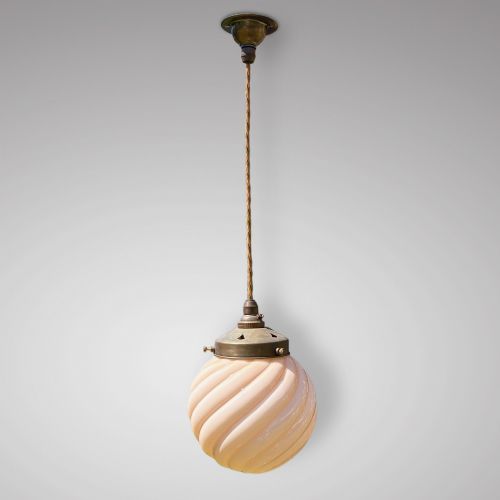
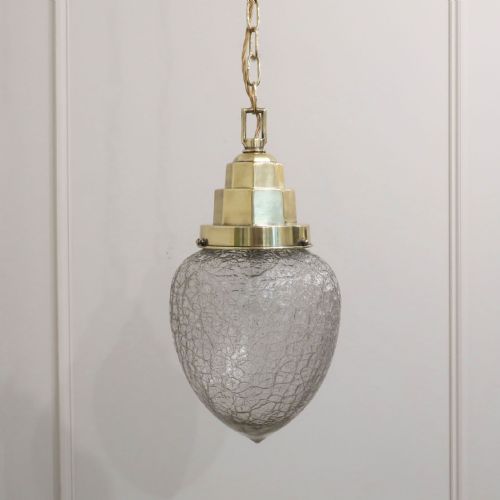
The version most commonly met on this page is the single pendant or flush bowl light featuring pressed, frosted, or opaline glass paired with metal galleries. They span streamlined geometric designs, French glass bowls, and industrial church or hall lights.
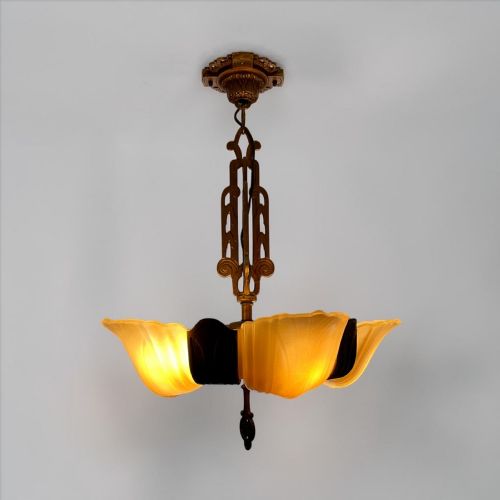
Makers range from notable designers like Charles Schneider, Degué, and Émile-Jacques Ruhlmann to anonymous workshops producing Amsterdam School brass fixtures and slip shade chandeliers. Their common thread is a reliance on strong silhouette and functional decorative metalwork.
How they were made
Metalwork relies heavily on spun brass, cast bronze, polished chrome, and steel, often formed into stepped galleries, geometric frames, or simple suspension chains. Copper and nickel-plated elements also appear to support heavier glass bowls and lanterns.
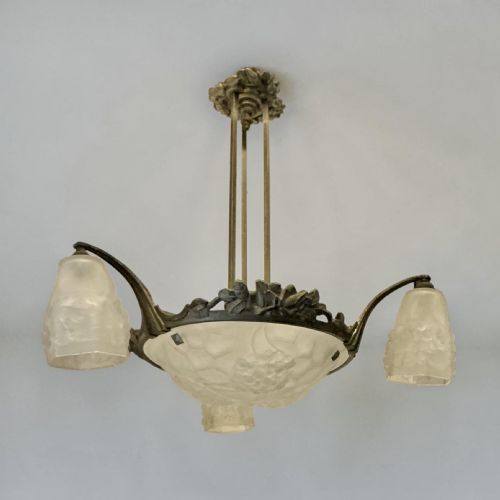
Glass production utilises moulding, acid-etching, frosting, and crackle effects to soften the output of early electric bulbs. Hand-painted motifs, amber tinting, and heavy cut crystal add decorative depth to shades and slip panels.
Art Deco Ceiling Lamp Retail Price Guide 2026
Typical asking prices for art deco ceiling lamp among the pieces listed under this phrase on Sellingantiques today, from the lower quarter to the upper quarter. They describe what is for sale here now, not the wider market.
Listings feature brass, chrome, and copper hardware paired with frosted, opaline, cut, and crackle glass shades.
What varies in quality
Quality rests in the substance of the glass and the weight of the metal fittings. Thick, heavy-moulded glass shades and solid brass or chrome components indicate superior manufacturing over thin pressed alternatives.
Distinction also lies in attribution and design execution. Signed pieces by established glassmakers command greater interest than standard commercial production, while complex multi-tiered chandeliers show superior structural ambition.
Charles Schneider·Degué·Émile-Jacques Ruhlmann
The Art Deco Ceiling Lamp Glossary
- Plafonnier
- A ceiling-mounted bowl light that sits flush or close to the ceiling. These fixtures project light downward while concealing the bulb within decorative glass.
- Opaline glass
- A milky, semi-translucent glass that diffuses light evenly without harsh glare. It was widely used for twentieth-century pendant and shade production.
- Slip shade
- A moulded piece of glass that fits directly into a metal frame or basket to form the body of a chandelier. Multiple shades are typically arranged around a central support.
- Gallery
- The metal collar or rim that grips a glass lampshade and attaches it to the suspension rod or chain. It provides both structural support and decorative framing.
- Amsterdam School
- An architectural and design style originating in the Netherlands characterised by expressive brickwork, organic forms, and rich metal detailing. Pieces from this movement often utilise dramatic brass framing.
Art Deco Ceiling Lamp: Frequently Asked Questions
How do I hang a heavy art deco ceiling lamp?
Heavy fixtures require secure fixing to ceiling joists rather than plaster alone, often utilising ceiling roses and robust metal hooks. Professional installation is recommended to support the combined weight of thick glass shades and brass or chrome frames.
Electrical wiring must also be inspected and adapted to modern safety standards during installation. Many vintage pendants arrive rewired, but the hanging mechanism requires proper structural support.
What rooms suit an art deco ceiling lamp?
These lamps suit hallways, dining spaces, and high-ceilinged living rooms where their sculptural forms can be appreciated. Flush plafonniers work well in rooms with lower ceilings, while multi-tier chandeliers demand vertical space.
Stylistically, they complement period properties, industrial conversions, and modern interiors seeking a strong geometric focal point. Their diffused glass creates a warm ambient glow suited to living areas.
How do I identify a 1920s pendant light?
Identification relies on material combinations such as frosted opaline glass, heavy brass galleries, and stepped chrome tiers. The presence of mould-blown patterns and structural symmetry points directly to this era.
While exact dates can be difficult to verify without a signature, construction methods like cast metal components and heavy glass thickness help distinguish twenties production from later replicas.
Are replacement glass shades available?
Original replacement shades are scarce and usually sourced through specialist antique dealers when a match is required. Because individual shades were often hand-moulded by specific glasshouses, finding an exact duplicate takes time.
When buying, it is best to ensure the existing glass is complete and undamaged. Mixing mismatched slip shades or globes alters the visual balance of the fixture.