
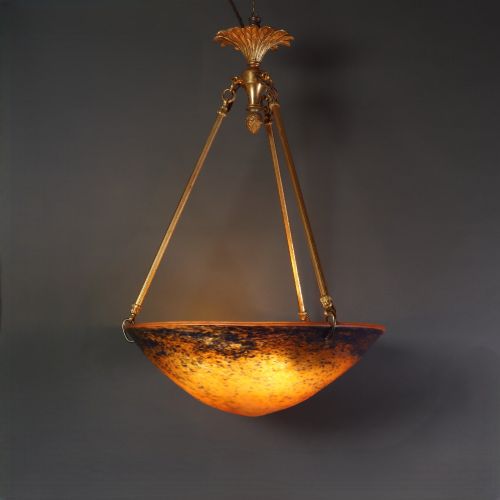


Art Deco Bowl Shade
An art deco bowl shade brings clean architectural lines and diffused light to a room, offering genuine period charm.
Art Deco Bowl Shade
An art deco bowl shade forms part of a ceiling light or pendant arrangement designed to illuminate a space with characteristic geometry and style. These pieces span the 1920s and 1930s, taking the form of hanging dishes, plafonniers, and uplight pendant lampshades.
The most common examples on this page utilise pressed satin glass, frosted glass, or carved alabaster to soften the glow from the bulb above. Metal suspensions in brass, patinated brass, and copper frequently secure these shallow bowls in place.
Regional variations emerge across the selection, encompassing English white alabaster dish lights and Swedish shaped carved alabaster ceiling lights. These configurations serve the same practical purpose of ceiling lighting while reflecting distinct material preferences of the period.
Materials and construction
Makers shaped glass through pressing and opalescent techniques to create textured surfaces like the clam shell chandelier or the Dahlias plafonnier. Satin and frosted finishes helped diffuse harsh light while displaying geometric or floral moulding.
Alabaster was carved into substantial shallow dishes and bowls, utilised for heavy ceiling fixtures that hung from chains or fabric cords. Metal components in brass, copper, and patinated brass provided the structural support and hardware for these pendant lights.
Some bowls are shaped like giant clams or carved with heavy dahlias, proving that 1930s lighting engineers had a soft spot for the garden.
Judging the quality
The depth of carving in alabaster and the crispness of the moulding in pressed satin or opalescent glass distinguish finer examples from simpler production. Superior pieces display harmonious proportions between the heavy glass or stone bowl and its metal suspension.
The sophistication of the metalwork, whether patinated brass, copper, or plain brass, contributes significantly to the overall presence of the ceiling light. Maker attribution, such as signed René Lalique glass, elevates certain pieces above standard anonymous production.
René Lalique
The Art Deco Bowl Shade Glossary
- Plafonnier
- A ceiling light fixture mounted flush or close to the ceiling, typically featuring a glass bowl held by metal mounts. This French term appears frequently in descriptions of art deco lighting.
- Opalescent glass
- Glass containing ingredients that cause it to milky-blue or fire in different lights. It scatters light effectively and adds visual depth to pendant lampshades.
- Satin glass
- Glass treated to have a velvety, matte finish rather than a high gloss. This texture diffuses glare efficiently in interior lighting.
- Alabaster
- A fine-grained, translucent stone used for carved bowls and dishes. It allows warm light to pass gently through its natural veining.
- Uplight
- A pendant lamp designed to cast its illumination upward toward the ceiling rather than straight down. This setup creates ambient room illumination.
Art Deco Bowl Shade: Frequently Asked Questions
How do these hang?
These bowl shades typically hang from ceilings using metal chains, rods, or fabric cords attached to brass, copper, or patinated brass hardware.
They are wired as pendant lights or flush ceiling fixtures to illuminate living spaces from above.
What materials are used?
The primary materials found in these pieces are frosted glass, pressed glass, opalescent glass, and carved alabaster.
Supporting framework and suspensions utilise metals such as brass, patinated brass, and copper, alongside fabric cords.
How do I date them?
Dating relies on stylistic markers from the 1920s and 1930s art deco period, combined with manufacturing methods like pressed satin glass.
Documentation, signatures such as René Lalique, or specific regional stone types like English or Swedish alabaster also help narrow the timeline.
Were they for low ceilings?
Plafonniers and flush ceiling lights were specifically designed for rooms with restricted vertical clearance, sitting close to the plaster.
Deeper hanging dishes and chandeliers used chains or cords to position the bowl at suitable heights for general room illumination.