





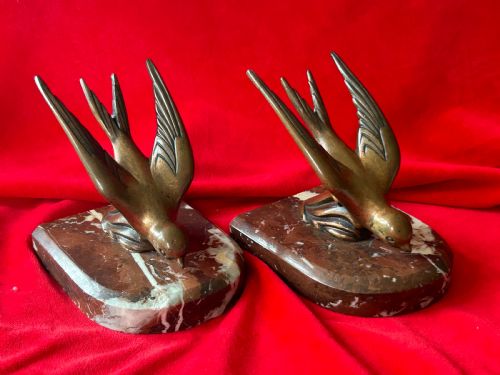
Art Deco Bird Figure
An art deco bird figure brings the aerodynamic sweep of the interwar years straight onto a mantelpiece or desk.
Art Deco Bird Figure
When you search for an art deco bird figure, you encounter sculptures, bookends, and decorative dishes capturing avian forms through the aesthetic of the 1920s and 1930s. These pieces translate the natural world into stylised geometries, focusing on swift lines and balanced postures.
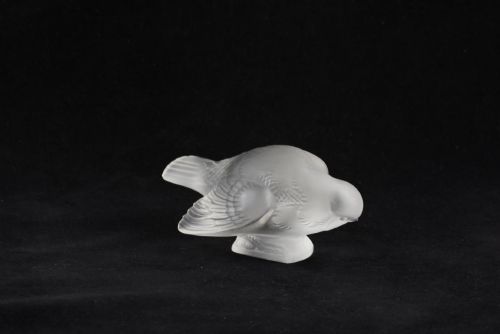
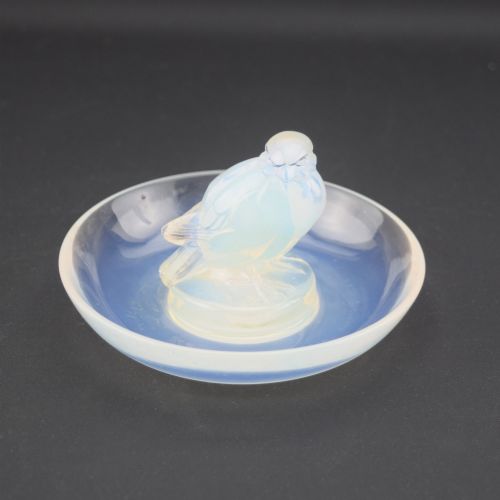
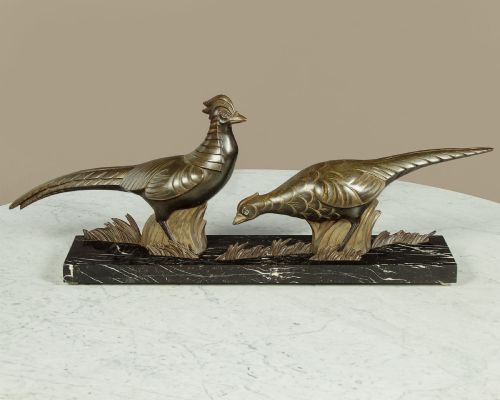
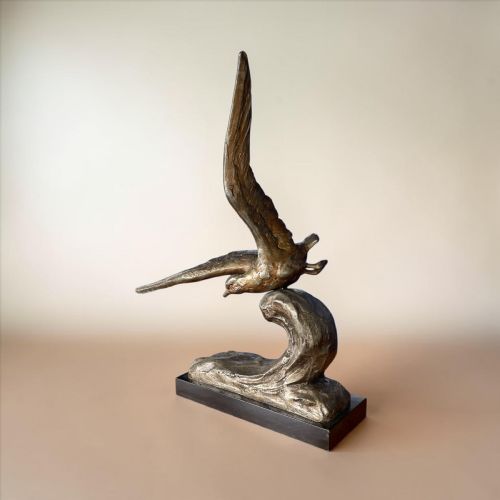
You are most likely to meet frosted and opalescent glass paperweights alongside cast bronze sculptures mounted on heavy plinths. The subjects range from sparrows and albatrosses to golden pheasants, each reflecting the period's fascination with speed and exotic grace.
How they were made
Makers utilised cast bronze and patinated metal to render figures with muscular tension and sleek plumage, often anchoring them to bases of black marble. These metallic elements rely on precise foundry work to capture the sharp angles and smooth surfaces characteristic of the era.
Glass pieces employ press-moulding techniques in frosted and opalescent finishes, sometimes enhanced with blue staining to accentuate the carved details of feathers and wings.
Art Deco Bird Figure Retail Price Guide 2026
Typical asking prices for art deco bird figure among the pieces listed under this phrase on Sellingantiques today, from the lower quarter to the upper quarter. They describe what is for sale here now, not the wider market.
Even a humble ashtray from this era manages to look like a soaring sparrow.
What varies in quality
The distinction between tiers of work rests on the crispness of the casting and the depth of the finish, whether in the sharpness of bronze feather details or the luminosity of moulded glass. Superior examples display a deliberate harmony between the bird and its base, such as a wave or a marble plinth.
Lesser items offer simpler silhouettes with softer edges and less refined patination, lacking the dynamic tension that defines the best sculptural work of the period.
Rene Lalique·Zoldan Kovats·Paul Joris·Henry Bird
The Art Deco Bird Figure Glossary
- Patinated metal
- Metal treated with chemical solutions to produce a coloured surface finish. This technique protects the underlying material while adding depth to the sculpture.
- Opalescent glass
- Glass that displays a milky, iridescent appearance, shifting in tone depending on the light. It was widely used in French decorative pieces during the interwar period.
- Plinth
- A heavy base supporting a sculpture or bookend. In this period, black marble was frequently utilised for this purpose to provide stability and contrast.
- Frosted glass
- Glass treated by acid-etching or sandblasting to create a matte, translucent texture. This finish highlights sculptural reliefs by diffusing light across the surface.
Art Deco Bird Figure: Frequently Asked Questions
What materials were used for an art deco bird figure?
Makers of the interwar period primarily worked with cast bronze, patinated metal, and moulded glass. These materials allowed for both sleek metallic lines and translucent effects.
Heavier elements like black marble frequently served as mounting plinths to ground the dynamic avian forms.
How do I display an art deco bird figure?
These pieces suit placement on flat surfaces where their silhouettes can be appreciated against a plain wall. Bookends work well on sturdy shelves, while glass paperweights benefit from natural light.
Keep them away from direct edges where vibration might cause a fall, particularly heavier bronze and marble combinations.
Are these figures from the nineteen thirties?
The period style spans the 1920s and 1930s, capturing the modernist shift towards streamlined natural forms. Most examples date from this interwar window.
Stylistic cues include geometric simplification and an emphasis on aerodynamic movement rather than strict realism.
What bird species appear most often?
Common subjects include albatrosses, pheasants, and small sparrows, often depicted in active postures. Sculptors favoured birds with distinct silhouettes that lent themselves to stylisation.
Wings outstretched in flight or compact resting shapes dominate the sculptural output of the era.