



Art Deco Bedside Pedestals
Art deco bedside pedestals are architectural bedroom pieces from the interwar decades that bring geometric elegance and practical storage to a modern interior.
Art Deco Bedside Pedestals
Art deco bedside pedestals comprise compact cabinets, cupboards and chests designed primarily for the bedroom during the 1920s, 1930s and 1940s. These pieces often serve double duty as lamp tables or occasional tables, reflecting the flexible domestic arrangements of the period.
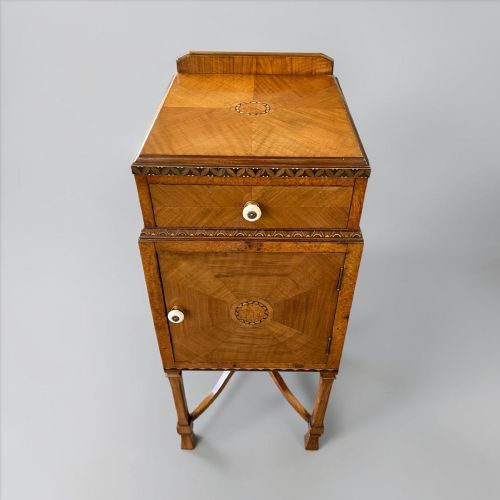
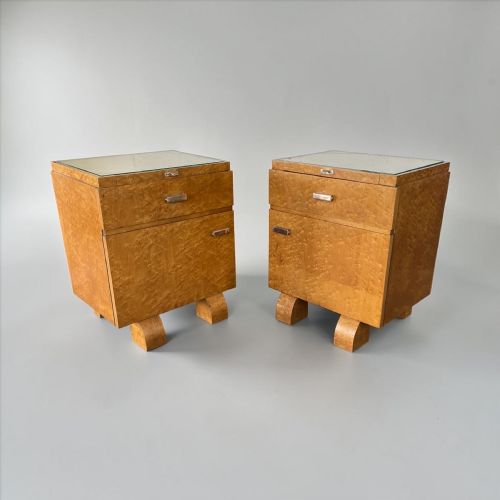
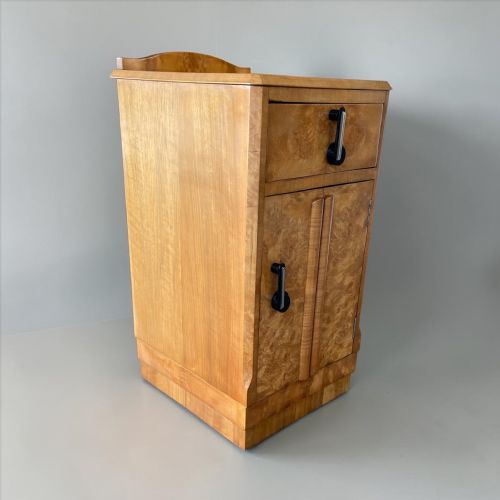
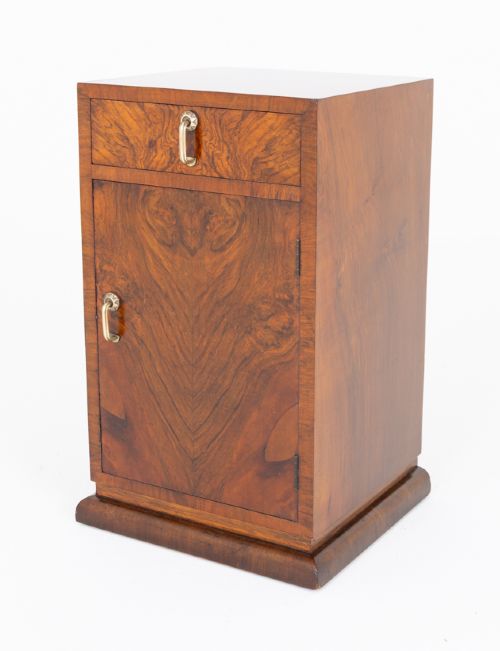
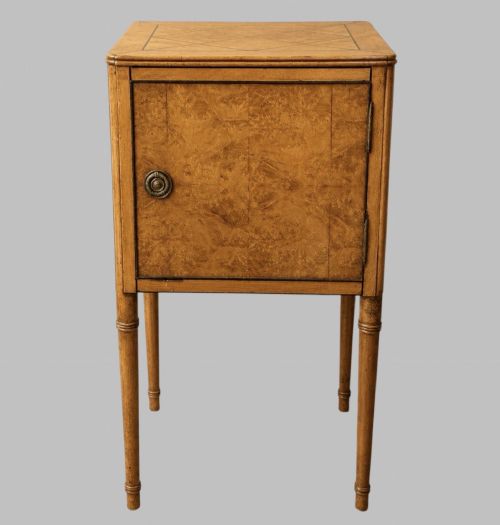
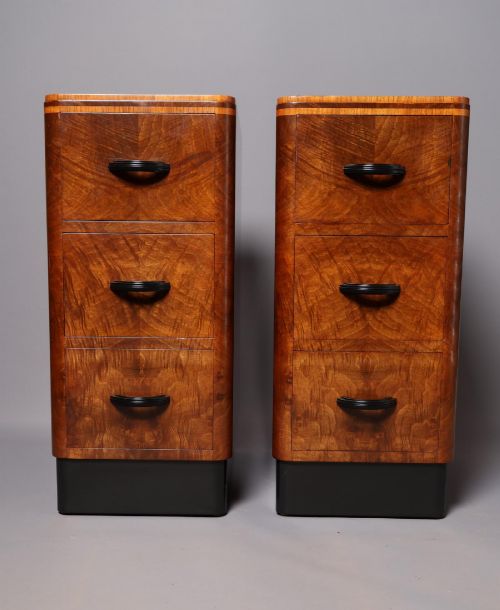
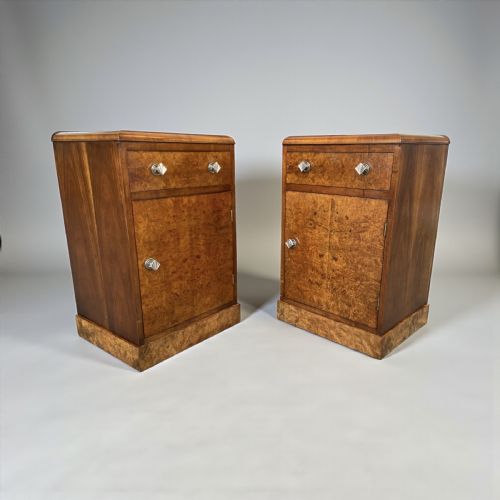
The most common formats on this page are matched pairs of bedside cabinets and single tables constructed in rich timbers. Walnut, burr walnut and birds eye maple dominate the selection, frequently paired with contrasting veneers like satinwood.
Beyond standard cupboards, the category occasionally stretches to encompass related forms such as nightstands and specialised lamp tables. These variations maintain the characteristic clean lines and functional compartments expected from the style.
How they were made
Cabinet makers constructed these pedestals using solid timber frames overlaid with highly figured decorative veneers. Burr walnut and birds eye maple were sliced thin to display intricate grain patterns across flat drawer fronts and curved cabinet doors.
Metal accents played a crucial supporting role in the construction, incorporating chrome, brass and polished white metal for handles, trim and table lamp bases. Glass and mirror tops were also utilised to protect wooden surfaces and reflect light.
Joinery techniques focused on creating seamless geometric silhouettes typical of the period, often combining internal carcases of standard wood with premium exterior veneers. Parchment and leather further augmented the tactile surface finishes on select lamp tables.
Listings span three distinct decades: the 1920s, 1930s and 1940s, with walnut appearing as the most common primary material.
What varies in quality
The choice and execution of veneer fundamentally divide standard examples from exceptional ones. Master cabinet makers selected symmetrical burr walnut or blonde birds eye maple grains that wrapped fluidly around the curves of a bedside cabinet.
Attribution to documented workshops and designers elevates certain pieces above anonymous production. Cabinets bearing the stamps or distinct hallmarks of known makers command greater attention from collectors of the period.
The integrity of matching pairs also influences the standing of the piece. True pairs that retain identical grain matching, original hardware and balanced proportions represent a higher tier of manufacture than assembled pairs.
Walter Carter Harrods·Maurice Adams·Harry and Lou Epstein
The Art Deco Bedside Pedestals Glossary
- Burr walnut
- A specialised timber cut from the abnormal growths of a walnut tree, yielding dense, swirling grain patterns. It was heavily utilised by art deco cabinet makers for high-end decorative facades.
- Birds eye maple
- A figured wood showing small, swirling dots resembling tiny eyes interrupting the grain. This pale timber defines many blonde art deco bedroom suites.
- Satinwood
- A durable, yellowish-brown hardwood with a lustrous sheen, often used for contrasting stringing or secondary veneers. It brings brightness to darker walnut furniture pieces.
- Nightstand
- A small bedside table or cabinet intended to hold a lamp and nighttime essentials. In art deco design, these often feature enclosed cupboards rather than open shelves.
- Occasional table
- A small, movable table used for secondary purposes such as holding a lamp or drinks. These share the geometric vocabulary of matching bedside pedestals.
Art Deco Bedside Pedestals: Frequently Asked Questions
Are these pedestals sold as pairs?
Many art deco bedside cabinets and tables appear in matched pairs, reflecting how bedrooms were furnished during the period.
Single pedestals also occur frequently, offering flexible placement options for smaller spaces or eclectic interior schemes.
What woods were used?
Walnut and burr walnut are the most prevalent timbers, accompanied by pale birds eye maple and occasional satinwood.
These woods were chosen specifically for their striking natural grain patterns rather than uniform appearance.
How do I date these pieces?
The majority of pieces date from the 1930s, with some examples spanning the 1920s to 1940s.
Stylistic cues such as streamlined geometric forms and specific veneer combinations help anchor them within this interwar bracket.
Can I use them as lamp tables?
Yes, many listings explicitly combine the roles of bedside tables and lamp tables. Their compact footprints and built-in surface space suit living room corners just as well as bedroom settings.