



Architectural Salvage Door Hardware
Architectural salvage door hardware consists of handles, knockers, locks, and hinges spanning centuries, offering practical fittings with historical character.
Architectural Salvage Door Hardware
Architectural salvage door hardware encompasses functional metalwork and ironmongery rescued from older buildings, ranging from heavy locks to decorative plates. These pieces reflect distinct periods of design and domestic utility, serving both restoration projects and decorative display.
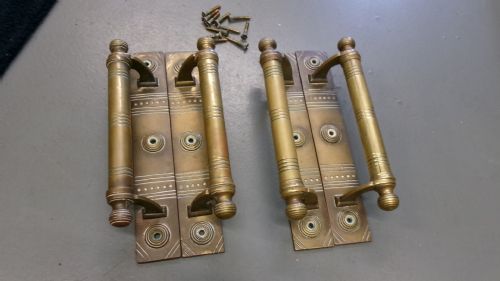
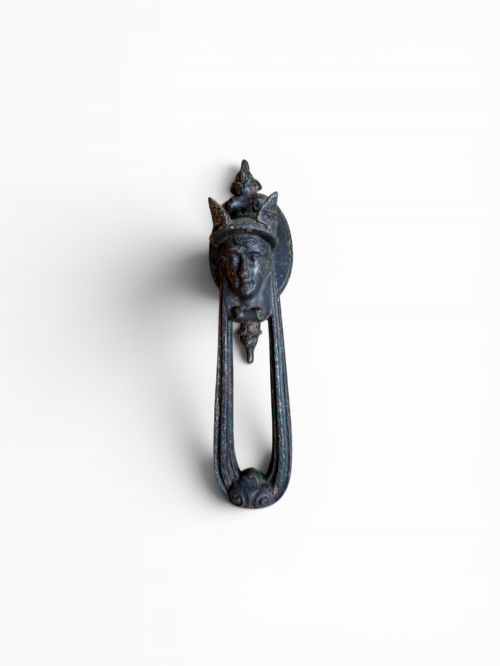
Victorian and Georgian brass items dominate the selection, alongside earlier seventeenth-century locks and twentieth-century handles. Buyers commonly encounter brass door knobs, cast iron knockers, and matching push plates from the nineteenth century.
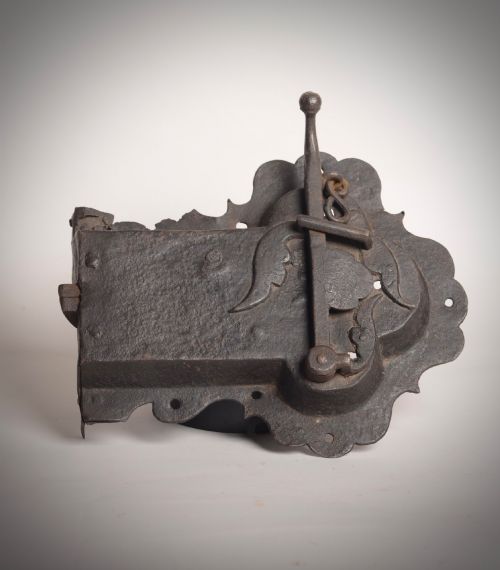
The objects take many forms, including rim locks, bell pulls, letter boxes, and hinges finished with acorns or urn finials. Each item carries the specific material weight and functional mechanism of its original era.
How they were made
Makers utilised casting, forging, and stamping techniques to shape metals such as brass, bronze, cast iron, wrought iron, and steel. Ironmongery often combined robust structural plates with movable latches, springs, and keys.
Decoration relied on applied motifs, engraved details, and fitted components like horn insets, crystal grips, and wooden mounts. Finishes varied from polished brass to blackened iron and enamelled surfaces.
Listings include items manufactured from brass, bronze, cast iron, wrought iron, steel, wood, horn, paper, and crystal.
What varies in quality
The standard of these pieces depends on the weight of the metal cast and the complexity of the mechanism. Finer examples retain working internal springs, original keys, and crisp surface ornamentation without excessive wear.
Scale and completeness set individual items apart, particularly matched pairs, full lock sets with keeps, and signed sample boards. Simpler utility hardware contrasts with ornate classical revival or art nouveau designs.
Gerwin & Co Birmingham
The Architectural Salvage Door Hardware Glossary
- Rim lock
- A mechanical lock housed in a metal box mounted on the surface of a door rather than mortised inside it. These were common on heavier internal and external doors.
- Finial
- A decorative terminal ornament placed at the ends of hinges or architectural fittings. Acorn and urn shapes frequently appear on nineteenth-century hardware.
- Bell pull
- A mechanical linkage fitted to a wall or door frame connected to a household bell system. They allowed visitors to summon domestic staff.
- Push plate
- A protective metal or enamel plate fixed to a door to prevent finger marks around the handle. They often match the design of adjacent door pulls.
Architectural Salvage Door Hardware: Frequently Asked Questions
What periods do these pieces come from?
The inventory spans several centuries, including seventeenth-century locks, Georgian brasswork, and Victorian ironmongery. Later items extend into the Edwardian era and the early twentieth century.
Victorian pieces form the largest group, featuring cast iron knockers, brass knobs, and engraved letter boxes alongside Arts and Crafts and Art Nouveau designs.
Are the locks and latches still working?
Many items retain their original internal mechanisms, and some listings include working box locks with keys and keeps. Operational status depends on the specific survival of internal springs and bolts.
Buyers should examine individual descriptions to confirm whether mechanical components remain intact and functional for installation.
What materials are most common?
Brass and cast iron appear most frequently across handles, hinges, and knockers. Bronze and wrought iron are also common in seventeenth-century latches and twentieth-century pull handles.
Some pieces incorporate mixed materials, such as steel and wood locks, horn bell ringers, crystal grips, and enamelled push plates.
How can I match pairs of hardware?
Listings often group items into matched pairs of door knobs, pull handles, and hinges. Sets of multiple matching hinges or complete lock assemblies with matching key plates are also available.
Reviewing the specific dimensions and period details in each listing helps ensure consistency across restoration projects.