


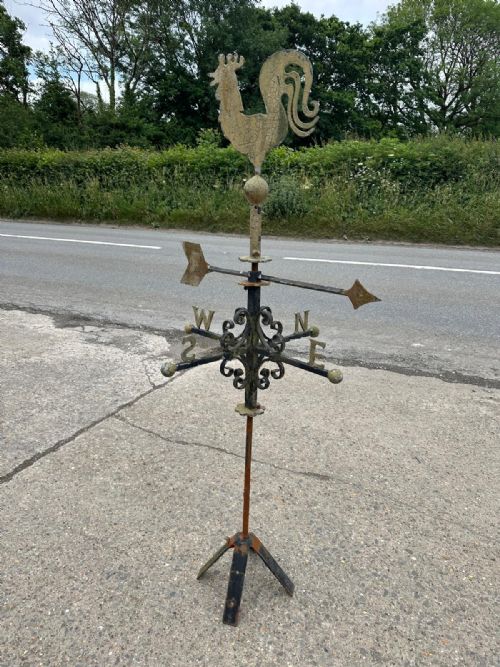
Architectural Weather Vane
An architectural antique weather vane crowns a roofline with character, bringing centuries of metalwork and folk art tradition to your property.
Architectural Weather Vane
When you search for an architectural antique weather vane, you encounter enduring roof ornaments shaped by hands from the Georgian era through the early twentieth century. These objects served the practical purpose of indicating wind direction while standing as sculptural focal points on barns, outbuildings, and houses.
Collectors seek these items for their authentic surface patina and the distinct regional styles recorded in British and English folk traditions. Each example preserves a fragment of vernacular architecture and historic metalworking skill.
Materials and construction methods
Makers shaped these weather vanes primarily from sheet copper and wrought iron, employing hammering and joining techniques suited to enduring outdoor exposure. The use of sheet metal allowed artisans to create hollow sculptural forms that caught the wind effectively while remaining balanced on their pivots.
Surfaces often retain traces of old paint or weathered metal patinas developed through decades of atmospheric exposure. Wood and stone elements occasionally appear in supporting mounts or structural bases, grounding the lighter metalwork above.
Architectural Weather Vane Retail Price Guide 2026
Typical asking prices for architectural weather vane among the pieces listed under this phrase on Sellingantiques today, from the lower quarter to the upper quarter. They describe what is for sale here now, not the wider market.
A metal huntsman silhouette keeps eternal watch over the wind direction, joining flocks of copper cockerels surveying the horizon.
Judging quality and character
The distinction between ordinary and exceptional examples rests in the sculptural articulation of the silhouette and the integrity of the original surface. Finer specimens display spirited modelling, particularly in cockerel forms and huntsman silhouettes, where the maker captured movement and proportion with conviction.
Surface preservation defines the visual appeal of each piece, with undisturbed old paint and natural copper oxidation holding greater aesthetic value than modern intervention. The balance between structural durability and graceful ageing separates standard utility items from true works of folk art.
The Architectural Weather Vane Glossary
- Cockerel
- A representation of a rooster traditionally placed atop a weather vane to symbolise vigilance and watchfulness. This motif appears frequently in British folk art metalwork.
- Folk Art
- Artistic work created within a traditional culture by self-taught or unpretentious makers. These pieces reflect regional styles rather than academic or classical rules.
- Silhouette
- An outline of a subject filled in with a solid colour, often used in metal weather vanes to depict figures such as huntsmen. This technique creates a strong visual profile against the sky.
- Wrought Iron
- Iron that has been heated and worked with tools by a blacksmith rather than cast in a mould. It provides the strong, fibrous structural framework needed for historic weather vanes.
Architectural Weather Vane: Frequently Asked Questions
How do weather vanes work?
A weather vane pivots freely on a vertical shaft, driven by a fin or sculptural element that catches the breeze. The heavier front portion points into the direction from which the wind blows.
Historically, these devices connected to interior dials or simply provided a clear visual indicator for farmers and mariners looking up from the yard.
Where should I mount one?
These pieces suit high points on buildings where wind flows freely, such as roof ridges, cupolas, or dedicated mounting brackets on exterior walls. Ensuring adequate clearance allows the vane to rotate without obstruction.
Many collectors also display them indoors on custom stands to appreciate the sculptural form and surface texture up close.
How do I date an old vane?
Dating relies on material analysis, construction methods, and stylistic cues such as the simplicity of the silhouette or the type of fixings used. Nineteenth-century examples often show hand-beaten sheet copper and traditional blacksmithing in the ironwork.
Comparing the wear patterns and paint layers with documented folk art pieces helps confirm the period of origin.
Are these vanes weather resistant?
Historic copper and iron weather vanes survived decades outdoors because their materials naturally weather to form protective oxide layers. Copper develops a stable green patina, while iron relies on historic paint layers or maintained surfaces to resist rust.
If displayed outdoors today, placement in sheltered historic settings or periodic conservation checks help preserve their condition.