
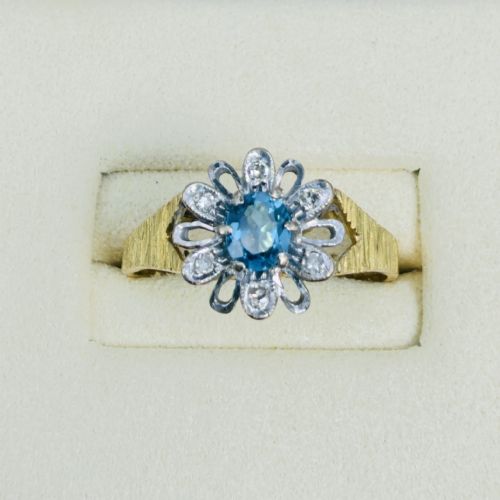
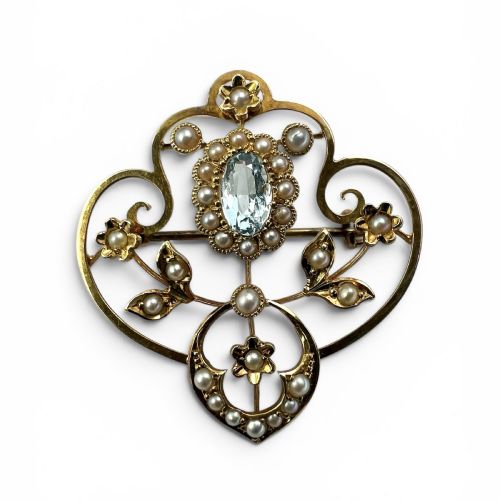
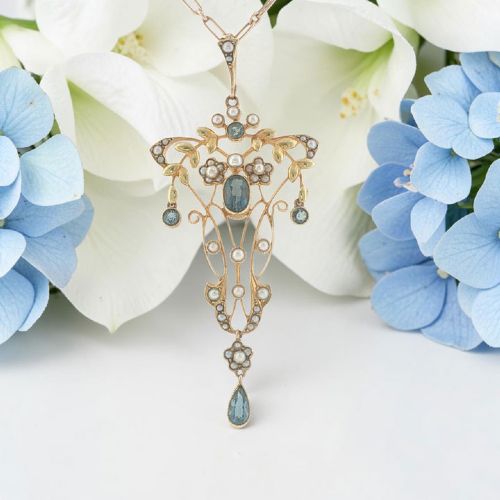
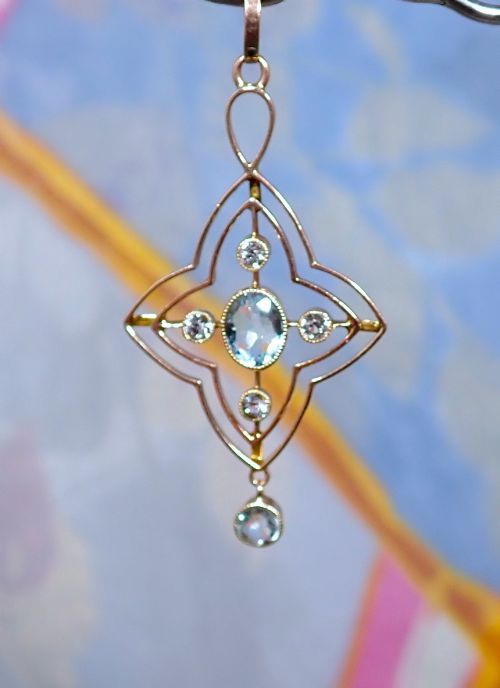

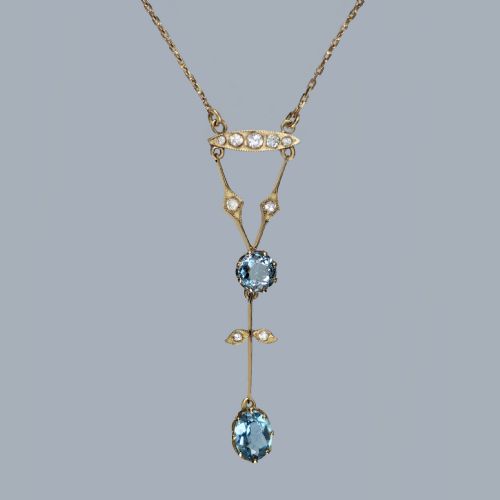


Aquamarine Gold Jewellery
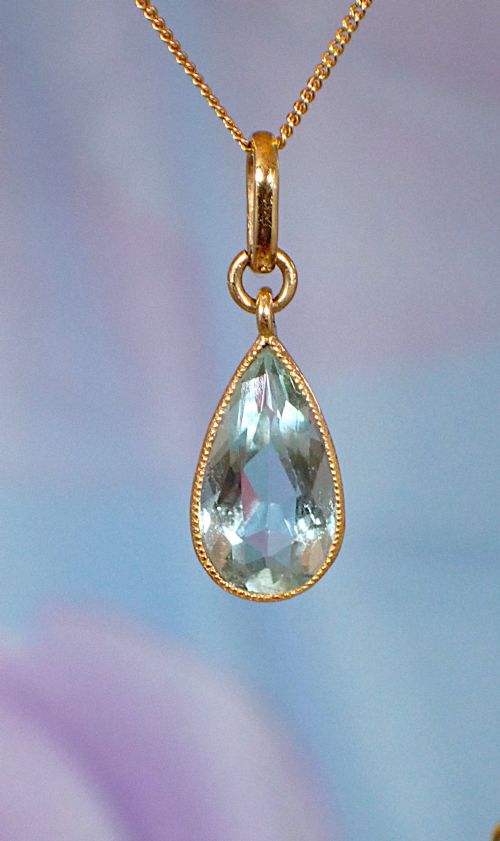
Aquamarine gold jewellery brings together pale blue beryl and precious metal in rings, pendants, and brooches that span the Edwardian era to the mid-century.
How they were made
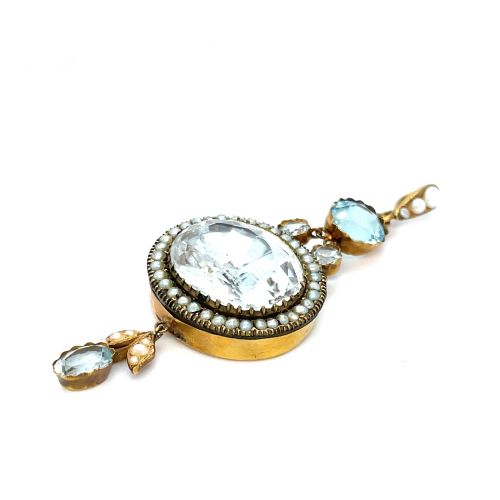
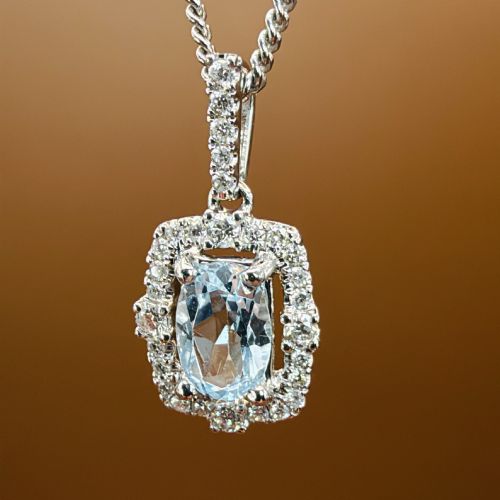
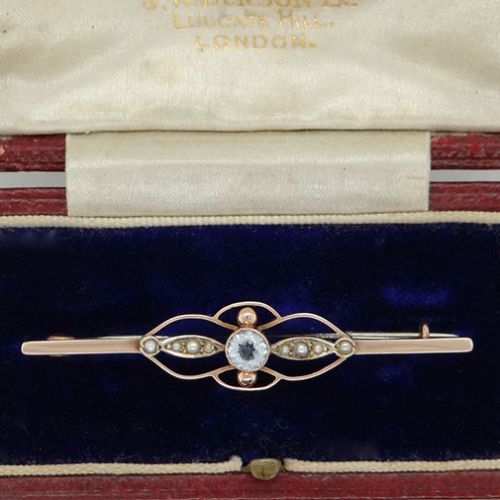
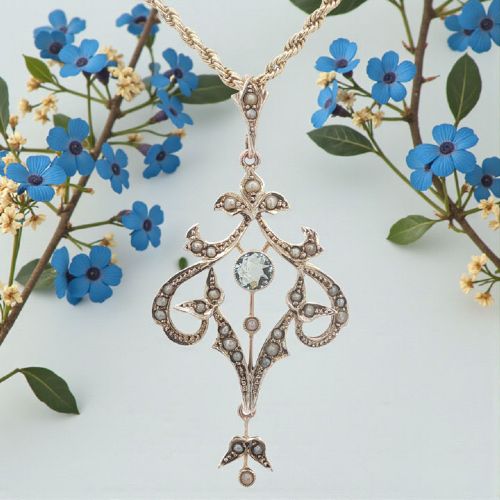
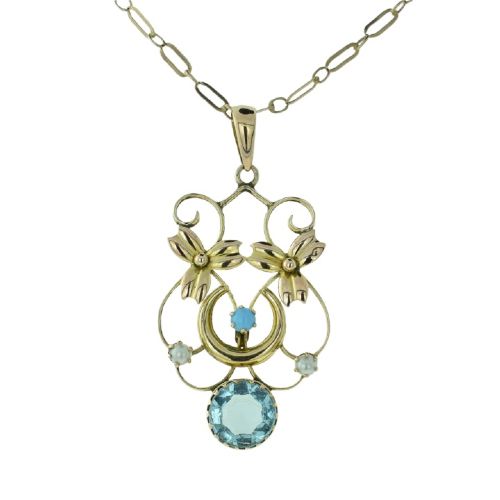
Makers set aquamarines into yellow, rose, and white gold of varying purities, often incorporating platinum for fine claw settings and millegrain edges during the Edwardian and Art Deco years. Stones appear alongside diamonds, seed pearls, tourmalines, and garnets, secured in forms ranging from simple bezel mounts to complex cluster and lavalier designs.
Craftsmen utilised casting, wirework, and hand fabrication to construct the mounts for these stones, applying surface details such as engraving and granulation. Foil backs occasionally appear in older Victorian items to enhance the optical depth of the beryl within closed settings.
What varies in quality
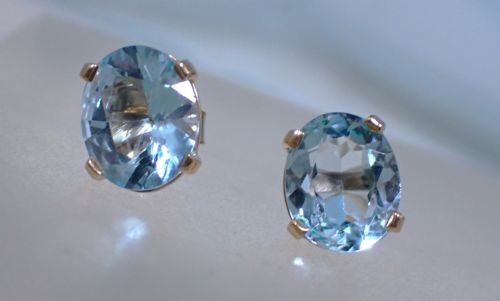
The distinction between standard items and exceptional pieces rests upon the saturation and clarity of the central beryl, alongside the precision of the goldsmith's work. Large, clean aquamarines with deep blue or sea-green tones command attention, particularly when paired with well-matched old-cut diamonds rather than simple paste.
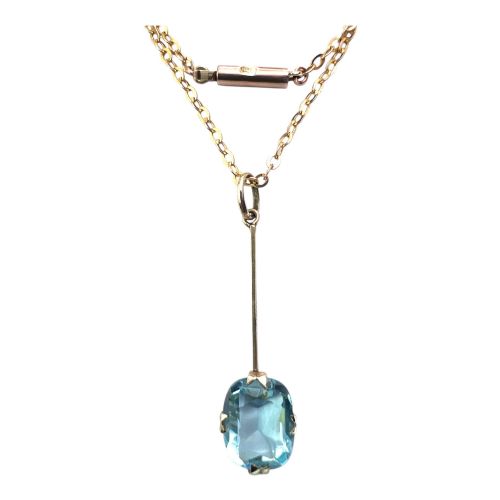
Structural integrity and the preservation of original settings also define worth, noting whether delicate seed pearls remain intact and if millegrain borders show uniform wear. Pieces retaining their original chains or clasps demonstrate a higher degree of completeness.
Some mid-century cocktail rings showcase aquamarines weighing over thirty carats, requiring remarkably sturdy fingers to wear.
C'est Laudier
The Aquamarine Gold Jewellery Glossary
- Aquamarine
- A pale blue to light greenish-blue variety of beryl utilised as the primary gemstone in these ornaments. Its name derives from the Latin for seawater.
- Millegrain
- A decorative technique featuring a row of small metal beads along the edges of a setting, characteristic of Edwardian and Art Deco jewellery. This adds a refined texture to the metal framework.
- Seed pearl
- Very small natural or cultured pearls often threaded or set alongside central gems in antique floral and cluster designs. They add a delicate lustre contrasting with polished gold.
- Lavalier
- A pendant style featuring a suspended gemstone or drop that hangs from a necklace chain, popular during the Edwardian and Art Nouveau periods. These designs often incorporate swinging elements.
- Cluster
- A gemstone arrangement where a central stone is surrounded by a border of smaller stones, typically diamonds or pearls. This configuration maximises visual presence on rings and pendants.
Aquamarine Gold Jewellery: Frequently Asked Questions
How do I date aquamarine gold jewellery?
Dating relies upon stylistic markers such as Edwardian millegrain work, Art Nouveau organic curves, or the bold carat weights typical of mid-century cocktail rings. Hallmarks stamped into the gold mount also provide direct clues to the year and place of manufacture.
Examining the cut of accompanying diamonds, such as old-cut stones versus later baguette cuts, helps narrow down the production era further.
Are aquamarine stones treated?
Many aquamarines undergo gentle heat treatment to reduce yellow or green undertones and enhance the desired blue hue. This practice is long-established and accepted within the antique trade.
Natural untreated stones with vivid colour remain less common, though historical pieces generally feature traditional colour variations.
How should I care for antique gold jewellery?
Protect these pieces by storing them individually in soft pouches to prevent softer stones like pearls and beryl from scratching against harder gems. Avoid harsh ultrasonic cleaners, particularly for items containing pearls or foiled backs.
Warm soapy water and a soft brush suffice for routine cleaning of gold and durable beryl.
What is the difference between white gold and platinum settings?
Platinum offers greater natural strength and a bright white finish that does not require rhodium plating, making it a favourite for secure Edwardian and Art Deco stone settings. White gold contains alloy metals like palladium or nickel mixed with yellow gold to achieve a silvery tone.
Over time, white gold may reveal a warmer hue as surface plating wears thin, whereas platinum retains its colour.