
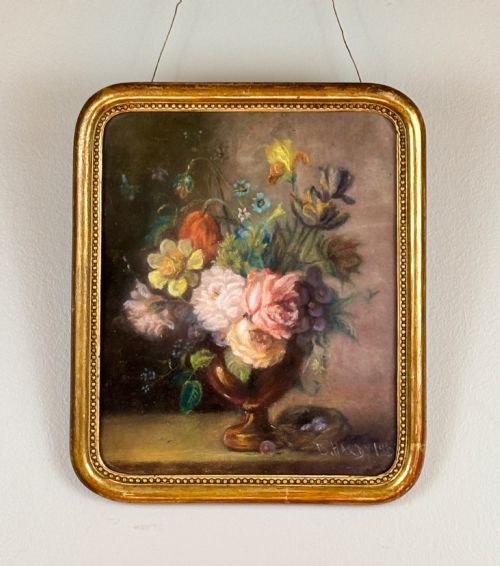

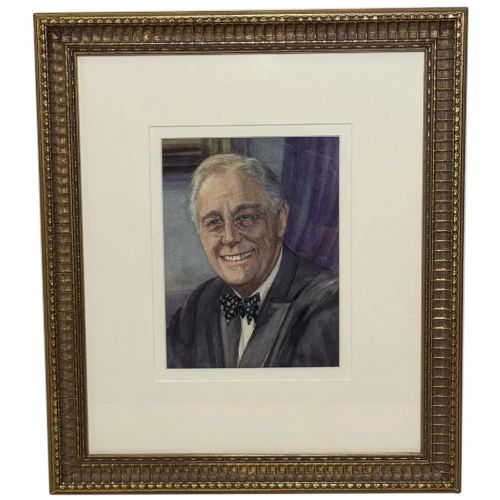


Antiqued Gilt Frame Artwork
Antiqued gilt frame artwork brings together period paintings and prints housed in gilded wooden surrounds spanning the seventeenth to twentieth centuries.
Antiqued Gilt Frame Artwork
When you search for antiqued gilt frame artwork, you encounter historical paintings, watercolours, pastels, and prints enclosed in aged gold-toned wooden surrounds. These pieces range from seventeenth-century Flemish and English school portraits to nineteenth-century landscapes and early twentieth-century impressionist scenes.
The objects listed on this page focus heavily on oil paintings on canvas or panel alongside watercolours on paper. Portraiture, maritime subjects, and romantic pastoral landscapes dominate the selection, reflecting centuries of framing traditions designed to complement classical compositions.
Materials and construction
The physical pieces rely on traditional substrates such as canvas, wood panels, heavy paper, and glass to support oil paint, watercolour, pastel, and print ink. Giltwood and gilt frames provide the enclosing structure, utilising applied gold leaf or metallic paint over wooden mouldings.
Makers shaped these works through classical painting techniques, drawing, and engraving before mounting them into decorative frames. The gilt surrounds often display patination achieved through age, wear, or applied finishes that mimic centuries of handling.
Listings feature works across the seventeenth, eighteenth, nineteenth, and twentieth centuries, using oil, watercolour, pastel, and giltwood.
Assessing quality and execution
Quality in these works rests upon the skill of the original draughtsmanship and brushwork, distinguishing accomplished academic or school art from simpler naive pieces. Finer paintings demonstrate sophisticated handling of light, anatomical precision, and well-preserved surface textures.
The relationship between the artwork and its frame also dictates overall merit. Superior examples feature period-appropriate gilt framing that complements the depth, scale, and era of the internal composition without appearing discordant.
Henry Barraud·Sir Joshua Reynolds·Charles Antoine Coypel·Jean Baptiste Van Loo·Sir Peter Lely
The Antiqued Gilt Frame Artwork Glossary
- Giltwood
- Wood that has been coated with gold leaf or a gold-coloured metallic finish. This material forms the primary decorative border for many classical paintings.
- Oil on Canvas
- Pigment mixed with drying oil applied to a stretched woven fabric support. This technique provides rich colour depth and durability across centuries.
- Watercolour
- Paint consisting of transparent pigment suspended in a water-based solution applied to paper. It offers a luminous, delicate finish often protected behind glass.
- Pastel
- A dry medium made of powdered pigment and a binder, worked directly onto paper. Pastels produce soft, velvety textures that require careful framing.
- School
- A grouping of artists sharing a common style, location, or influence from a specific era. It often designates works created in the manner of a master.
Antiqued Gilt Frame Artwork: Frequently Asked Questions
What periods do these artworks cover?
The inventory spans multiple centuries, reaching from the late seventeenth century through the Georgian and Victorian eras into the early twentieth century.
This broad chronological range includes seventeenth-century portraits, eighteenth-century classical scenes, and nineteenth-century realist paintings.
Are the frames original to the pieces?
Frames accompanying these historic artworks often reflect the period of creation or a later nineteenth-century revival style chosen to complement the imagery.
Gilt wooden surrounds show varying degrees of age and patination that align with the historic nature of the enclosed paintings and prints.
What mediums are most common?
Oil paint on canvas or wooden panel appears frequently alongside works on paper such as watercolours, pastels, and historical engravings.
Each medium brings distinct textural qualities, from the heavy impasto of oils to the delicate transparency of early watercolours.
How should I care for framed art?
Protect these pieces by avoiding direct sunlight, which can fade historic pigments and discolour paper supports over time.
Maintain stable indoor humidity levels to prevent the wooden frames and canvas substrates from expanding or contracting excessively.