

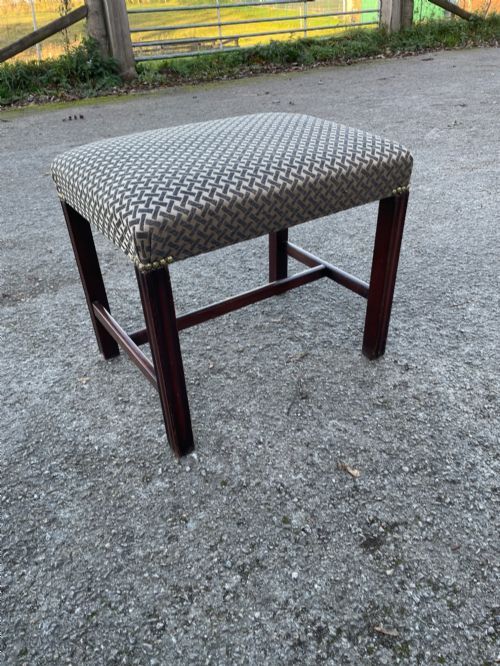

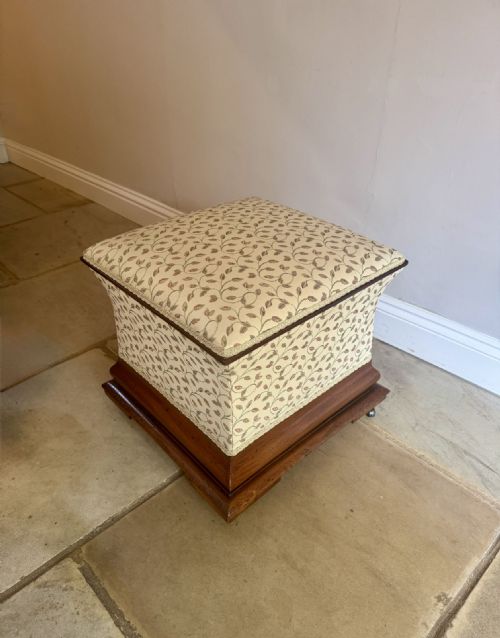

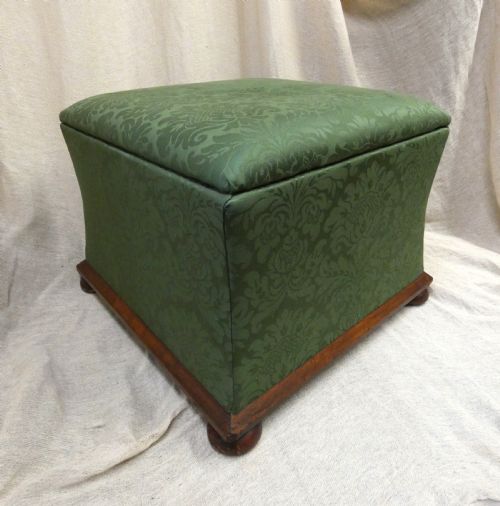


Antique X Base Stool
These antique x base stool pieces unite crossing architectural supports with period craftsmanship, offering both sturdy seating and distinct historical character.
Antique X Base Stool
When you search for an antique x base stool, you encounter a variety of forms rooted in historical seating designs, including piano stools, footstools, ottomans, and industrial swivel seats. The cross-frame construction provides structural stability while creating a distinct silhouette that has recurred across multiple centuries of furniture design.
The versions most commonly met on this page span the Georgian, Regency, William IV, and Victorian periods, alongside industrial workshop adaptations. These pieces utilise cross-frames in materials ranging from heavy cast iron to polished hardwoods like mahogany, rosewood, and walnut.
Seating formats vary from adjustable piano stools with revolving mechanisms to upholstered ottomans and heavy industrial bar stools. Each style reflects the functional demands of its original context, whether a domestic drawing room, a music salon, or a late nineteenth-century workshop.
How they were made
Makers utilised dense timbers such as mahogany, rosewood, walnut, and oak to construct the characteristic intersecting frame members. These woods were chosen for their structural resilience and capability to take fine finishes, often complemented by decorative gilding and gesso work.
Industrial examples incorporate cast iron for bases and seats, utilising gear cogs and heavy metal components designed for mechanical adjustment. Upholstered elements employ traditional padding finished in velvet, leather, or pitch pine structures to complete the form.
Antique X Base Stool Retail Price Guide 2026
Typical asking prices for x base stool among the pieces listed under this phrase on Sellingantiques today, from the lower quarter to the upper quarter. They describe what is for sale here now, not the wider market.
Listings feature nineteenth-century seating constructed from rosewood, mahogany, cast iron, and velvet across Georgian, Regency, and Victorian periods.
What varies in quality
The grade of timber selection and the precision of joinery in the crossing frame dictate the structural integrity of domestic pieces. Higher quality items display careful figuring in veneers like rosewood and walnut, alongside robust mechanical adjustment screws that operate smoothly.
Industrial and utilitarian versions rely on the weight and cast clarity of their iron components, where crisp detailing in gear cogs and swivel mechanisms separates standard utility items from finer workshop furniture.
Blackstone & Co.
The Antique X Base Stool Glossary
- X Base
- A furniture support structure formed by two intersecting members creating an X shape when viewed from the side. This architectural configuration provides balanced weight distribution.
- Curule Stool
- An ancient form of folding seat featuring crossing concave legs, adapted in later neoclassical and nineteenth-century revival styles. It often incorporates giltwood and gesso enrichment.
- Ottoman
- A padded upholstered seat or footstool lacking a back, sometimes fitted with a hinged lid for internal storage. These pieces frequently double as work boxes.
- Swivel Base
- A rotating mechanical mount allowing the seat top to turn independently of the supporting frame. Common in piano stools and industrial seating.
- Giltwood
- Timber treated with gold leaf or a gold-coloured metallic finish. It appears predominantly on neoclassical and decorative revival furniture frames.
Antique X Base Stool: Frequently Asked Questions
What is an x base stool?
An antique x base stool is a seat supported by intersecting legs or frame members that form an X shape. This design spans domestic piano stools, ottomans, and industrial workshop seating.
The crossing supports provide inherent structural strength while offering distinct aesthetic lines associated with periods from the Georgian era through to the late nineteenth century.
How do I date an antique stool?
Dating relies on examining the timber species, construction methods, and hardware integration. Regency and William IV pieces often feature rosewood or mahogany with intricate turning, whereas later Victorian and industrial versions introduce cast iron and pitch pine.
Style indicators such as neoclassical gesso work or industrial gear cogs further help place the piece within specific nineteenth-century manufacturing contexts.
Were these stools used for pianos?
Many nineteenth-century x base stools served specifically as piano seating, incorporating adjustable swivel mechanisms to alter the seat height. These often featured round or square upholstered tops supported by timber or iron threaded screws.
Their sturdy construction accommodated the pianist's movement while matching the prevailing furniture styles of music rooms and parlours.
Can I use an ottoman stool for storage?
Certain nineteenth-century ottoman and box stool variants feature hinged tops concealing internal compartments designed for textiles, sheet music, or needlework. These dual-purpose items functioned as work boxes as well as footrests.
Checking the interior construction reveals whether a particular model was built to hold stored items alongside its primary seating function.