





Antique Writing Desk Tools
These antique writing desk tools are the fitted boxes, leather surfaces, and silver holders that turn a simple table into a place for correspondence.
Antique Writing Desk Tools
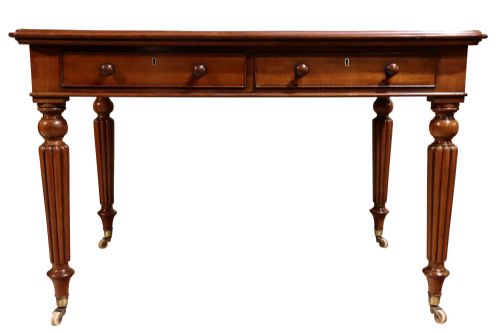
When you search for antique writing desk tools, you enter a world of practical desk furniture and desk accessories designed for correspondence and study. The pieces span from the Regency era through to the Edwardian period and the early twentieth century.
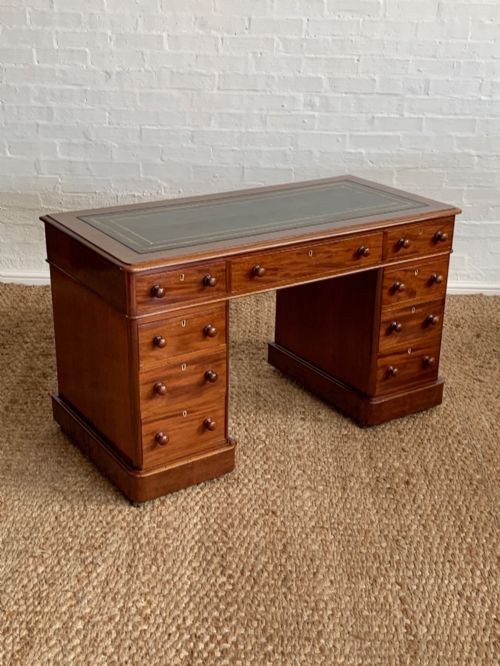
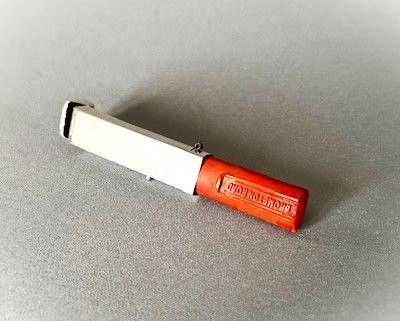
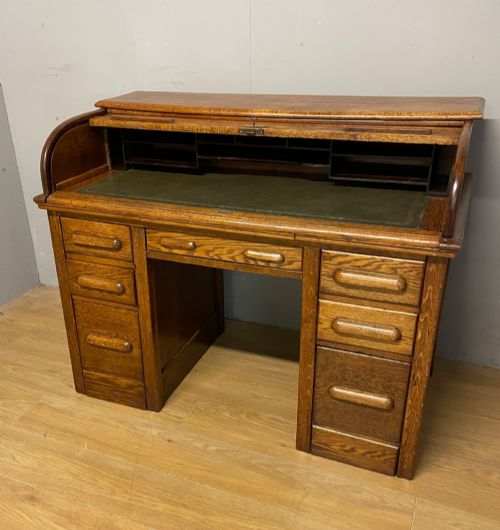
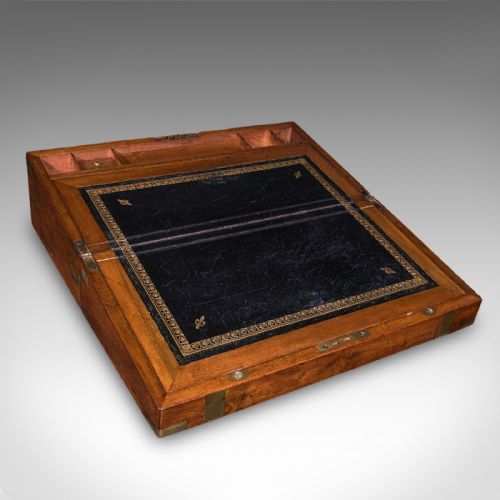
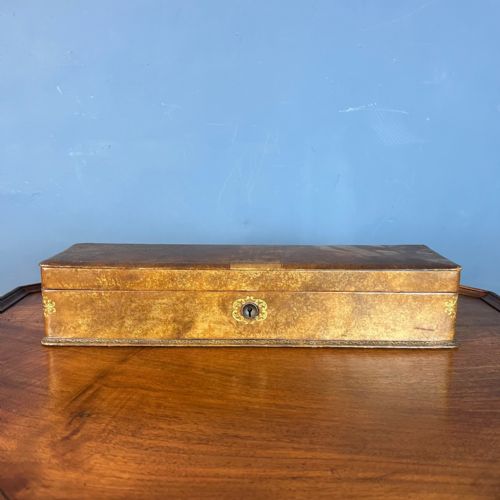
The selection ranges from larger pedestal desks and writing tables in mahogany and walnut to smaller writing slopes, correspondence boxes, and desk blotters. You will also find specific silver accessories like vesta cases, rulers, and sealing wax holders.
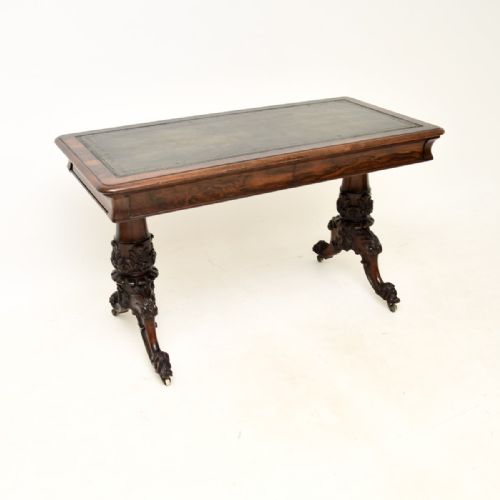
Many of these larger tables and desks feature inset leather writing surfaces, often tooled with gilt decoration, while smaller accessories provide portable storage for writing implements and wax.
How they were made
Cabinet makers utilised dense hardwoods such as mahogany, walnut, burr walnut, rosewood, and oak to build the structural frames, pedestal desks, and portable writing slopes. These timbers were often polished to a deep lustre.
Writing surfaces and smaller boxes frequently incorporated leather, including Moroccan leather, which was applied to the wood and decorated with gold tooling. Silver components and fittings were cast and worked for items like rulers and sealing wax holders.
Antique Writing Desk Tools Retail Price Guide 2026
Typical asking prices for writing desk tools among the pieces listed under this phrase on Sellingantiques today, from the lower quarter to the upper quarter. They describe what is for sale here now, not the wider market.
Some Edwardian silver sealing wax holders still contain their original, completely unused sticks of wax waiting for a letter.
What varies in quality
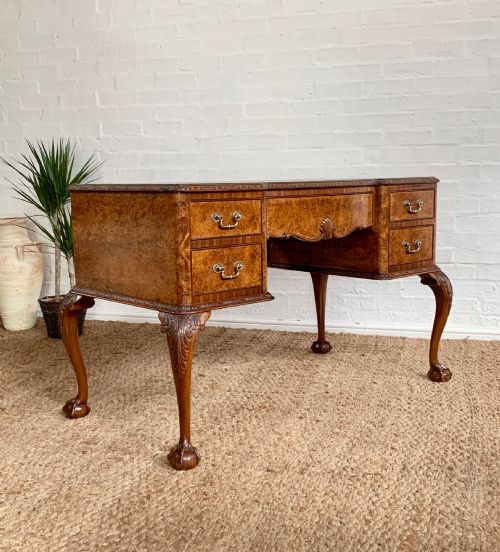
The choice of timber underpins the distinction between standard items and finer pieces, with burr walnut and figured mahogany commanding attention for their decorative grain. Cabinet work involving intricate inlay or solid oak construction shows greater investment of time.
The survival of original elements, such as untouched tooled leather inserts and unblemished sealing wax within holders, determines the integrity of the piece. Superior examples retain their fitted interiors and maker signatures without later alterations.
Maple & Co
The Antique Writing Desk Tools Glossary
- Writing slope
- A portable box with a hinged sloping lid that opens to reveal compartments for paper and ink. These were essential for travel before the widespread use of fixed desks.
- Vesta case
- A small pocket or desk box designed to hold matches. They often appear alongside sealing wax implements in desk sets.
- Reformed Gothic
- A nineteenth-century design style emphasising structural honesty and medieval forms, visible in certain walnut tables from this period.
- Centre table
- A freestanding table finished on all sides so it can stand in the middle of a room. These frequently serve as writing tables with inset leather tops.
Antique Writing Desk Tools: Frequently Asked Questions
How do I care for leather desk tops?
Leather desk inserts require gentle dusting with a dry cloth and occasional treatment with specialised leather balms to prevent drying and cracking. Avoid using heavy modern chemical cleaners on antique leather.
Keep these surfaces away from direct sunlight and excessive heat sources to preserve the original gilt tooling and colour of the material.
What is a pedestal desk?
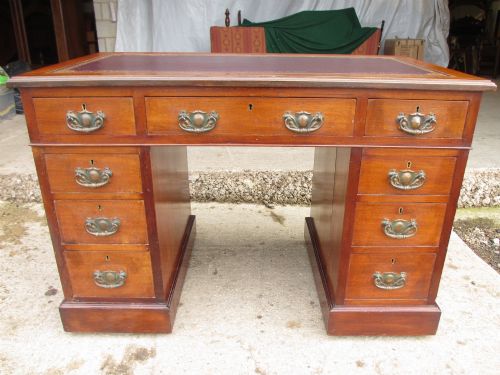
A pedestal desk is a heavy freestanding desk supported by two columns of drawers, with a central space for sitting. They often feature tooled leather writing inserts across the top surface.
These desks were standard in nineteenth-century studies and libraries, built in mahogany, walnut, and oak to provide substantial storage and a large workspace.
How do I identify a Victorian writing table?
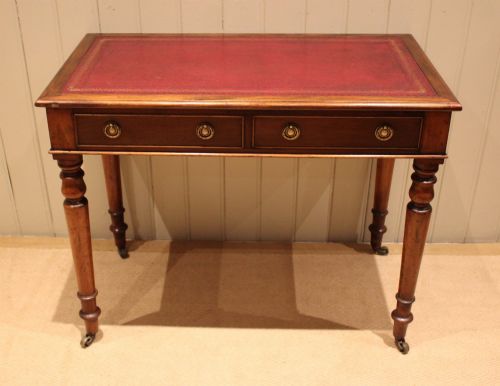
Victorian writing tables generally display the deep red-brown tones of mahogany or the figured grain of walnut, often supported on reeded legs or pedestal bases. They typically feature inset leather surfaces with gold tooling.
Construction details such as hand-cut dovetails in the drawer boxes help confirm the nineteenth-century origins of the piece.