




Antique Wrist Jewellery
Antique wrist jewellery encompasses bracelets, bangles, and watches spanning the Victorian era through to the mid-century period.
Antique Wrist Jewellery
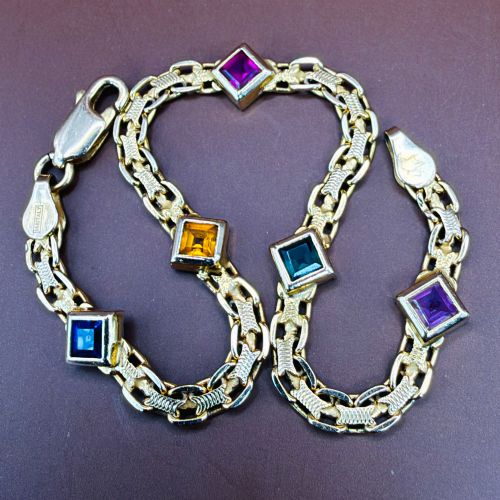
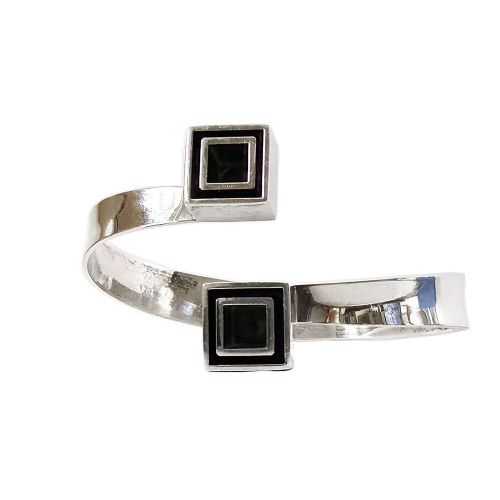
Antique wrist jewellery covers a diverse array of ornamental pieces designed to adorn the wrist, ranging from delicate Victorian chain bracelets to robust mid-century bangles. When exploring antique wrist jewellery, buyers encounter various forms including rigid cuffs, flexible links, and jewelled cocktail watches.
Regional variations also appear within the selection, encompassing European workmanship alongside distinct cultural pieces such as an East African tribal fighting wrist knife bracelet. Most items span from the nineteenth century through the mid-twentieth century, offering multiple construction styles and decorative approaches.
How they were made
Metals such as 9ct gold, 18ct yellow gold, platinum, and silver form the structural foundation of these pieces, shaped through casting, engraving, and linking techniques. Rolled gold and metal core methods also appear in specific twentieth-century examples.
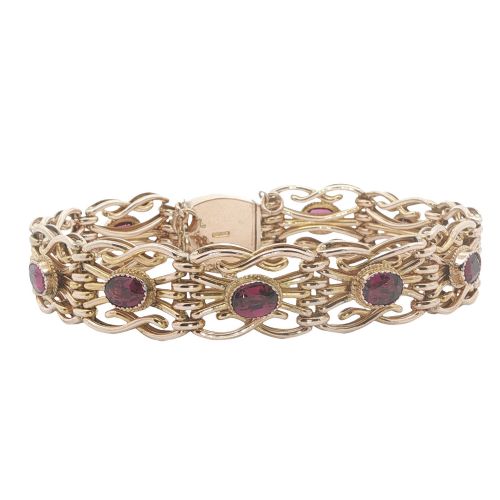
Gemstone setting relies on traditional hand-crafting methods, securing diamonds, rubies, sapphires, garnets, zircons, and pearls into platinum or gold mountings. Enamel work and hinged mechanisms add mechanical and visual complexity to specific bangles and cuffs.
Antique Wrist Jewellery Retail Price Guide 2026
Typical asking prices for wrist jewellery among the pieces listed under this phrase on Sellingantiques today, from the lower quarter to the upper quarter. They describe what is for sale here now, not the wider market.
Listings span from the 19th Century through to the 1960s, featuring gold, platinum, silver, and diamond materials.
What varies in quality
The standard of workmanship in antique wrist jewellery depends upon the precision of the metal engraving, the security of the settings, and the integrity of mechanical components like clasps and hinges. Pieces featuring intricate hand-engraved details or substantial precious metal weight represent higher tiers of production.
Gemstone selection significantly influences overall merit, distinguishing pieces set with natural untreated stones like Ceylon sapphires and Burmese rubies from standard commercial designs. Original elements, such as fitted boxes or intact Swiss jewelled lever movements in watches, elevate the standing of a piece.
Elgin
The Antique Wrist Jewellery Glossary
- Bangle
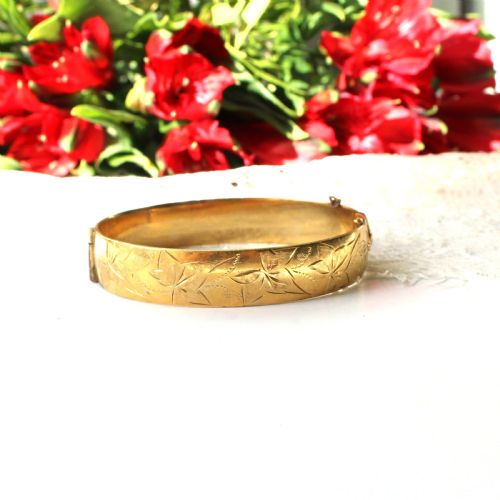
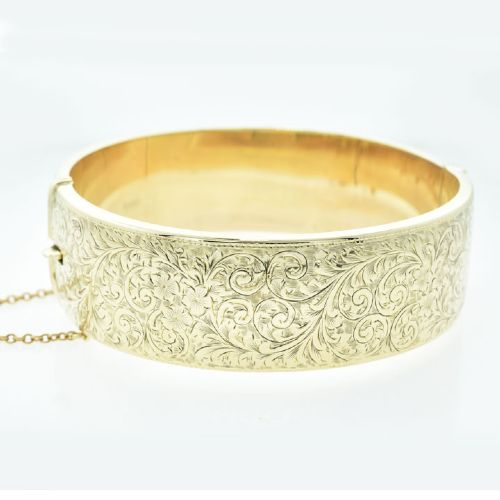
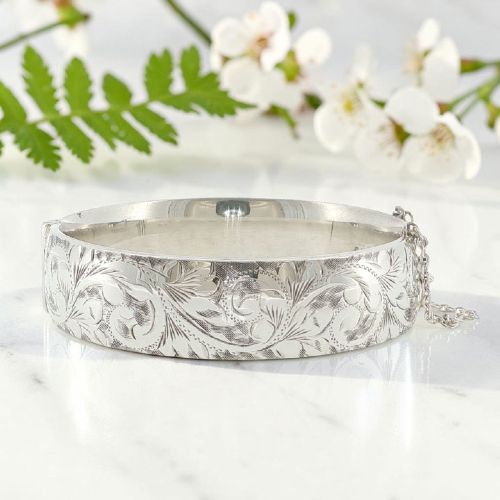
- A rigid ring or bracelet that slips over the hand or opens via a hinge, commonly seen in Victorian and vintage designs. Hinged variants often secure with a built-in clasp and safety chain.
- Cocktail watch
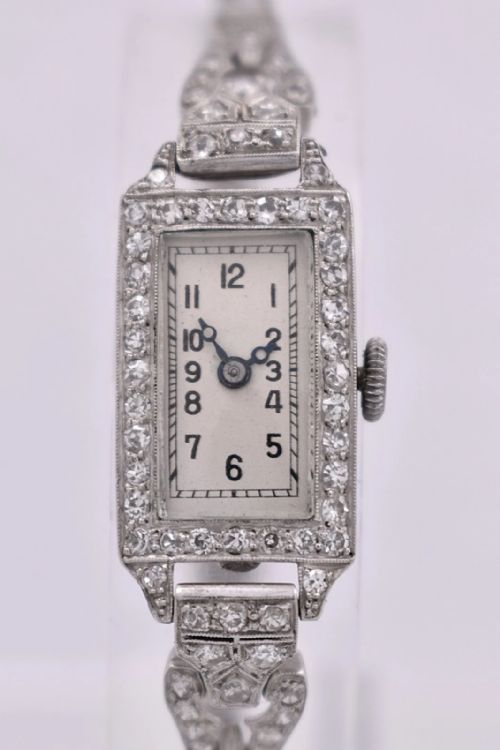
- A small women's timepiece designed primarily as evening jewellery, frequently platinum or white gold and set with diamonds. These typically conceal the dial behind a decorative hinged cover or cluster of stones.
- Rolled gold
- A manufacturing technique where a thin layer of gold is mechanically bonded to a base metal core. This method provided the appearance and durability of solid gold at a lower production cost.
- T-bar
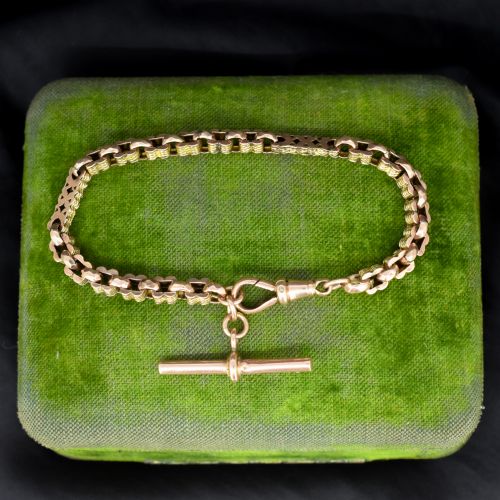
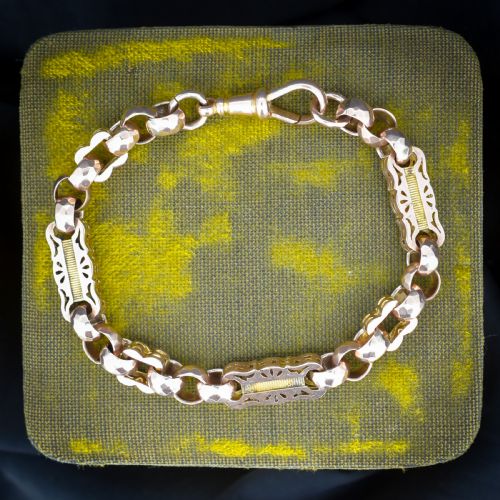
- A transverse bar attached to the centre of a pocket watch chain or fancy link bracelet. Originally used to secure the chain to a waistcoat buttonhole, it remains purely decorative on many bracelets.
- Tank bracelet
- A robust, geometric link bracelet popular during the Art Deco period, named for its resemblance to the tracks of a military tank. These pieces are typically forged from heavy gold with linear engraving.
Antique Wrist Jewellery: Frequently Asked Questions
What materials are used in antique wrist jewellery?
The pieces utilise a range of precious metals, predominantly 9ct gold, 15ct gold, 18ct gold, platinum, and silver, alongside rolled gold alternatives. Gemstones such as diamonds, rubies, sapphires, emeralds, almandine garnets, green zircons, and pearls are frequently integrated.
Enamel and glass also appear in specific stylistic examples, particularly from the Victorian and Art Deco eras.
How do I identify Art Deco wrist jewellery?
Art Deco pieces generally feature geometric patterns, symmetrical lines, and the prominent use of platinum or white gold. The integration of calibre-cut gemstones and stylized engravings marks the distinct aesthetic of the 1920s and 1930s.
Watches and bracelets from this period often showcase streamlined forms and sophisticated mechanical movements.
Were these bracelets worn daily?
Many everyday chains and bangles served for regular wear, while diamond cocktail watches and gem-set cuffs were reserved for evening social events. Robust designs like nineteenth-century chain bracelets with T-bars were built for practical daily use.
More delicate platinum and pearl pieces required greater care and were kept for formal occasions.
How do I care for antique gemstone bracelets?
Gentle cleaning with a soft cloth helps maintain the metal surface without disturbing fragile stone settings. Professional inspection ensures that older claw settings and delicate hinges remain secure.
Harsh chemical dips should be avoided, particularly with pearls and softer organic or treated gemstones.