


Antique Woven Chair
An antique woven chair brings organic texture and traditional craft into a room through natural materials like cane, rush, and wicker.
Antique Woven Chair
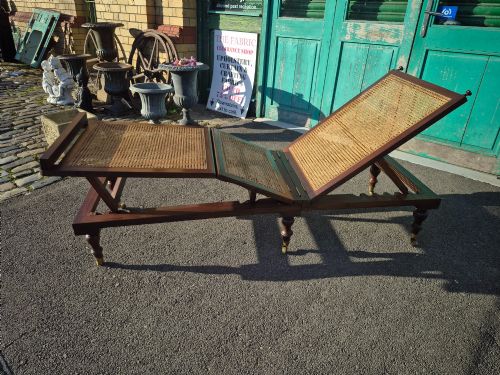
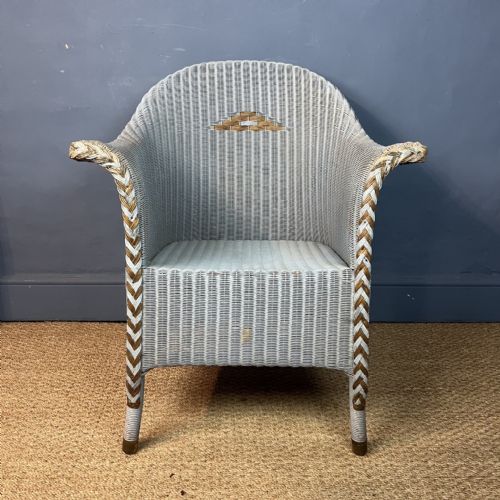
Every antique woven chair relies on flexible plant materials interwoven across wooden frames to form supportive seats and backs. The selection spans dining chairs, armchairs, rocking chairs, and daybeds originating from the eighteenth, nineteenth, and early twentieth centuries.
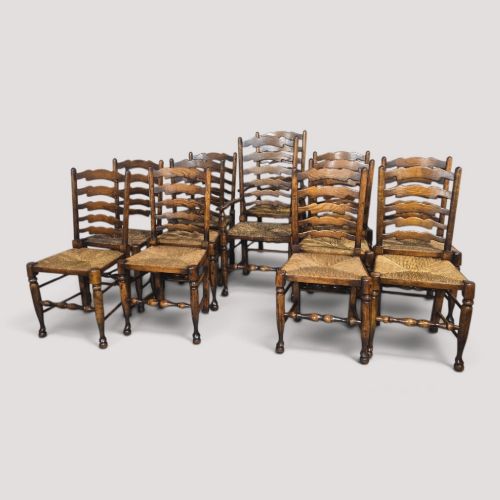
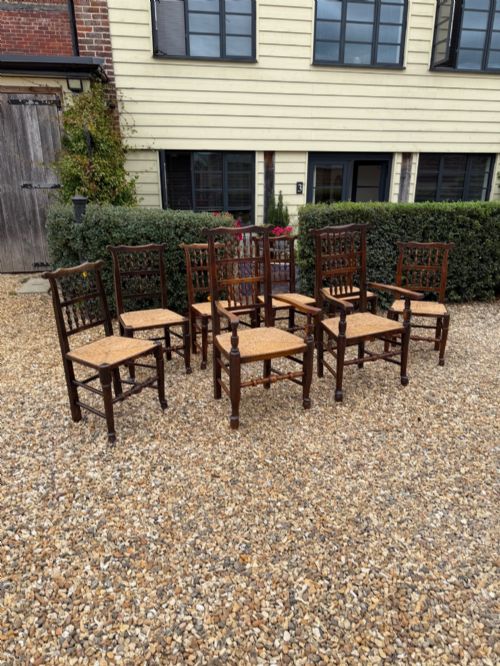
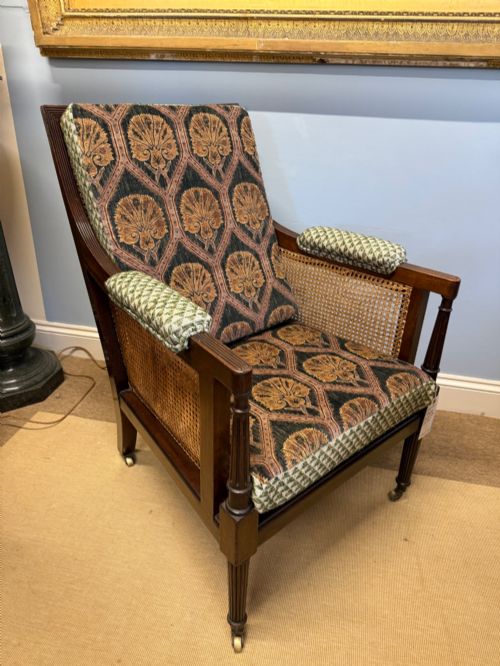
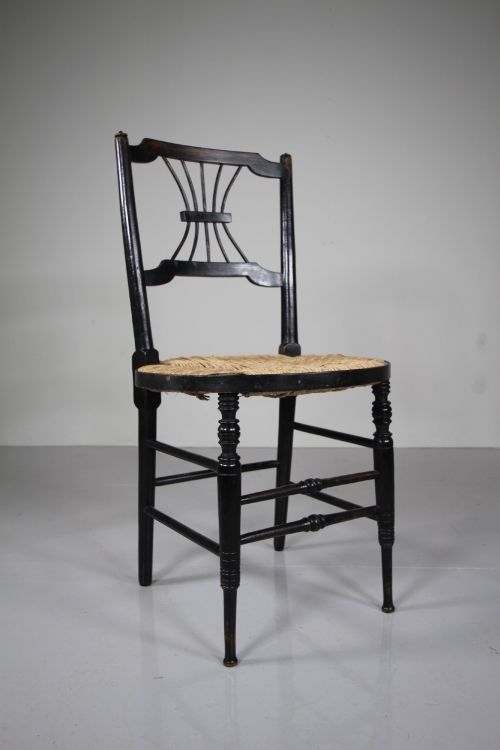
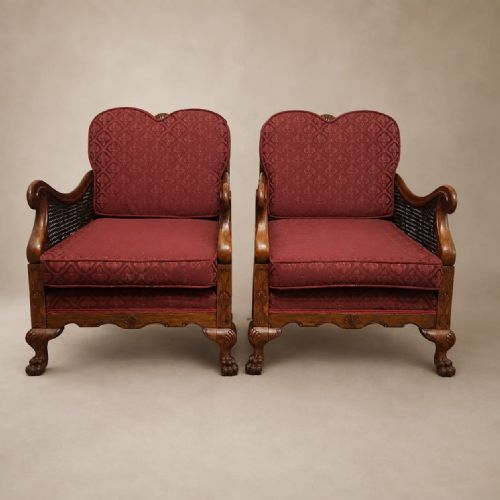
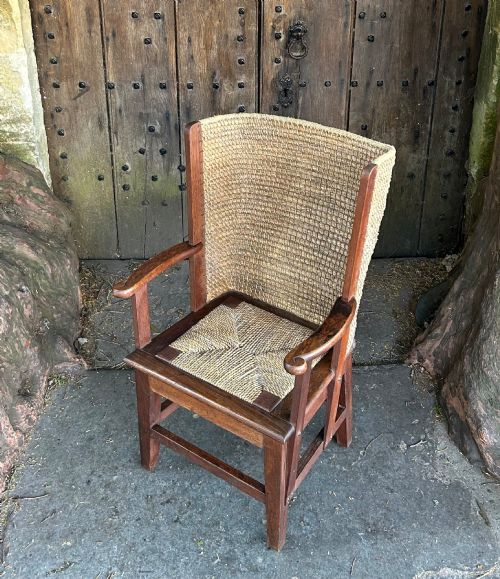
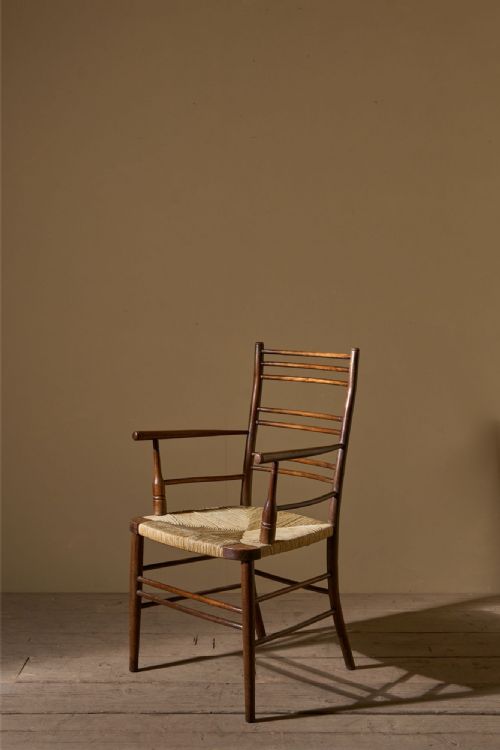
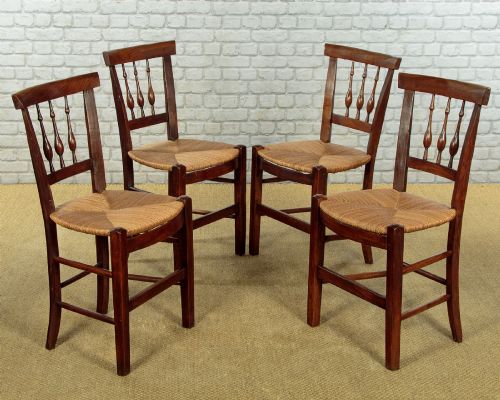
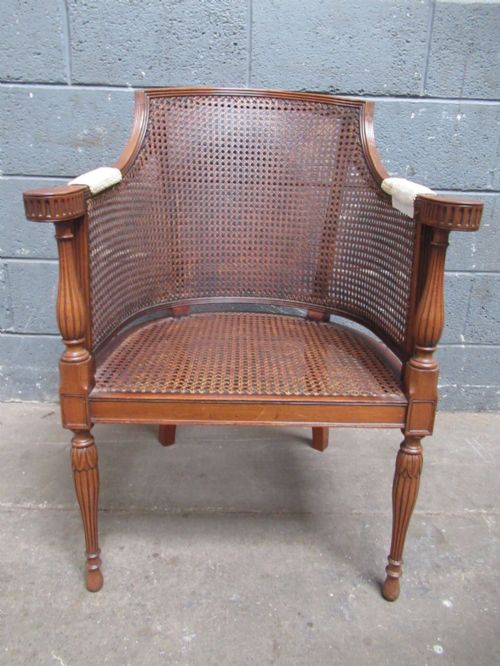
The most common examples on this page are nineteenth-century country chairs with rush seats, alongside Edwardian and 1920s bergere armchairs featuring woven cane panels. Regional vernacular pieces, such as Lancashire rush-seated chairs and Orkney chairs, sit alongside Arts and Crafts designs by makers associated with Morris & Co.
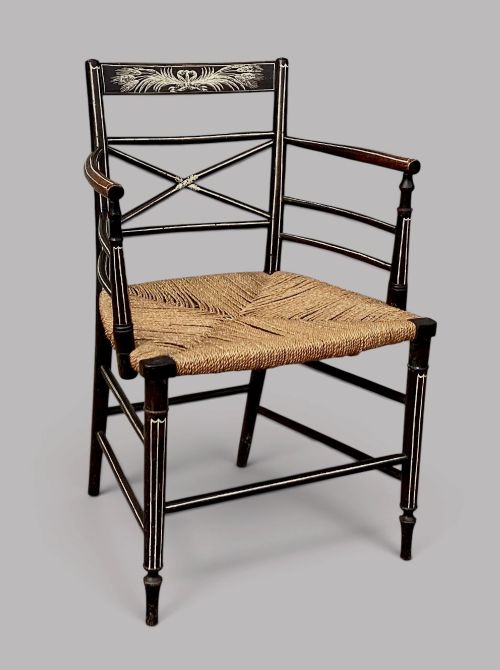
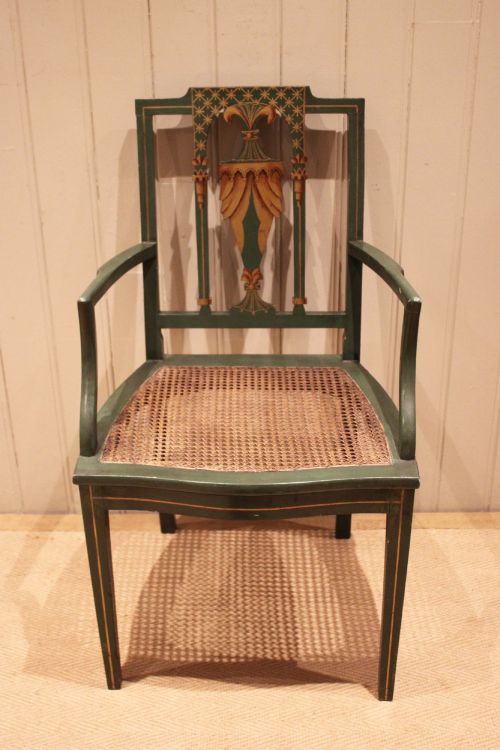
Makers utilised woods appropriate to each regional tradition, pairing sturdy frames of oak, mahogany, walnut, beech, elm, and fruitwood with pliable natural seating materials. These range from simple ladder-back country chairs to sophisticated Regency painted elbow chairs and Anglo-Indian colonial seating.
How they were made
Makers constructed the structural frames from domestic hardwoods such as oak, mahogany, walnut, elm, and beech, joining components with traditional mortise and tenon joints. Turned elements, such as bobbin framing or spindle backs, frequently appear on nineteenth-century country examples.
Seating areas and backrests are formed by hand-weaving natural materials directly into or through the wooden framework. Split cane, woven rattan, and twisted marsh rush provide the flexible tension required for comfortable daily use.
Several chairs retain direct links to institutional life, including documented seating made specifically for St Paul's Cathedral.
What varies in quality
The integrity of the wooden frame determines structural stability, with superior pieces retaining their original joinery and finish without excessive movement. Finer examples display carefully turned details, well-proportioned arms, and carved elements rather than plain utility framing.
The condition and execution of the weave dictate visual appeal and longevity. Hand-woven cane panels and evenly twisted rush seating require precise tension and skill, separating standard workshop output from exceptional examples produced by prominent Arts and Crafts firms.
William Morris·Liberty Morris And Co·Angraves of Leicester·Dryad of Leicester·E W Godwin
The Antique Woven Chair Glossary
- Bergere
- An enclosed armchair featuring a wooden frame with cane-work panels lining the back and sides. This style gained popularity during the eighteenth century and saw a major revival in Edwardian and 1920s interiors.
- Rush
- Marsh grass twisted into a continuous cord and hand-woven to create a durable, textured seat. It is commonly found on traditional country ladder-back and Arts and Crafts chairs.
- Cane
- Strips derived from the outer bark of rattan palms, split and woven in patterns like the six-way hexagonal mesh seen on classic bergere chairs. Split cane offers a smooth, tight finish.
- Orkney chair
- A traditional regional armchair characterised by a high, rounded back woven from oat straw over a wooden frame, developed to protect occupants from drafts in Scottish coastal cottages.
- Arts and Crafts
- A design movement spanning the late nineteenth and early twentieth centuries that emphasised handcraftsmanship, simple construction, and natural materials over mass production.
Antique Woven Chair: Frequently Asked Questions
How do I care for rush seats?
Keep rush seats away from excessive moisture and direct heat sources, which can cause the plant fibres to dry out and snap.
Light cleaning with a dry brush removes dust from the crevices without damaging the natural material.
Can antique cane chairs support daily sitting?
Most solid antique cane chairs remain sturdy enough for regular use provided the woven panels are intact and firm.
Avoid placing excessive localized weight on the centre of older cane mesh to prevent premature sagging or tearing.
What is the difference between rush and cane?
Rush consists of twisted marsh grasses formed into thick cords to create solid, textured woven seat pads.
Cane utilises thin strips of rattan bark threaded through frame holes to create open, patterned mesh panels for backs and seats.
How do I date an antique woven chair?
Examine the wood species, turning styles, and construction methods used in the frame alongside the pattern of the woven elements.
Design characteristics often align with specific periods, such as Regency painted finishes or Arts and Crafts oak frames.