
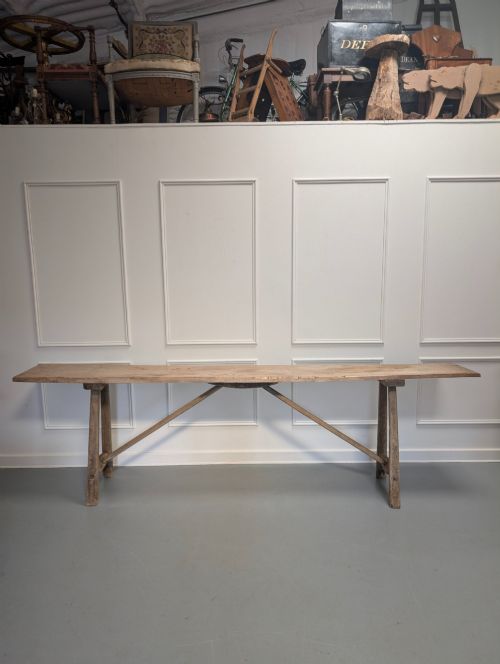
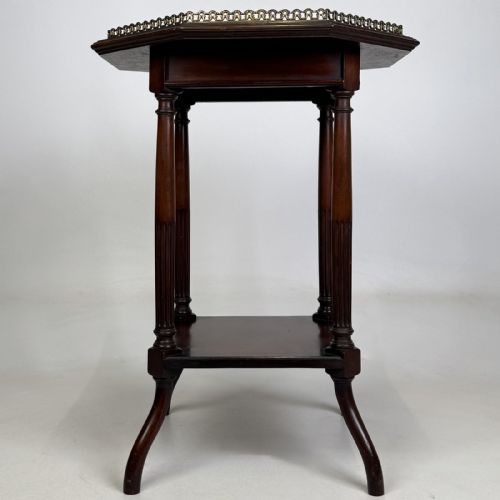
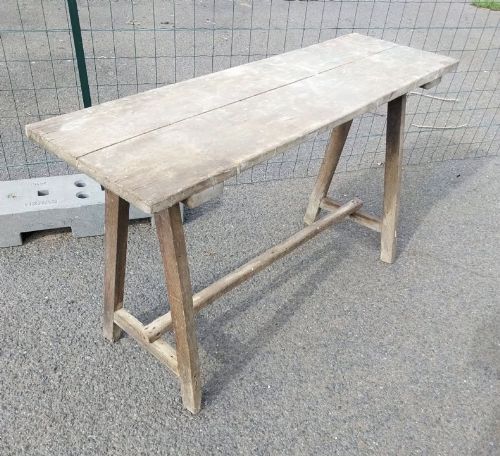
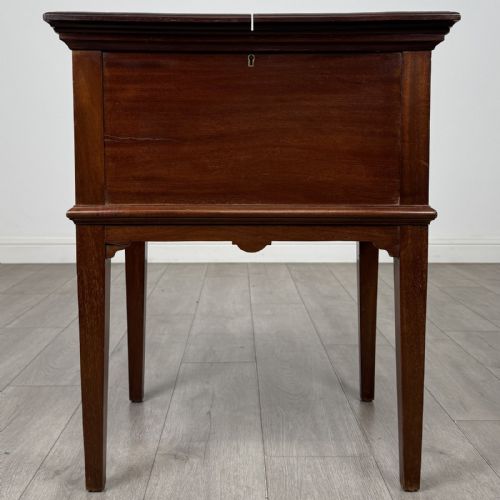
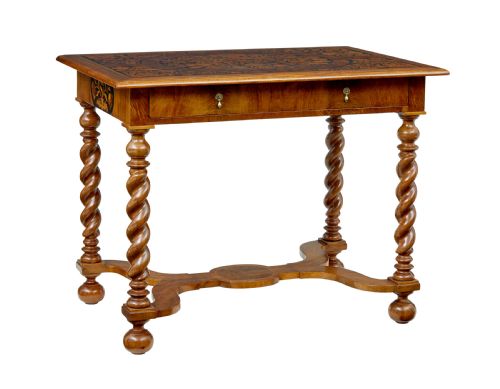
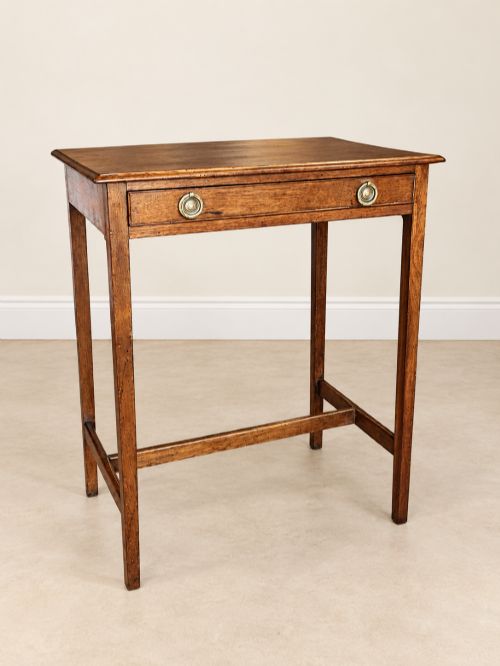
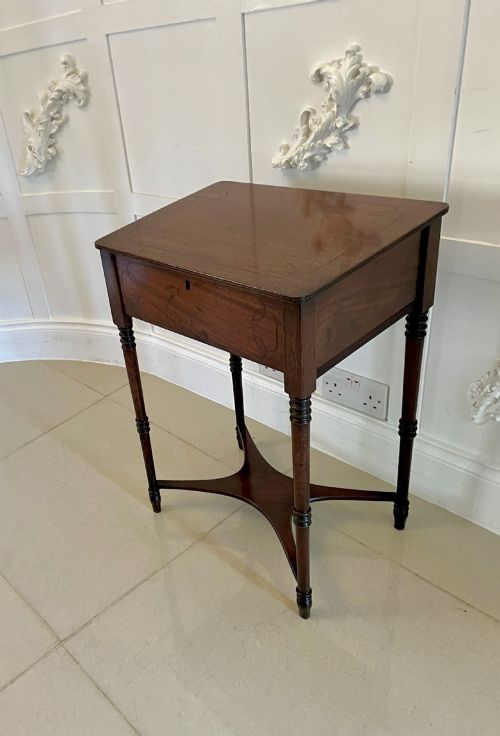
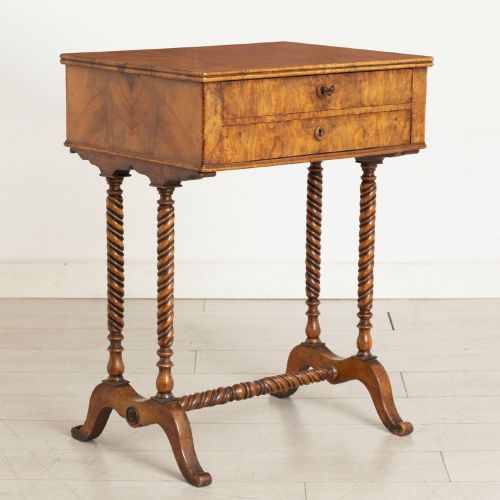
Antique Wood Work Table
An antique wood work table brings refined utility to a room, offering tailored compartments for sewing, writing and pastime.
Antique Wood Work Table
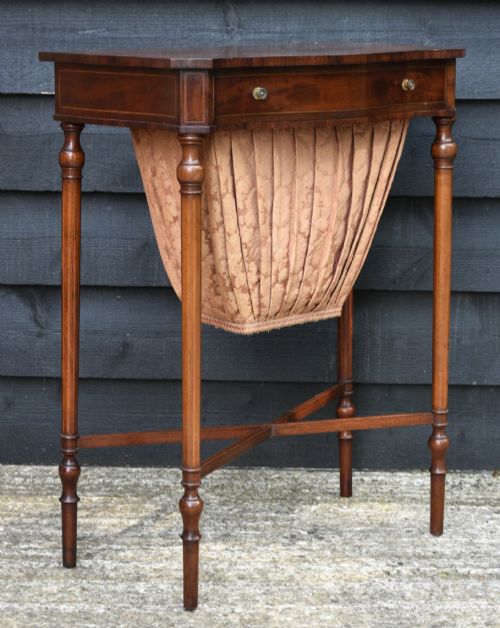
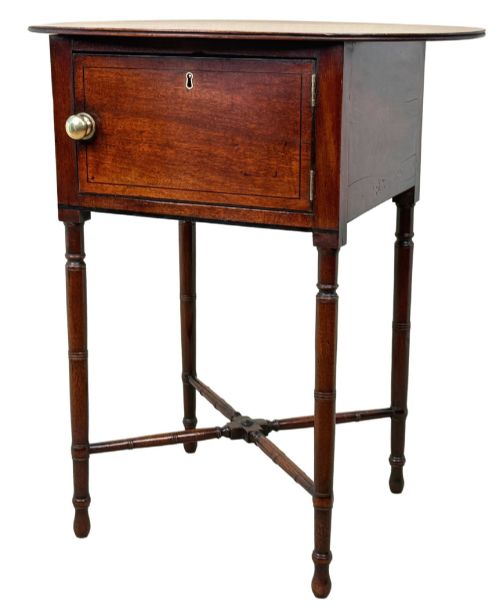
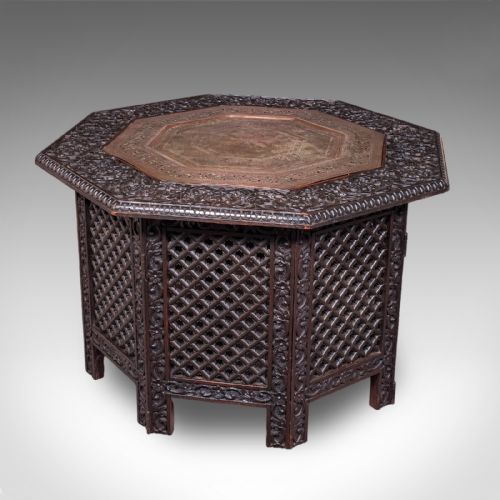
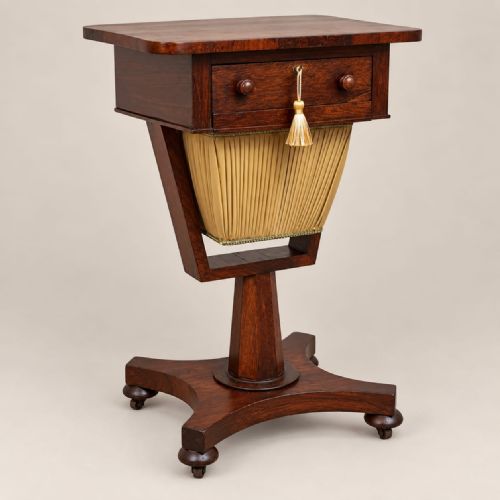
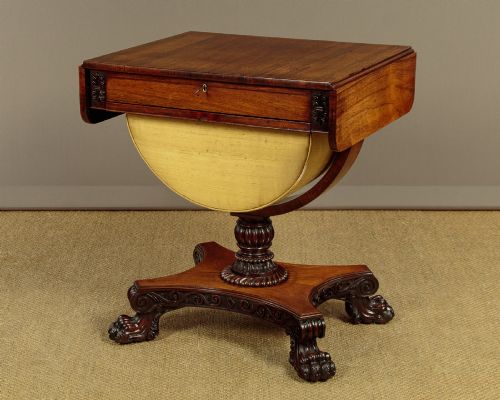
When searching for an antique wood work table, buyers encounter compact multi-functional furniture designed for domestic needlework, hobbies and correspondence during the Georgian, Regency, William IV and Victorian eras. These versatile pieces frequently feature drop leaves, fitted interior compartments, and hanging fabric bags or wooden boxes beneath the main surface.
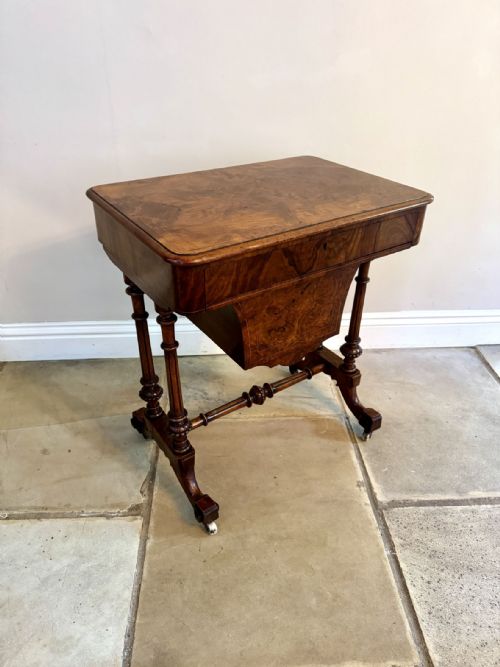
The versions most commonly met on this page date from the nineteenth century, constructed in rich timbers like rosewood and mahogany with occasional walnut and oak examples. They serve today as elegant bedside companions, lamp tables or occasional writing desks in sitting rooms.
How they were made
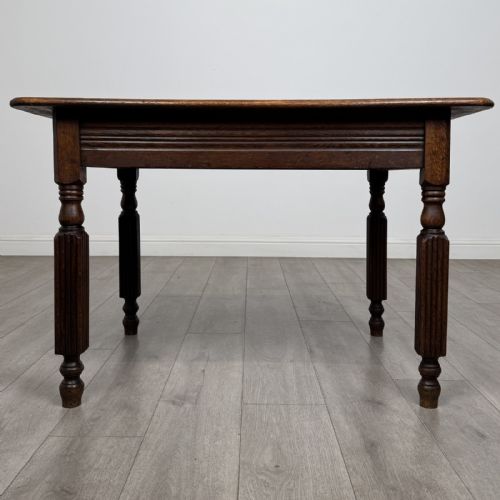
Cabinet makers utilised dense tropical hardwoods such as rosewood and mahogany, frequently applying decorative veneers, cross-banding and fine marquetry or inlay in satinwood, brass and fruitwoods. Solid native timbers like oak, pine and fruitwood appear on farmhouse, kitchen and refectory forms.
Construction methods rely on traditional joinery, incorporating turned pedestals, slender legs, dovetailed drawers and hinged lids that conceal fitted compartments, writing slopes and gaming boards.
Materials span mahogany, rosewood, walnut, oak, burr walnut, wrought iron, fabric, and brass.
What varies in quality
The refinement of the timber grain and the precision of the marquetry or cross-banding distinguish standard production from superior pieces. Highly figured rosewood, burr walnut and silky oak elevate a work table.
Complexity of internal fittings also dictates quality, with clever concealed drawers, fitted writing slopes, integrated chess boards and well-preserved silk or fabric work bags separating simpler sewing tables from elaborate hobby desks.
Ralph Turnbull
The Antique Wood Work Table Glossary
- Pembroke table
- A small rectangular table with hinged drop leaves on two opposing sides, often fitted with a single drawer.
- Caddy top
- A raised, moulded lid resembling a tea caddy, frequently seen on Regency and William IV work tables.
- Marquetry
- Decorative patterns formed by inserting thin pieces of wood, ivory or metal into a veneered surface.
- Parquetry
- Geometric mosaic woodwork arranged in regular patterns like herringbone or cubes, seen on parquetry work tables.
- Secretaire
- A desk or cabinet with a pull-down writing flap concealing small drawers and pigeonholes.
Antique Wood Work Table: Frequently Asked Questions
What is an antique work table used for?
These pieces were originally built for women's domestic tasks such as sewing, needlework, embroidery and light correspondence. They contained specialised compartments for threads, pins and writing materials.
Today, modern collectors utilise them as compact side tables, lamp stands or bedside cabinets where surface space and hidden storage are both required.
How do I identify a Regency work table?
Regency examples typically date from the early nineteenth century and showcase dark tropical timbers like rosewood, often accented with brass inlay or delicate column supports. They frequently feature rectangular drop leaves and silk sewing bags suspended below.
Later Victorian versions tend towards heavier carved pedestal bases, burr walnut veneers, and multi-functional folding tops designed for chess or backgammon.
What is a Pembroke work table?
A Pembroke work table combines the folding drop leaves of a standard Pembroke table with the internal storage and fitted drawers characteristic of sewing furniture. The hinged flaps allow the surface area to expand when needed for tasks.
They appear frequently in mahogany and rosewood from the Georgian and Regency periods.
How do I care for antique wood furniture?
Antique timber requires stable indoor humidity away from direct heat sources and strong sunlight, which can dry out rosewood and mahogany veneers. Gentle dusting with a dry lint-free cloth preserves the polished surface.
Occasional application of traditional beeswax feeds the timber without building up heavy chemical layers.