
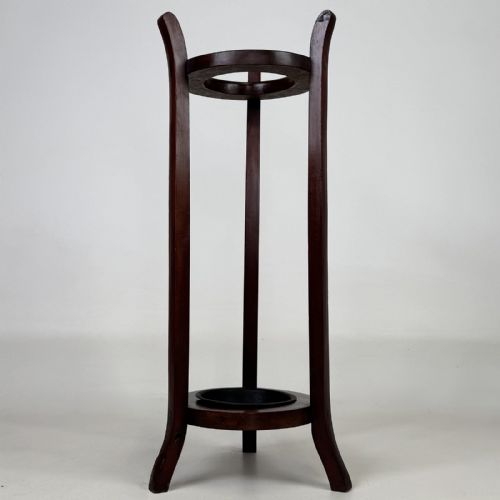
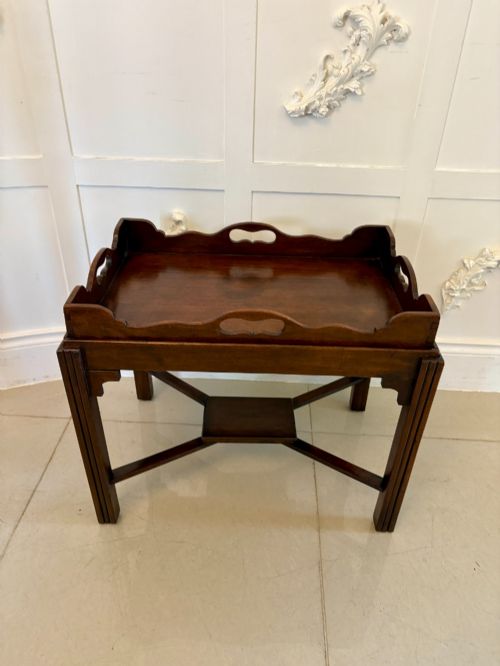
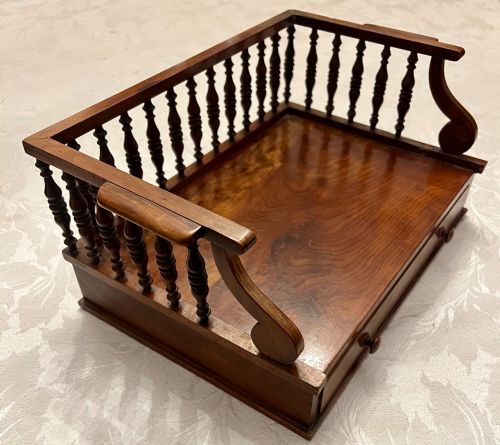
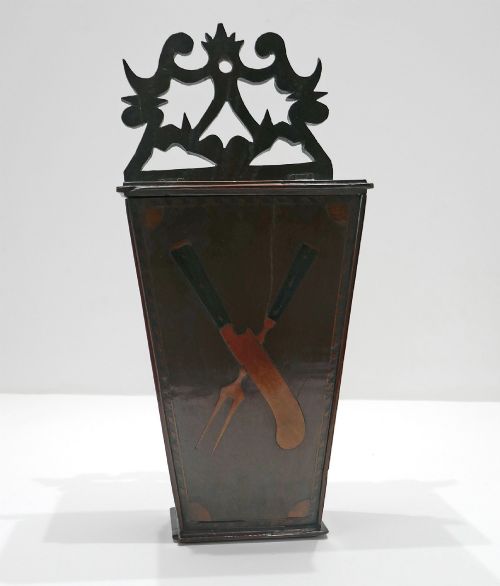
Antique Wood Tray
An antique wood tray brings tactile warmth and period utility to a room, whether used for serving or placed upon a folding stand.
Antique Wood Tray
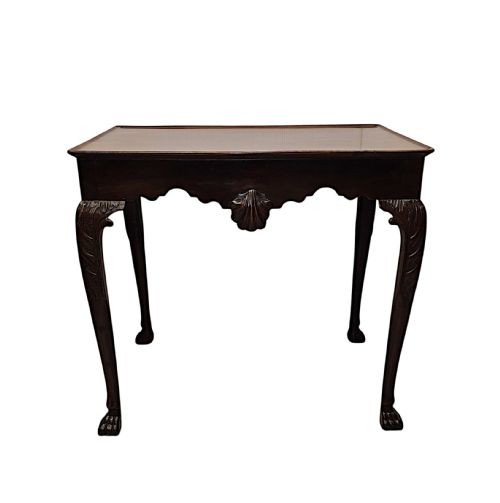
When you search for an antique wood tray, you encounter pieces spanning from the Georgian and Victorian eras through to the Edwardian period and the early twentieth century. These items include serving trays, butler's trays mounted on stands, and specialised forms such as ship's trays and inlaid varieties.
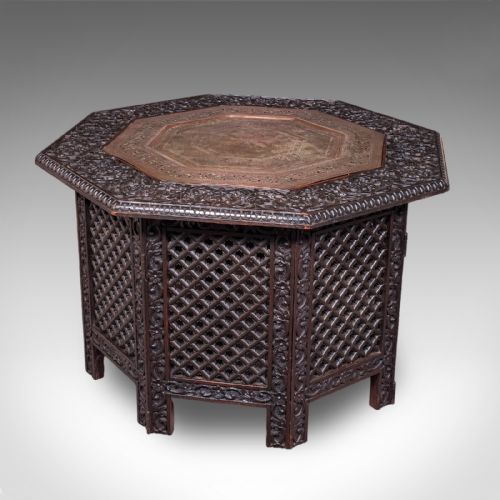
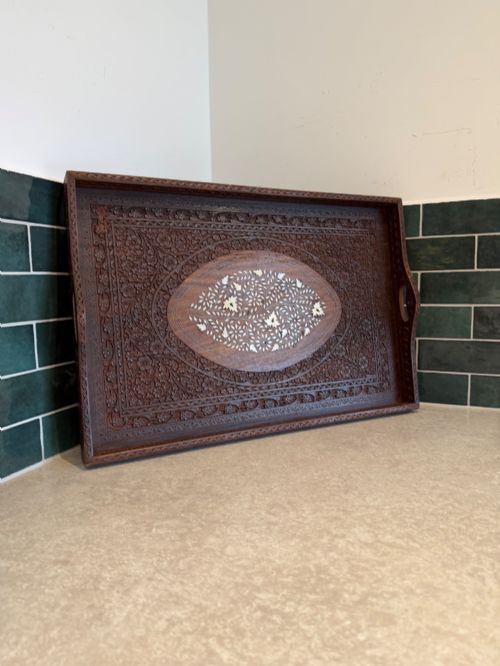
The selections on this page demonstrate distinct regional influences and design movements, encompassing Anglo-Indian work, Campaign styles, and Arts and Crafts pieces. Mahogany is particularly prevalent, alongside walnut, satinwood, rosewood, and golden elm.
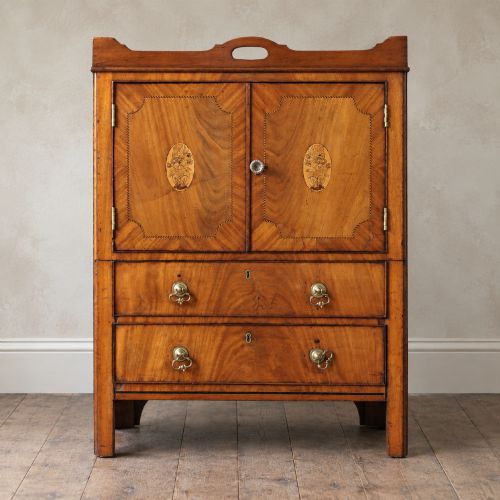
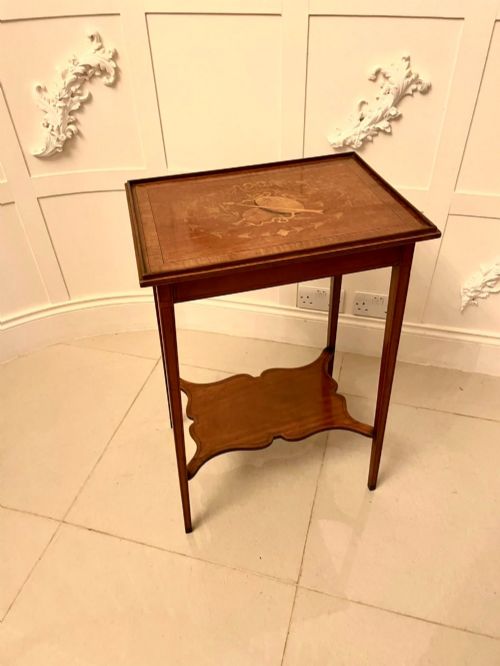
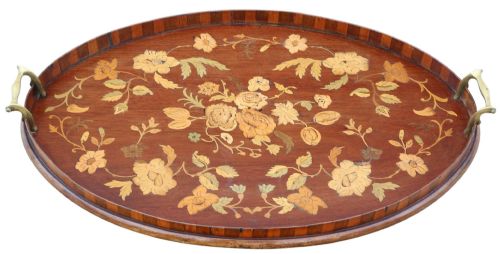
Many examples incorporate brass handles, gallery edges, or marquetry and boxwood and ebony inlay. You will find both utilitarian serving pieces and decorative occasional tables featuring removable tray tops.
Materials and construction methods
Cabinetmakers utilised dense timbers such as mahogany, walnut, and rosewood, often selecting veneers like oyster walnut or satinwood for decorative surfaces. Inlay work in boxwood, ebony, and marquetry added contrasting linear patterns or pictorial motifs to the wood.
Structural integrity relied on traditional joinery, while metal components such as brass carrying handles, copper insets, and silver plate galleries were integrated to enhance both function and appearance. Coopered construction appears in rounded wooden trays, utilising stave techniques akin to barrel making.
Design styles represented include Georgian, Edwardian, Victorian, Arts and Crafts, Campaign, and Anglo-Indian traditions.
Distinctions in quality
The standard of craftsmanship is evident in the precision of the timber selection, the crispness of any inlay work, and the snugness of fit between tray tops and their folding stands. Superior pieces exhibit careful grain matching and refined finishing that preserves the natural depth of the wood.
Design sophistication also separates simpler utilitarian items from finer decorative examples, such as those featuring elaborate marquetry, silver plate galleries, or distinctive regional carving associated with Anglo-Indian workshops.
The Antique Wood Tray Glossary
- Butler's tray
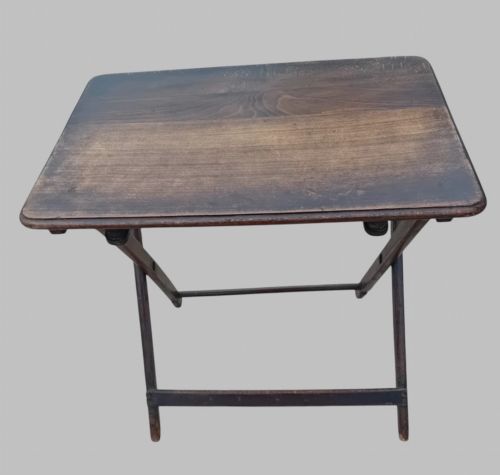
- A removable wooden tray with hinged or shaped sides, traditionally designed to sit upon a folding X-frame stand for serving. These pieces often feature cut-out carrying handles.
- Gallery tray
- A tray surrounded by a raised pierced metal or wooden border, known as a gallery, designed to prevent items from sliding off during transport.
- Marquetry
- Decorative veneer work created by fitting together small pieces of different coloured woods, shells, or ivory to form pictorial or geometric designs on the surface.
- Campaign style
- Portable furniture designed for travel and military campaigns, typically featuring folding frames, recessed brass handles, and sturdy construction.
- Coopered
- A method of construction using curved wooden staves joined edge to edge and bound with bands, commonly seen in cylindrical trays and buckets.
Antique Wood Tray: Frequently Asked Questions
How were antique wood trays used?
These trays served primarily for carrying drinks, tea service, or correspondence in period households. Many butler's styles functioned as portable furniture when paired with folding wooden stands.
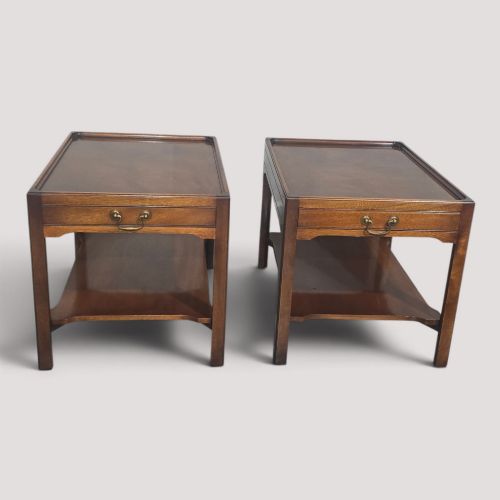
Over time, some versions transitioned into permanent occasional tables or bedside furniture. Their sturdy construction allowed them to move easily between rooms as household needs shifted.
What is a butler's tray on a stand?
A butler's tray on a stand consists of a deep-sided wooden tray that lifts off a folding X-frame base. This dual-purpose design allowed servants to clear rooms quickly by folding the stand and carrying the tray away.
In modern interiors, this form serves effectively as a side table or drinks stand. The removable top provides flexible surface space for everyday living.
How do I care for antique wood surfaces?
Maintain antique timber by dusting with a dry, soft cloth and avoiding silicone-based polishes. Occasional application of a quality beeswax helps nourish the grain and protects the polish from drying out.
Keep wooden items away from direct heat sources and strong sunlight to prevent warping and fading. Using coasters and placemats protects the surface from moisture and heat rings.
How can I tell the period of a tray?
Dating relies on examining the timber species, construction techniques, and decorative styles present. Georgian and Regency pieces often showcase solid mahogany with restrained inlay, while Edwardian examples frequently feature satinwood or elaborate marquetry.
Tool marks, fixings, and the style of brass handles or galleries also provide clues to age. Comparing the joinery methods helps distinguish eighteenth-century craftsmanship from later revival styles.