



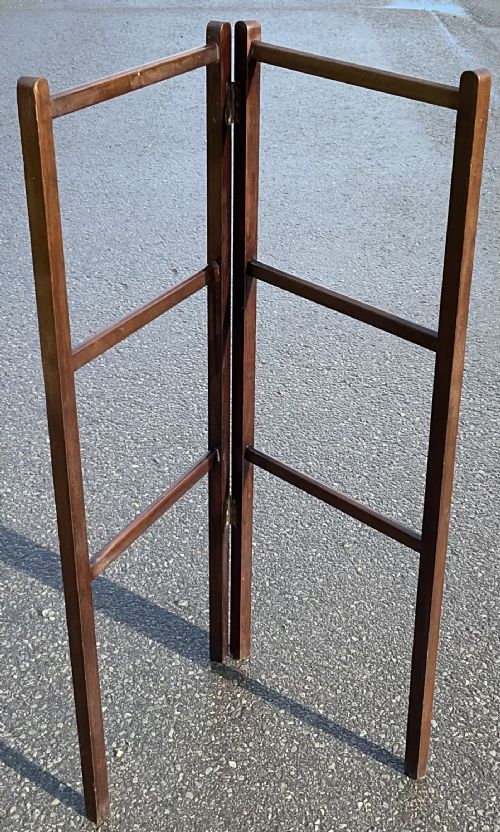


Antique Wood Towel Horse
An antique wood towel horse brings quiet domestic utility into a room, offering warm timber rails for linen or garments.
Antique Wood Towel Horse
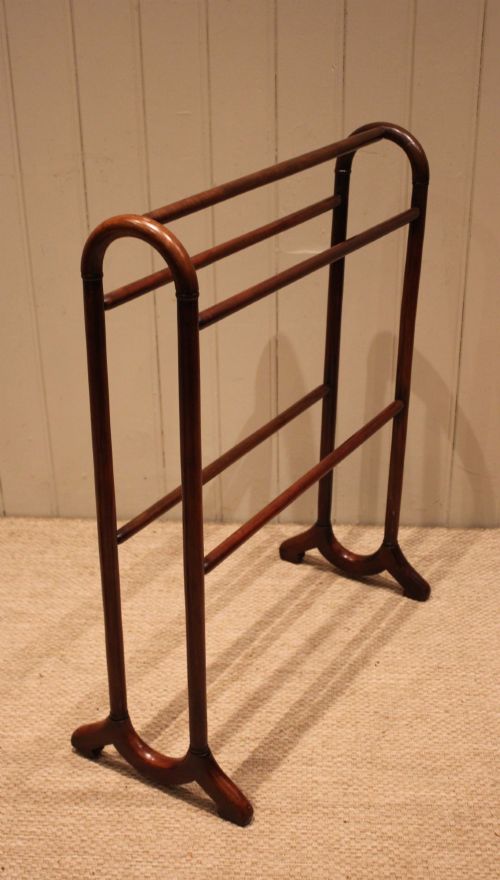
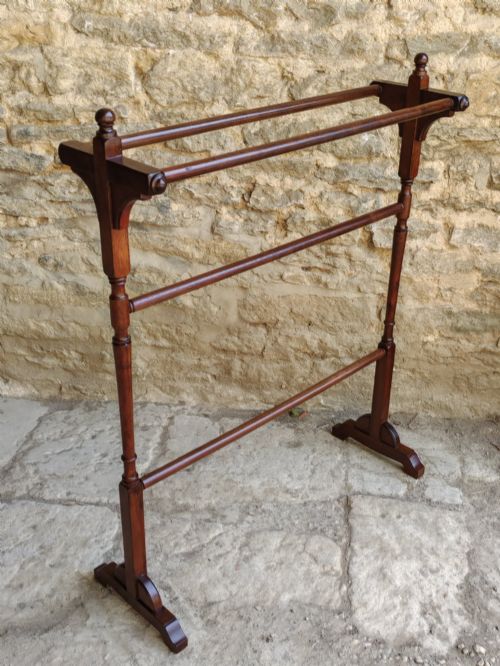
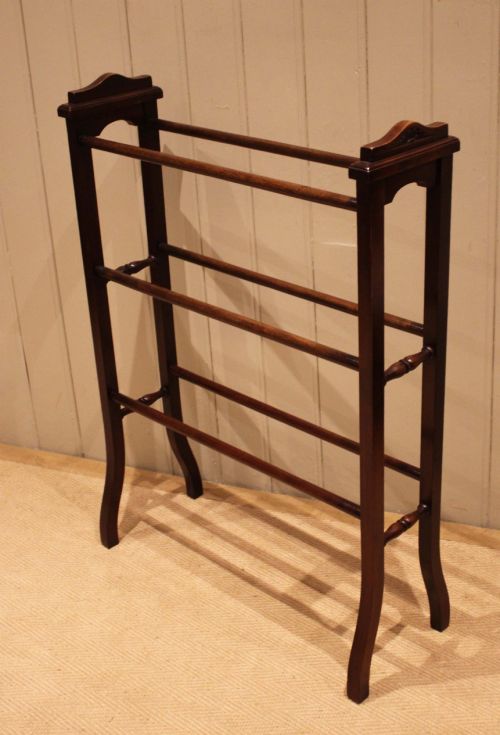
An antique wood towel horse is a practical frame designed to hold linens, towels, or garments in domestic interiors. When exploring this selection, buyers encounter various formats ranging from standard upright rails to multi-fold standing frames.
The pieces appearing here span the nineteenth century and the Edwardian era, predominantly featuring mahogany construction alongside walnut, elm, and lacquered wood. Formats include traditional towel rails, clothes racks, folding cheval designs, and occasional large robe stands.
Origin styles stretch across Victorian, Edwardian, William IV, and Victorian Gothic Revival aesthetics, supplemented by nineteenth-century English and Qing Dynasty examples. The standard form relies on stable uprights and horizontal bars suited for everyday drying and display.
How they were made
Cabinetmakers constructed these frames primarily using solid mahogany, walnut, and elm, selecting timber for grain pattern and structural resilience. Brass hardware occasionally appears to secure hinges, joints, or decorative elements on folding and multi-section formats.
Surface finishes rely on traditional polish and lacquer, preserving the natural tone of the wood while providing a durable barrier against moisture from damp linens. Joinery methods prioritise stability in standing frames, supporting heavy fabrics across multiple rails.
Antique Wood Towel Horse Retail Price Guide 2026
Typical asking prices for wood towel horse among the pieces listed under this phrase on Sellingantiques today, from the lower quarter to the upper quarter. They describe what is for sale here now, not the wider market.
The inventory spans the nineteenth century and the Edwardian era, featuring Victorian, William IV, and Regency styles.
What varies in quality
Quality reveals itself in the choice of timber and the complexity of the frame, where dense mahogany and rich walnut distinguish finer pieces from simpler utilitarian items. Scale also plays a role, with larger oversized rails and multi-fold structures demanding superior joinery to maintain rigidity.
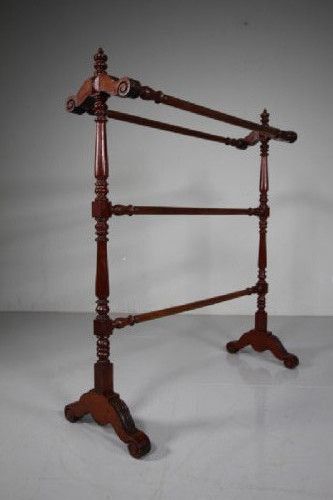
Refinement of design separates standard rails from exceptional examples, such as those featuring Gothic Revival detailing or silhouette shaping. The integrity of the wood and the smoothness of folding mechanisms indicate the level of craftsmanship invested in the piece.
The Antique Wood Towel Horse Glossary
- Cheval towel rail
- A standing rail featuring a pivoting or swinging frame, allowing sections to adjust independently. This form provides versatile hanging space while maintaining a compact footprint.
- Gothic Revival
- A nineteenth-century design movement incorporating medieval architectural motifs such as pointed arches and heavy mouldings. Walnut and mahogany pieces often display these pointed structural elements.
- William IV
- A stylistic period spanning the 1830s characterised by robust classical proportions and substantial timber forms. Pieces from this era often exhibit a heavy, architectural presence.
- Lacquered wood
- A surface finish applied to timber to create a glossy, protective coat derived from natural resin. This technique appears on specific imported stands such as Qing Dynasty examples.
- Clothes rack
- A tall freestanding wooden frame utilised for airing garments and textiles rather than small hand towels. These taller structures often incorporate multiple hanging bars across wide spans.
Antique Wood Towel Horse: Frequently Asked Questions
How were antique towel horses used?
These frames stood in bedrooms, dressing rooms, and bathrooms to hold freshly laundered linens, blankets, or daily garments. Their open design allowed air to circulate around damp textiles.
In larger houses, servants moved them near fireplaces to warm textiles before use. They served a purely functional role in domestic routines.
Where should I place a towel horse at home?
A towel horse suits bathrooms, bedrooms, and dressing areas where textiles are frequently handled. Standing frames fit neatly against bedroom walls or in unused corners.
Foldable versions adjust to fit smaller spaces when closed or open out to display multiple quilts. They introduce warm timber tones to modern and traditional interiors alike.
How do I distinguish Victorian from Edwardian pieces?
Victorian examples often display heavier timber sections, darker polished mahogany, and occasionally ornate details like Gothic Revival carving. They date from the mid to late nineteenth century.
Edwardian pieces, built around 1900 to 1910, tend to feature lighter proportions and simpler rectilinear frames. The transition reflects shifting domestic tastes toward brighter, less cluttered rooms.
What is a folding towel rail?
A folding rail consists of multiple wooden frames hinged together to expand or contract. This design allows the piece to stand flat against a wall or open into a wider screen.
Such configurations provide extended hanging capacity while remaining adaptable to room layouts. The hinges are typically brass or integrated wooden pivots.