

Antique Wood Canterbury
An antique wood canterbury is a practical piece designed to hold folios, newspapers and sheet music, bringing distinct character to a room.
Antique Wood Canterbury
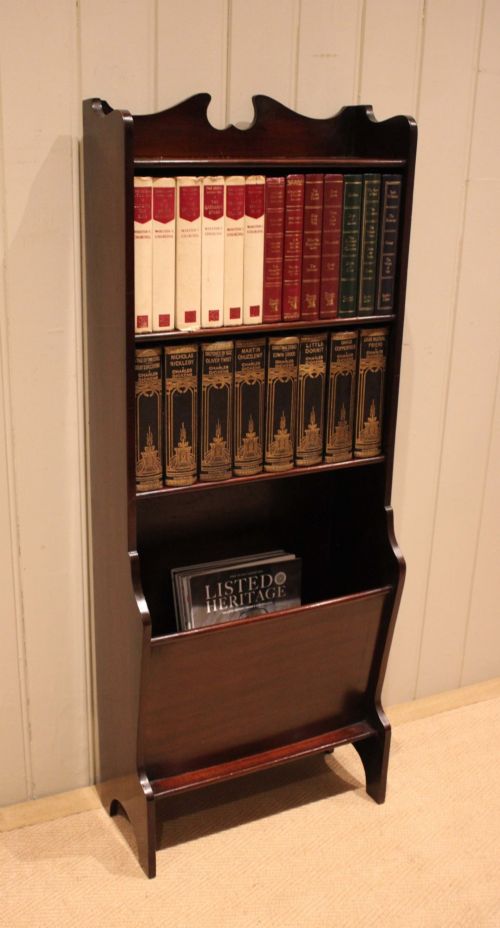
When searching for an antique wood canterbury, buyers encounter versatile furniture pieces primarily designed for holding newspapers, magazines, folios and sheet music. These pieces range from compact freestanding models to multifunctional side tables and cabinets featuring dedicated compartments.
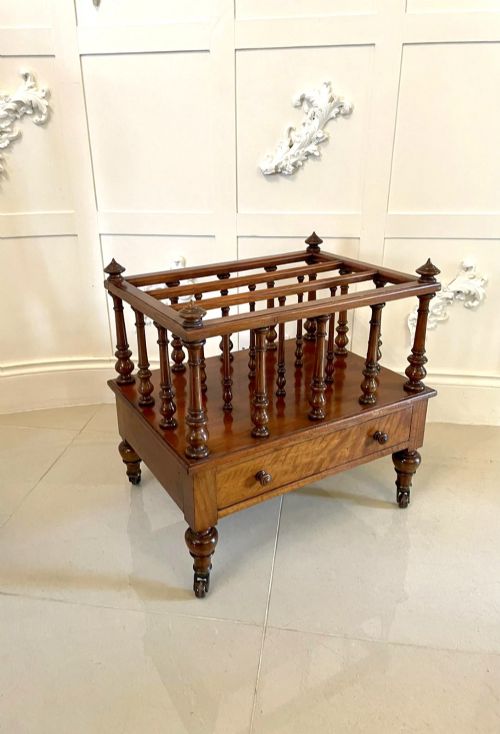
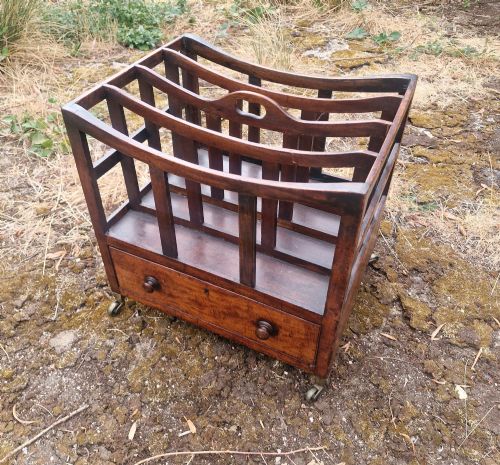
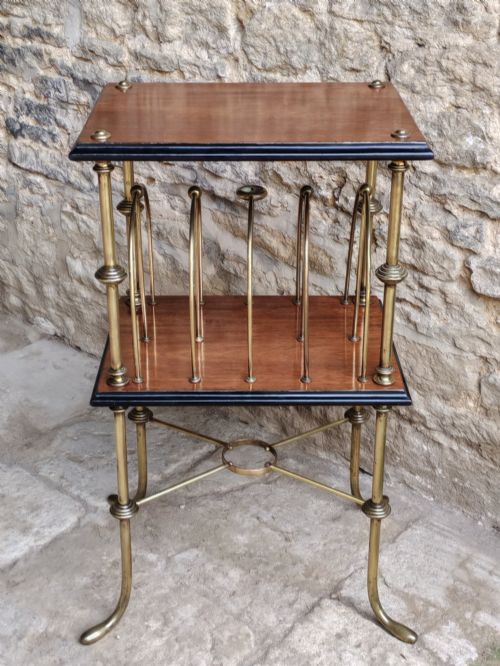
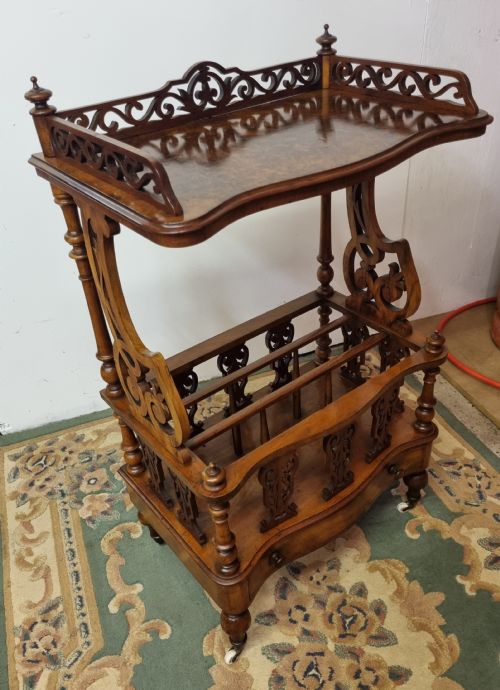
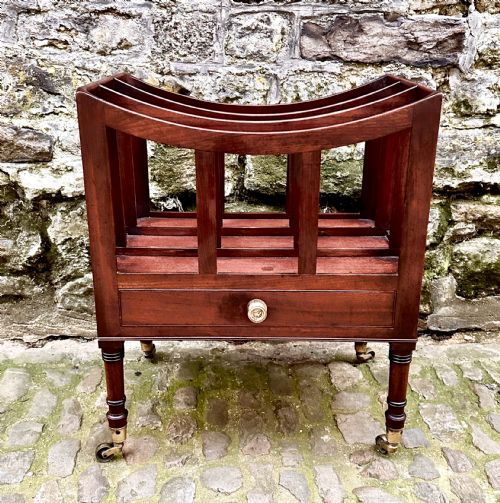
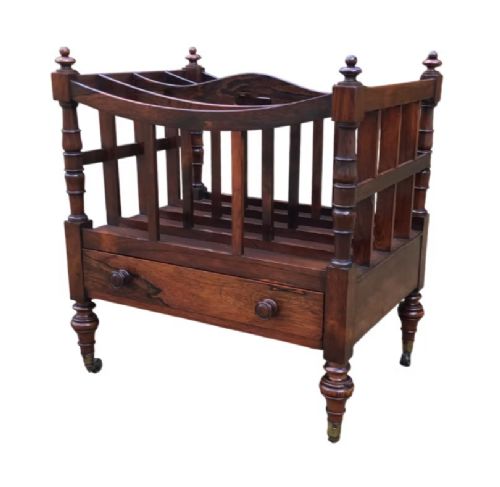
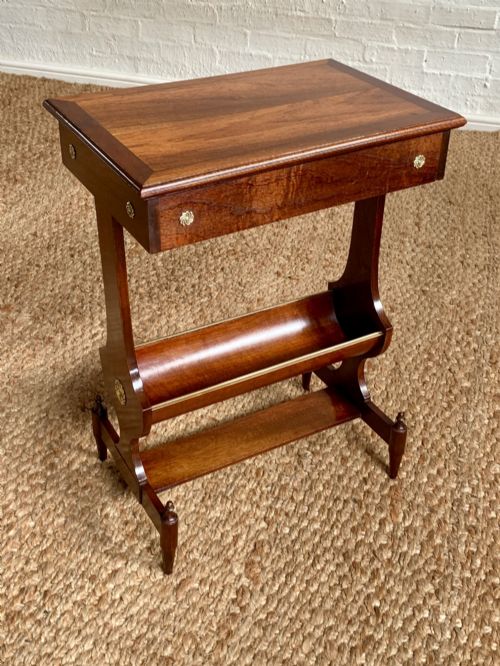
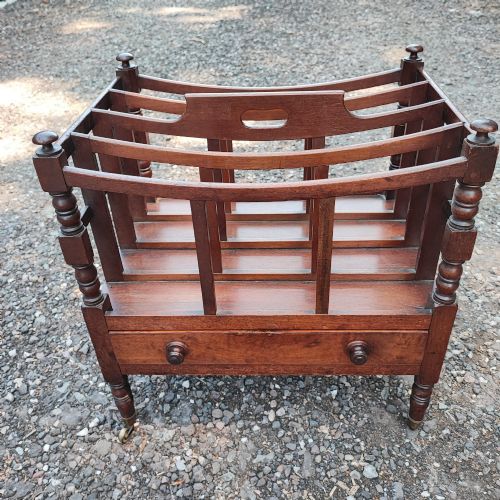
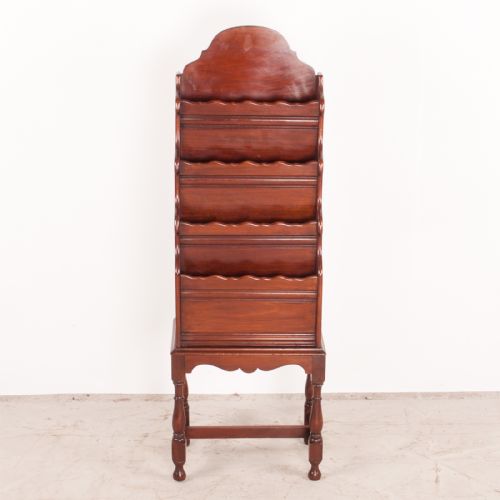
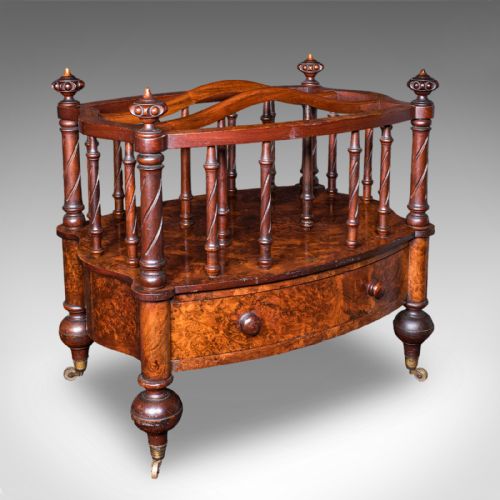
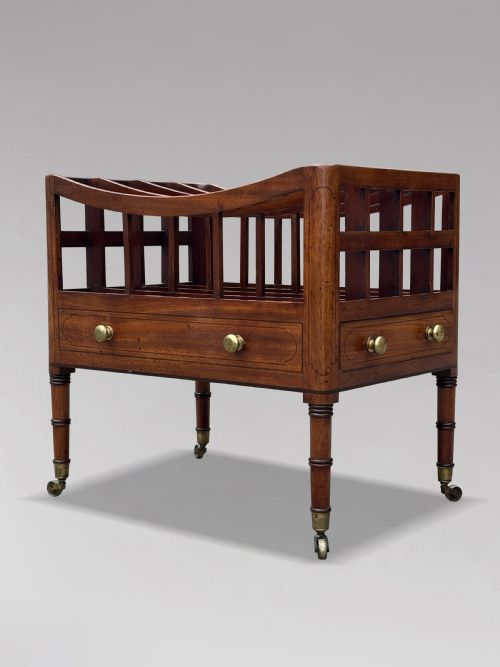
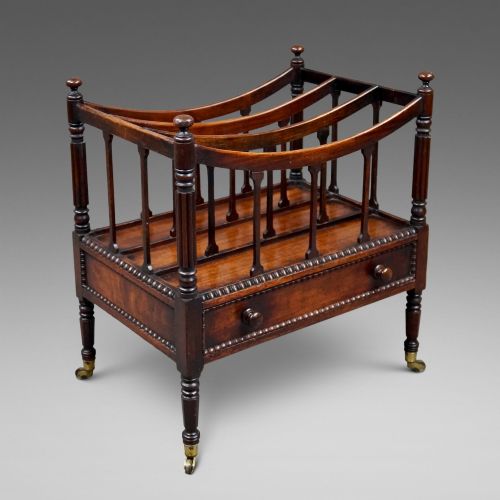
The versions most commonly met on this page originate from the Georgian, Regency, William IV, Victorian and Edwardian periods. Many examples combine the characteristic slatted rack partitions with a lower drawer, while others incorporate side tables, work tops or whatnot shelving structures.
Materials and construction
Makers utilised dense timbers such as mahogany, rosewood and walnut, frequently selecting figured veneers, burr walnut and brass details to elevate the appearance of the piece. These woods provided the structural integrity needed for slatted dividers and freestanding frames.
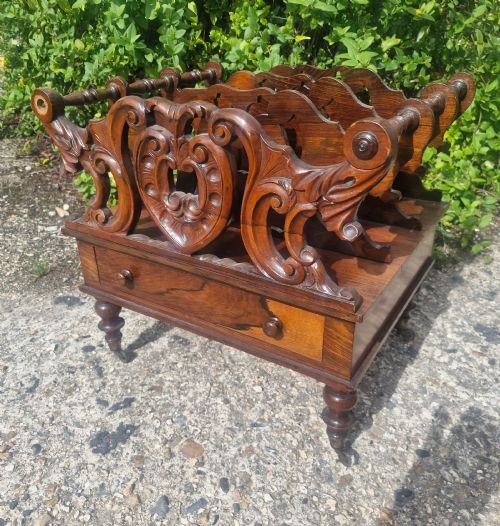
Joinery techniques ranged from straightforward cabinet making to elaborate turned supports, carved accents and delicate partitions. Drawers were integrated into the base framework alongside open rack sections, supporting the storage of paper, folios and music sheets.
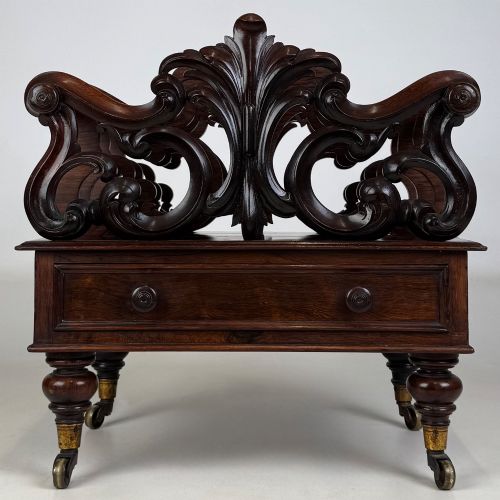
Early nineteenth-century craftsmen occasionally carved intricate Prince of Wales feathers into the timber framework of these musical stands.
Assessing quality and proportion
Quality rests upon the choice of timber grain, the precision of the joinery in the slatted dividers, and the refinement of any turned or carved details. Superior examples exhibit well-figured mahogany, rosewood or burr walnut paired with balanced proportions.
Charles Dowsett Of Canterbury
The Antique Wood Canterbury Glossary
- Canterbury
- A low stand with partitions for holding sheet music, newspapers or folios. This form developed in the late 18th century and often incorporates a drawer below the racks.
- Whatnot
- An open set of tiered shelves used for displaying or storing small objects. These often combine with a canterbury base in later Victorian designs.
- Folio
- A large-format book, pamphlet or collection of unbound sheets. Canterburys were originally sized to accommodate these sizeable paper items.
- Figured walnut
- Timber cut to reveal distinctive, decorative grain patterns such as swirls and flames. Makers prized this material for high-status Victorian cabinetry.
- Serpentine shape
- A undulating outline with a convex centre flanked by concave curves. This contour appears on the shelves or bases of certain Victorian walnut pieces.
Antique Wood Canterbury: Frequently Asked Questions
What is an antique wood canterbury used for?
These pieces served as dedicated stands for organising newspapers, magazines, sheet music and loose folios in domestic interiors.
Today, they function well beside sofas or armchairs for holding contemporary periodicals or books.
How do I date an antique canterbury?
Dating relies on observing timber choices, hardware, and stylistic traits associated with periods like Regency or Victorian.
Georgian and Regency pieces often feature linear mahogany forms, whereas Victorian examples tend to utilise rosewood or burr walnut with more ornate carving.
Are all canterburys fitted with drawers?
Many models incorporate a single drawer beneath the slatted divisions for smaller items, though simpler open rack versions exist.
Drawers frequently feature mahogany linings and small turned wooden knobs or brass pulls.
Can a canterbury be used as a side table?
Certain Edwardian and Victorian variants combine a magazine rack with a flat top or work surface, functioning effectively as occasional furniture.
These multifunctional designs allow the piece to serve dual purposes in a living space without occupying extra floor area.