

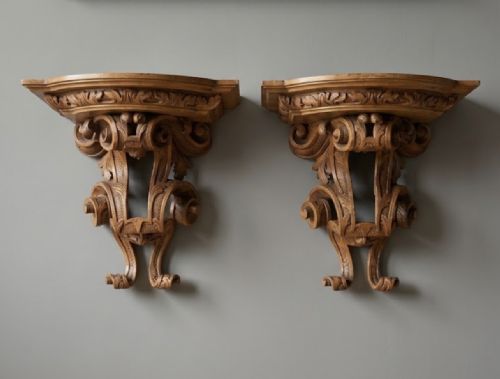
Antique Wood Brackets
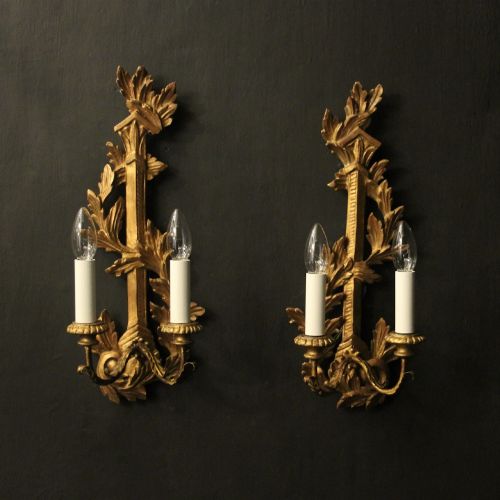
Antique wood brackets bring carved architectural depth to a room, supporting shelves or displays with period craftsmanship.
Antique Wood Brackets
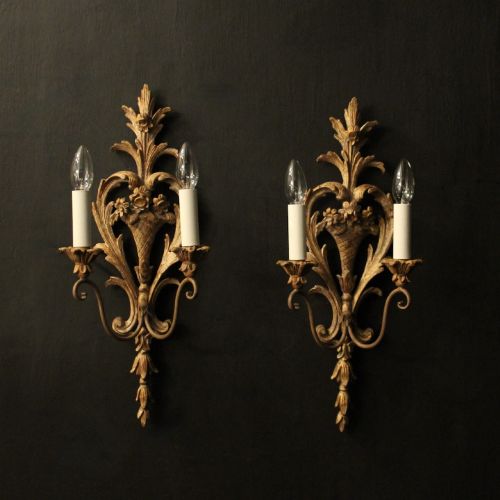
When you search for antique wood brackets, you encounter architectural and decorative supports originating from the Georgian and Victorian periods, alongside later Edwardian examples. These pieces serve to hold wall shelves, clocks, or display items while adding distinct period character to interior walls.
Originating across the eighteenth and nineteenth centuries, these brackets demonstrate how functional joinery doubled as ornamental woodcarving. Walnut and various woods provide the structural base for designs ranging from restrained classical profiles to elaborate sculptural forms.
How they were made
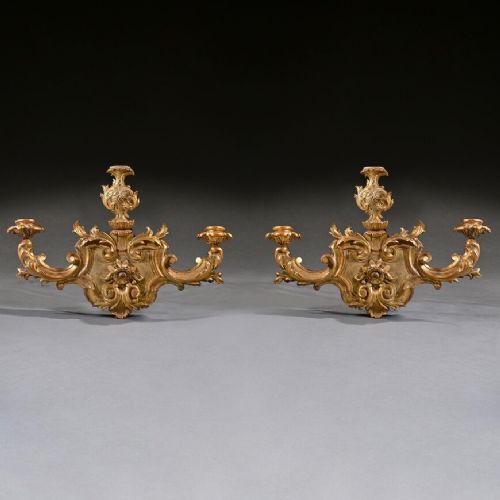
Cabinet makers and woodcarvers shaped these supports from dense hardwoods like walnut and mahogany, utilising hand chisels and gouges to achieve detailed contours. Gesso and giltwood finishes appear on decorative examples, providing a smooth base for gold leaf application.
Construction relied on traditional joinery methods to ensure stability under load, integrating wall fixing plates or tenoned joints. Surface treatments involved hand polishing with wax or oil to highlight the natural grain of the timber.
Antique Wood Brackets Retail Price Guide 2026
Typical asking prices for wood brackets among the pieces listed under this phrase on Sellingantiques today, from the lower quarter to the upper quarter. They describe what is for sale here now, not the wider market.
Some carved wooden cherubs have watched over Victorian hallways for well over a century without ever blinking once.
What varies in quality
The choice of timber and the preservation of original finish dictate the visual appeal of an antique bracket. Well-figured walnut or clean mahogany with undisturbed patination commands greater appreciation than heavily restored or later replacement surfaces.
Taylor of London·Thomson of London·Brockbanks and Atkins·Reprodux
The Antique Wood Brackets Glossary
- Bracket
- A structural or decorative projection from a wall, designed to carry a weight such as a shelf, clock, or ornament.
- Gesso
- A plaster-like mixture applied to wood surfaces as a preparation for gilding or painting, capturing fine relief details.
- Giltwood
- Timber that has been coated with gold leaf or gold paint, frequently used on decorative furniture and architectural fittings.
- Baroque Revival
- A nineteenth-century stylistic movement that reinterpreted seventeenth-century theatrical, ornate forms with dynamic curves and rich ornamentation.
Antique Wood Brackets: Frequently Asked Questions
How do I hang heavy antique wood brackets?
Wall brackets require secure fixing into solid masonry or direct wall studs using appropriate steel screws to bear their intended weight safely.
Heavier carved walnut or giltwood versions demand load-bearing anchor points behind the mounting plate to prevent movement over time.
Can antique wood brackets hold shelves?
Many pairs are constructed specifically to support wooden display boards or small mantel shelves against a wall surface.
Checking the projection depth and the vertical fixing span ensures the chosen pair matches the dimensions of the shelf board.
What woods were used for antique brackets?
Carvers utilised dense timbers including walnut and mahogany, which permitted intricate detail work without splintering along the grain.
Giltwood items typically feature a softer underlying wood base coated in gesso before the application of gold leaf.
How do I clean antique wood brackets?
Dusting with a dry, soft bristle brush removes particles from carved crevices without disturbing the underlying polished timber surface.
Moisture and modern chemical sprays should be avoided to protect historical wax finishes and delicate gilt layers from deterioration.